REVIEW · PARIS
Best Paris Experience
Book on Viator →Operated by BestParisExperience · Bookable on Viator
Glide past Paris landmarks fast and pain-free. I love the quick Segway training that helps you get comfortable early, and I love the tight, iconic loop that covers a big chunk of central Paris in about two hours. The result is a tour that feels efficient without feeling rushed, especially for first-time visitors who want the headline sights in one go.
One thing to keep in mind: you’ll be riding in the real flow of the city, so the first minutes can feel mentally demanding, even with a calm guide and a safety-first approach. If you’re uneasy around traffic, plan to lean on the training and follow instructions closely.
In This Review
- Key things to know before you book this Paris Segway tour
- Segway in Paris: training first, then the big sights
- Price and value: what $81.62 buys you in 2 hours
- Stop 1: Hôtel des Invalides from Cathedrale Saint-Louis des Invalides
- Stop 2: Pont Alexandre III and why it feels like Paris theater
- Stop 3: Grand Palais—French art, big architecture, exterior views
- Stop 4: Petit Palais, the fine-arts museum you can spot in seconds
- Stop 5: Place de la Concorde and the golden-point obelisk
- Stop 6: Assemblée Nationale (Bourbon Palace) and the politics of place
- Stop 7: Eiffel Tower at the end—what you get in the base-area view
- How this route works for families, first-timers, and time-crunched days
- Weather and comfort: the two practical factors that matter most
- Should you book BestParisExperience?
- FAQ
- How long is the Paris Segway tour?
- Is the tour offered in English?
- Are admission tickets included for the landmarks?
- What landmarks will I see during the tour?
- How big is the group?
- What if the weather is bad?
Key things to know before you book this Paris Segway tour
- Small group, up to 10 people: you get more attention during setup and practice.
- Two-hour format: enough time for multiple major landmarks, not so long that you fatigue out.
- English-speaking guide: you’ll get clear commentary at each stop.
- Iconic exterior views: you’ll see big sights like Invalides, Concorde, and the Eiffel Tower from the outside.
- Good weather required: the tour depends on conditions so the ride stays smooth and safe.
Segway in Paris: training first, then the big sights
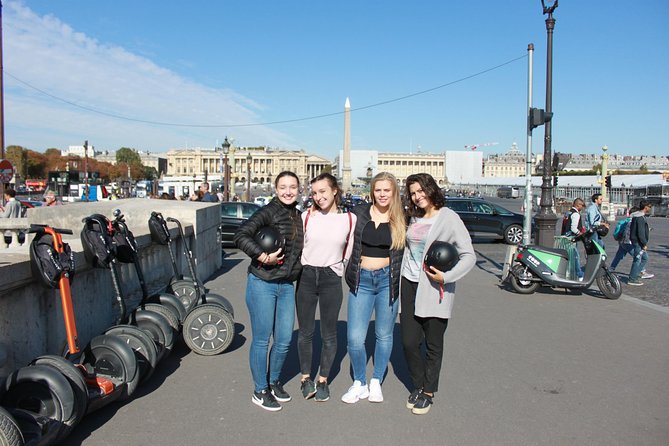
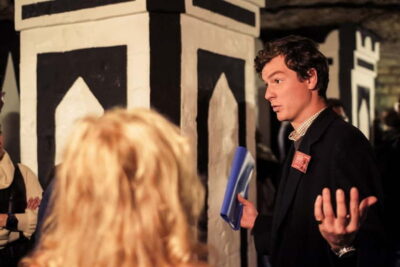
A Segway tour in Paris works best when the start feels controlled. Here, you get that head start: you’ll have time to learn the basics and practice before you move through busier areas. That matters because once you’re rolling, your attention goes to what you’re seeing, not to figuring out how to drive.
I also like the way a small group changes the mood. With a maximum of 10, you’re not stuck watching other people struggle from behind. Instead, you’re more likely to get coaching that fits your comfort level, whether you’re brand new or you’ve used Segways before.
And yes, you’ll still be riding alongside the city. In particular, the review-friendly point here is mental confidence: getting used to Segways is one thing, but blending into traffic patterns is another. The good news is that the guides you’ll encounter are described as calm and patient at the start, which is exactly what you want if you’re a little nervous.
You can also read our reviews of more tours and experiences in Paris.



Price and value: what $81.62 buys you in 2 hours
At about $81.62 per person for a roughly 2-hour experience, you’re paying for speed plus expert guidance. This isn’t a museum ticket price. You’re not buying entry; you’re buying time saved and context delivered at each stop.
That’s the trade. Admission tickets are not included at the listed landmarks. So think of this tour as a fast way to orient yourself: you get the shapes, locations, and historical importance, then you decide later whether you want to go inside places with separate tickets.
I find this format especially good on a first or second day. If you’ve only got limited time and you want a clear route through Paris’s “greatest hits,” Segways can compress hours of walking into a couple hours of gliding—while keeping you out of decision fatigue.
Stop 1: Hôtel des Invalides from Cathedrale Saint-Louis des Invalides
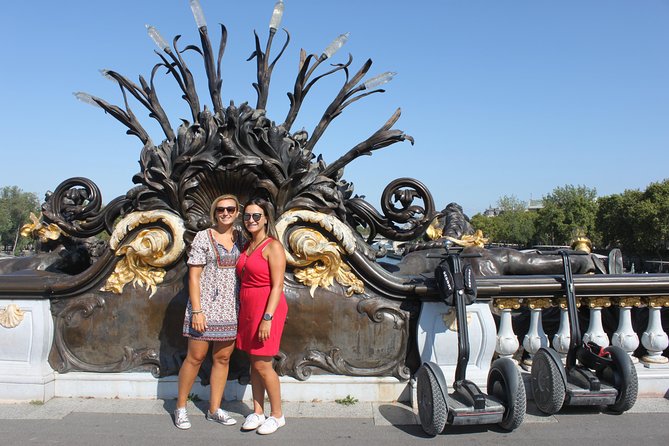
You begin near the Hôtel des Invalides area, anchored by the Cathedrale Saint-Louis des Invalides. Even without going inside, this is a powerful architectural introduction. Invalides is all about scale and ceremony, so it instantly signals you’re in the part of Paris where the city turns formal.
This stop is short, but it’s a smart opener. It gets you into the rhythm of the tour: quick orientation, a few key facts, then off to the next visual anchor. If you like architecture and want a sense of Paris’s grandeur without hunting for a perfect viewpoint, this is a solid first chapter.
Stop 2: Pont Alexandre III and why it feels like Paris theater
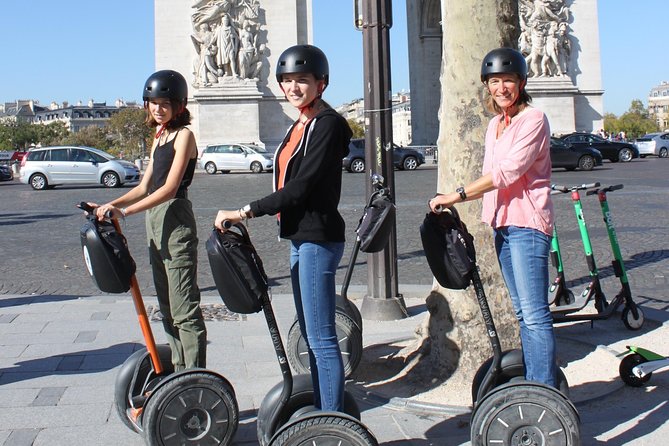
Next up is Pont Alexandre III, often described as the most majestic Parisian bridge. The bridge isn’t just a crossing—it’s a full-on monument. You’ll get a brief window to take in the details and understand why it has such a strong place in Paris’s visual identity.
In practical terms, a bridge stop also helps with pacing. Your body is already in “ride mode,” so you don’t lose the whole tour to standing around. You can take photos, angle yourself for a quick view, and keep moving—without feeling like the tour is only pauses.
Stop 3: Grand Palais—French art, big architecture, exterior views
The Grand Palais stop focuses on what you can see outside: the monument dedicated by the Republic to the glory of French art. This is a good example of why this tour format works. Even if you’re not paying for museum entry, you’re still learning why the building matters.
Grand Palais also pairs nicely with your next stop. It sets expectations for “fine art energy” in the area, so when you reach Petit Palais you’ll understand it as part of the same creative neighborhood mood—not just another pretty facade.



Stop 4: Petit Palais, the fine-arts museum you can spot in seconds
Petit Palais is framed as the museum of fine arts, and the big benefit here is instant recognition. You’ll get an overview view without committing your day to a ticket line or a timed entry plan.
The drawback is also clear: you won’t get the full museum experience on this tour alone. Since admission isn’t included, you’re going to come away with appreciation and orientation, not finished museum time. That’s not a flaw—it’s just the right mental model. Use this as your shortlist-builder.
Stop 5: Place de la Concorde and the golden-point obelisk
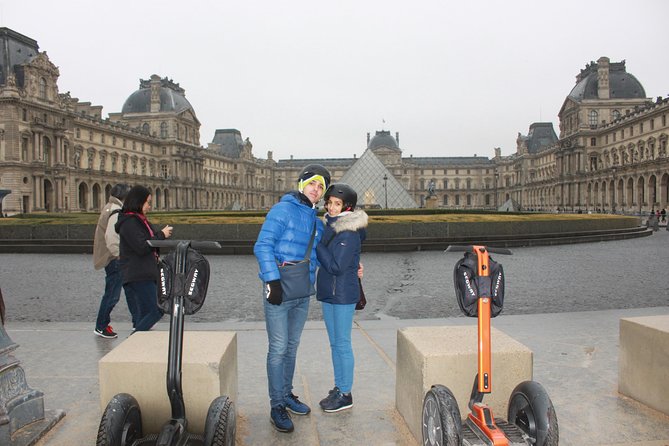
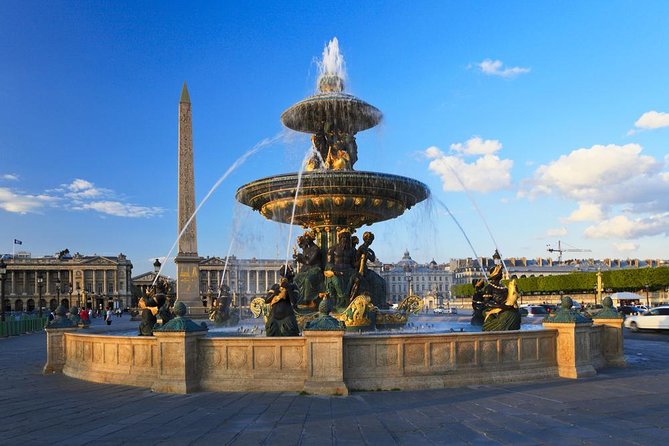
At Place de la Concorde, you’ll hit one of Paris’s most famous squares. The star attraction in this stop is the famous obelisk with a golden point, which makes the landmark easy to find and fun to photograph.
Why this matters for your whole trip: Concorde is a visual hub. Once you’ve seen it from the tour’s perspective, it becomes easier to understand how different parts of central Paris connect—especially if you later plan walks toward the Seine, the major avenues, or the Left Bank.
This is also a good place for quick, practical photo planning. In a two-hour tour, you don’t get long stops, so locations that photograph well in a short window are exactly what you want.
Stop 6: Assemblée Nationale (Bourbon Palace) and the politics of place
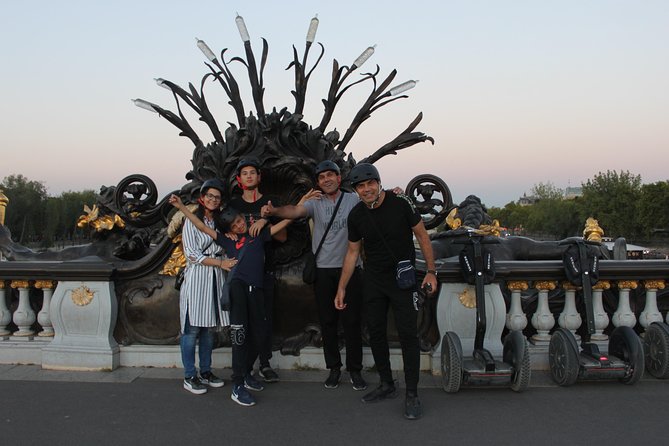
Your next stop is the Assemblée Nationale, presented as the Bourbon Palace that has hosted the lower houses of the French Parliament since 1799. That one date gives you the real meaning of the building: it’s not just historic-looking. It’s been used.
I like this kind of explanation because it turns architecture into context. You’re not only seeing stone; you’re seeing continuity—how a building becomes part of national life over centuries.
A quick note: this is another exterior-oriented moment. If you want to go deeper, you’ll need to plan that separately. Still, the exterior visit gives you a sense of scale and authority that you won’t get from photos alone.
Stop 7: Eiffel Tower at the end—what you get in the base-area view
The tour finishes with the Eiffel Tower, described as the emblem of Paris and symbol of France. You’ll get to see it at the base-area level, which is a strong closer for a Segway experience. It feels like payoff, not just a route marker.
The key here is expectation-setting. You won’t be doing a summit experience on this tour. Admission tickets aren’t included, so you’re not buying into the tower’s interior or viewpoints as part of the package. Instead, you’re getting a dramatic “you’re really here” moment.
If you want the best photos, timing helps. Try to keep your last stop energy focused: take a few shots quickly, then check your angle. You’ll get plenty of visuals, but don’t let the whole final minutes disappear into one perfect position.
How this route works for families, first-timers, and time-crunched days
This tour is built for short-attention, high-impact travel days. One review specifically calls out that it captured teenagers fast—plus it’s framed as fun for families with kids 12+ who can follow instructions and handle the Segway basics.
If you’re traveling with multiple ages, Segways can be a “everyone participates” win. You’re not splitting into different activity tracks where one person is bored and the other is engaged. Everyone is moving, everyone sees the landmarks, and everyone gets quick context along the way.
If you’re solo, it’s also a nice way to meet the city without getting trapped in wandering. Paris can be hard to pace on foot if you’re trying to hit too much. This tour gives you a clean plan with a natural endpoint back at the start.
Weather and comfort: the two practical factors that matter most
This experience is designed to run in good weather. If the conditions are poor, expect the operator to offer another date or a full refund. That’s important because Segways are a smooth ride when the surface is right.
Physical fitness is listed as moderate. That usually means: you should feel comfortable balancing and standing for short periods while riding and stopping. You don’t need athleticism, but you should be able to handle the motion and stay attentive during safety coaching.
Also, keep in mind the tour’s structure. It’s roughly two hours, with many stops around five minutes each. That’s not a sightseeing marathon. It’s a “see a lot quickly” plan.
Should you book BestParisExperience?
Book it if you want a fast, focused way to get your bearings and see major Paris landmarks without spending the day deciding where to go. The best part for many people is the combination of quick training, big sights, and clear guidance in English, all with a small group.
Skip or pair it with something else if your goal is indoor museum time, long viewing, or ticketed experiences inside the buildings. Since admission isn’t included, you’ll likely want separate plans for museums or tower access later.
If you love the idea of being out in the city but hate the idea of sore feet, this is one of those tours that can genuinely make Paris feel easier on day one.
FAQ
How long is the Paris Segway tour?
The tour lasts about 2 hours.
Is the tour offered in English?
Yes, it’s offered in English.
Are admission tickets included for the landmarks?
No. Admission tickets are not included at the stops.
What landmarks will I see during the tour?
You’ll see the Hôtel des Invalides area (Cathedrale Saint-Louis des Invalides), Pont Alexandre III, Grand Palais, Petit Palais, Place de la Concorde, the Assemblée Nationale, and the Eiffel Tower.
How big is the group?
The tour has a maximum of 10 travelers.
What if the weather is bad?
The experience requires good weather. If it’s canceled due to poor weather, you’ll be offered a different date or a full refund. You can also cancel for a full refund up to 24 hours in advance.