REVIEW · PARIS
Best of the Louvre Museum Private Tour with Monalisa
Book on Viator →Operated by The Expat Tours · Bookable on Viator
The Louvre can eat an entire day. This private tour keeps you focused with prepaid tickets and a guide-led route built to move fast without feeling rushed, landing on major works like the Mona Lisa. I like that you can set the pace with a real human who explains what you’re seeing, not just points. One catch: you must arrive on time and follow security rules (no large bags), because tickets are time-stamped.
I also love that you can choose the format that fits your group, from private to a smaller semi-private option, and it’s all in English. Guides like Blerta, Mindy, Wei, Vivian, Avi, and Melina get singled out for keeping people engaged and comfortable, including teens and elders who need to slow down.
In This Review
- Key takeaways before you go
- Why this Louvre tour feels faster than DIY
- What you should expect from the 2-hour format
- Meeting at the Louvre Pyramid: timing and security rules
- The 2-hour highlights route: foundations to palace halls
- What stops look like in practice
- How your pace works
- Mona Lisa and the Louvre giants: what the guide should add
- A few examples of what context can change
- Egyptian Antiquities option: when the 3-hour add-on makes sense
- Price and value: what you’re really paying for
- One caution about shared formats and audio
- Choosing private vs shared: how to match it to your group
- Pacing, rest, and keeping everyone engaged
- Should you book this Louvre Monalisa private tour?
- FAQ
- Is the museum admission ticket included?
- Is this tour truly private?
- Can I add the Egyptian collection and the mummy?
- Where do I meet, and when should I arrive?
- What language is the tour offered in?
- Can I cancel for a full refund?
Key takeaways before you go
- Prepaid entry = less waiting: skip the long ticket scramble and get inside on schedule
- Chronological route: foundations to palace halls, with big stories tied to what you see
- The main masterpieces, explained: Mona Lisa, Venus de Milo, Michelangelo’s slaves, and more
- Optional Egyptian Antiquities (mummy): only included on the 3-hour version
- Private attention where it matters: you’re not fighting for the guide’s time
- Rules are real inside: arrive early and keep luggage small for security
Why this Louvre tour feels faster than DIY

The Louvre is one of those places where “I’ll just wander” turns into “how is it already 4:00?” Even if you’re organized, the museum’s size and crowd flow can turn your day into a lot of walking and very little looking.
This tour is designed to cut through that fog. In about 2 hours, you get a guided path that hits the museum’s biggest and most influential works in a way that makes sense as a single storyline. Instead of bouncing randomly, you follow a chronological path through the Louvre’s foundations, art collections, royal jewels, and palace halls—so you start understanding how the museum became what you walk into today.
The other value is personal attention. On the private option, the tour is paced around your group. That means questions are actually possible, and the guide can adjust the “speed” when you hit a piece you want to linger with. In a museum where standing still for the right moment feels impossible, having that permission is a big deal.
You can also read our reviews of more private tours in Paris



What you should expect from the 2-hour format
A two-hour Louvre visit is not about seeing every room. It’s about seeing the right rooms and understanding why they matter. If you want a museum marathon, this isn’t that. If you want the highlights with context and less stress, it’s a smart trade.
Meeting at the Louvre Pyramid: timing and security rules
You meet at the Louvre Pyramid (75001 Paris, France), and the tour ends back there. That matters because it’s easy to orient yourself before you start—one fixed place beats trying to track someone across different courtyards.
Here’s the practical part that can make or break the experience:
- Arrive 15 minutes early. The tour starts on time, and late arrivals aren’t accommodated because tickets are time-stamped.
- Bring an ID document if requested, and make sure you have a valid phone number you can be reached at the day of your tour.
- Keep bags small. No large bags or suitcases are allowed inside—only handbags or small thin bag packs through security.
Inside, expect a museum environment with real crowd control. Some rooms may have quiet or restricted rules where the guide will explain instructions before you enter those spaces. If you like to talk while you look, this is the kind of museum where you’ll need to follow the room’s rules.
One more “Paris reality” note: the Louvre can have occasional closures. If opening is delayed by more than 1 hour, you’ll be offered an alternative, but because entry is pre-purchased in advance, refunds or discounts aren’t provided for delays like that.
The 2-hour highlights route: foundations to palace halls
The heart of this tour is its chronological storyline. You’ll start with the Louvre’s foundations and then move through sections that represent different eras of art and collecting, finishing with palace-style grandeur.
Along the way, your guide points out more than just the famous titles. The tour description calls out “hidden messages” and historical context in the most recognizable works, and that approach is exactly what changes your experience from seeing objects to actually understanding them.
What stops look like in practice
Your route is built around key masterpieces such as:
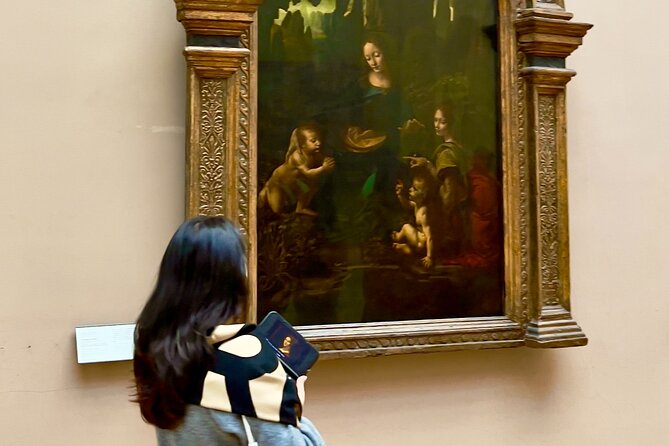
- the Mona Lisa, with attention to the kind of painting details people often miss when they’re just snapping photos
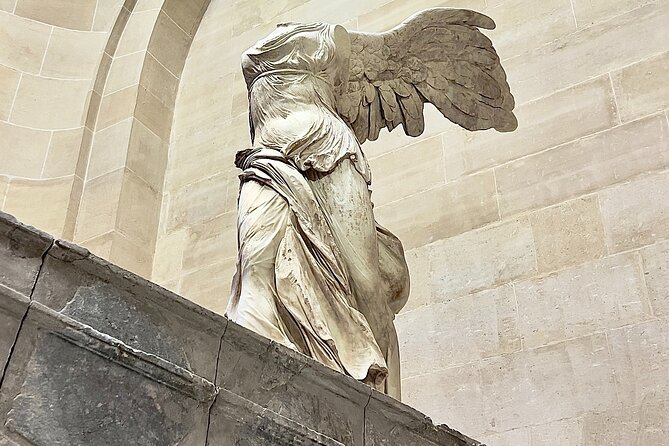
- Venus de Milo, where the guide helps you connect form to historical taste and influence
- Michelangelo’s slaves (often called Prisoners), where you can appreciate the emotion and movement more clearly with explanation
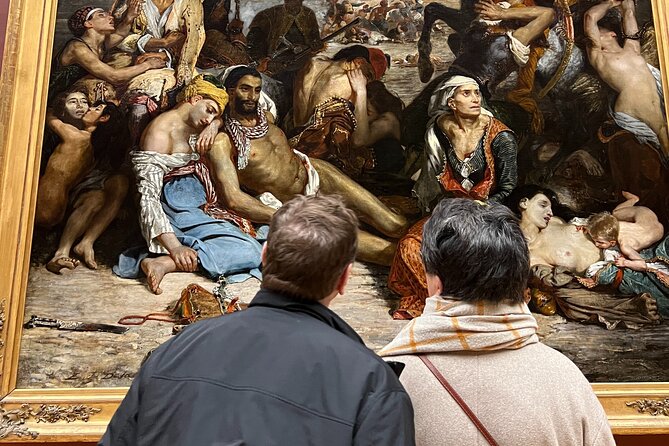
- Wedding at Cana, Raft of Medusa, and the Coronation of Napoleon, which shift the focus across major art movements and power
- Canova’s Cupid & Psyche, a different tone from the big political and religious works, but still tied into the museum’s wider evolution
What’s valuable is not that you’ll “see them,” but that the guide helps you notice why these works belong in the same narrative. Even if you’ve heard of these paintings and sculptures before, you’ll likely understand them more by the time you reach the later pieces.
You can also read our reviews of more museum experiences in Paris






How your pace works
This is where private format really shows. The tour is described as “at your own pace,” with time to interact and without competing for attention. In a place like the Louvre, that reduces the usual pressure to rush through rooms. It also helps families: guides in this same program have been praised for engaging teens by asking questions and keeping attention from drifting.
Mona Lisa and the Louvre giants: what the guide should add

Let’s be honest: the Mona Lisa is crowded, bright, and wrapped in a wave of expectations. Without guidance, it can feel like you spent 20 minutes near the painting without actually seeing it.
This tour’s best angle is using art-historical context to make the encounter less “check the box” and more “I get it now.” The tour description specifically mentions discovering history and hidden messages in the most famous pieces, and multiple guides named in reviews are praised for making each work feel like it has a personality and a reason to be there.
A few examples of what context can change
- Venus de Milo can become more than a famous statue when you understand why it stood out to collectors and artists across time.
- Michelangelo’s slaves can feel more emotional when the guide explains how Michelangelo’s figures express struggle and movement rather than just showing anatomy.
- Raft of Medusa can shift from “important painting” to “a story with stakes” when you connect it to the moment it was made.
- Coronation of Napoleon becomes easier to follow when you have a framework for the political theater, not just the pageantry.
- Cupid & Psyche works well as a contrast late in the route, giving you a more intimate myth story after the big public artworks.
If you like to ask, this is a good format. If you don’t, you’ll still benefit from the guide doing the translation from visual clues to meaning.
Egyptian Antiquities option: when the 3-hour add-on makes sense

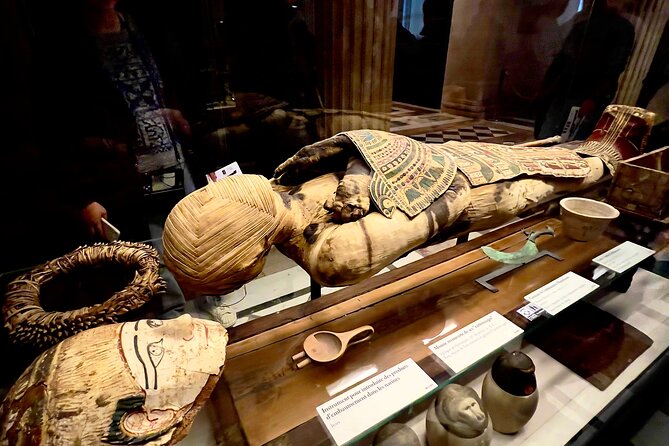
If you want the Louvre’s Egyptian side too, you have an option—but it comes with a timing condition. The Egyptian Antiquities visit, including the Egyptian mummy, is only included in the 3-hour Egyptian option.
That’s useful because it forces a decision. Do you want:
- a tight, 2-hour route through the major highlights, or
- a longer session where Egyptian Antiquities become part of your day
The 3-hour version is a strong choice if Egyptian art is a priority for you, or if you’re traveling with someone who gets excited by objects tied to daily life, belief systems, and burial practices. If your main goal is the highest-profile European masterpieces, the 2-hour route may fit your energy better.
Price and value: what you’re really paying for
The price is $299.57 per person for the tour as described, with an average booking window of about 36 days in advance. That might sound steep for a museum visit until you translate what you’re buying.
You’re paying for:
- an English-speaking guide with art-history expertise
- the admission ticket included (listed as a €22 entrance ticket for adults)
- a structured route through a massive museum
- private attention (if you choose the private option)
- reduced time loss from waiting and navigating on your own
Could you do the Louvre solo? Sure. But solo usually means either spending time figuring out where to start, or accepting that you’ll see highlights without much interpretation. Here, your money buys interpretation plus direction plus time saved from ticket lines.
There’s also a format choice that affects value. The tour offers private or shared/semi-private options with different fees. In practice, smaller group sizes can feel calmer. Reviews mention semi-private groups like 6 to 8 people, and those setups still keep you from being totally lost in the crowd—though shared formats may involve audio equipment.
One caution about shared formats and audio
Some reviews criticize audio equipment quality in a shared/semi-private setting. If clear sound matters a lot to you, consider booking the fully private option, or go in with the expectation that audio gear may not always be perfect in a loud museum environment.
Choosing private vs shared: how to match it to your group

Here’s a simple way to decide.
Choose private if:
- you want flexibility to stop and ask questions
- you’re traveling with kids, elders, or anyone who needs to rest more often
- you care most about the guide’s full attention
Choose semi-private/shared if:
- you’re fine with a smaller group dynamic
- you want a guided plan but can accept less flexibility than a true private tour
- you’re cost-conscious and still want a structured “best of” route
Either way, the route is built around the museum’s top highlights, plus extra context that’s hard to replicate when you’re solo.
Pacing, rest, and keeping everyone engaged
One thing I really like about this kind of guided Louvre route is how it can support different travel styles.
Reviews point out that guides can be patient with slower movement and even build in moments to sit. That’s huge in a museum with many steps and lots of walking. If you’re bringing parents who struggle with stairs, or anyone who needs frequent breaks, a guided plan reduces the guesswork of where to go next and how long to stay.
Guides have also been praised for engaging teenagers. That often happens when a guide asks questions rather than lecturing. If you’re traveling with a teen who would rather be scrolling than staring at marble, this kind of interaction can be the difference between a long day and a memorable one.
Should you book this Louvre Monalisa private tour?
Book it if you want:
- the Louvre’s biggest works in a structured order
- a guide who makes famous pieces easier to understand
- a calmer experience than DIY wandering, especially in a limited time window
Skip (or switch options) if you:
- want to roam every wing with no time pressure
- don’t want to follow security rules and strict start times
- are the type who can handle museum crowds and do your own planning without getting stressed
My practical advice: if it’s your first Louvre trip, don’t underestimate how much a smart route changes everything. Two hours won’t cover the whole museum, but it can cover the parts that matter most—plus give you the meaning behind what you see.
FAQ
Is the museum admission ticket included?
Yes. The tour includes the museum entrance ticket for adults (listed as a €22 entrance ticket).
Is this tour truly private?
It’s private if you choose the private option. If you choose the shared/semi-private option, it will not be private.
Can I add the Egyptian collection and the mummy?
Yes, but only with the 3-hour Egyptian option. The Egyptian mummy is included only in that longer version.
Where do I meet, and when should I arrive?
You meet at the Louvre Pyramid (75001 Paris). Arrive 15 minutes early because the tour starts on time, and tickets are time-stamped.
What language is the tour offered in?
The tour is offered in English.
Can I cancel for a full refund?
Free cancellation is available up to 24 hours before the experience starts. If you cancel less than 24 hours before, the amount paid is not refunded.