REVIEW · PARIS
3-Hours Walking Tours Around Paris – Choose your own!
Book on Viator →Operated by Tour Up in Europe · Bookable on Viator
Paris feels bigger than it is.
This 2-hour private walking tour is designed to help you stitch central Paris together fast, with a choose-your-own route and an English-speaking guide covering major sights and stories. I like that it is built around quick, meaningful stops—everything from royal Paris at the Louvre to the hilltop mood of Montmartre—so you leave with a sense of how neighborhoods connect, not just a list of landmarks.
I also like the flexibility in real life: guides here have been praised for staying focused on what you want to see, even when plans get fluid (for example, Maryan’s approach in covering four arrondissements based on your interests). The one drawback to watch is that some big stops require your own tickets, and the tour time is short—so think of the visits as orientation and context, not a full museum day.
In This Review
- Key highlights you should care about
- How the choose-your-own format keeps your Paris day efficient
- Louvre area and royal Paris: what you can learn in 15 minutes
- Île de la Cité and Notre-Dame area: origins first, then 800 years of context
- Quartier Latin and Saint-Germain-des-Prés: why Latin still matters here
- Le Marais: 1001 mysteries and a neighborhood built for slow wandering
- Montmartre: rebels, Sacré-Cœur area, and a view that makes sense
- Eiffel / Invalides: the quick landmark ping that sets a later plan
- Price and value: what $180.24 per person buys you here
- Guide quality matters more than most people expect
- Comfort, timing, and how to walk smarter in Paris
- Potential snags: when a museum closure changes the plan
- Who should book this tour, and who should skip it
- Should you book the 3-hour walking tour around Paris
- FAQ
- How long is the walking tour?
- Is the tour private?
- What language is the tour offered in?
- Do I need admission tickets for the stops?
- Is there a mobile ticket?
- Where does the tour start and end?
- Is free cancellation available?
- How far in advance should I book?
- Are service animals allowed?
- Is it easy to reach by public transportation?
Key highlights you should care about
- Choose-your-own routing so you can aim at what matters most to your group.
- A private guide means you get real conversation, not just headset facts.
- Iconic stops with smart time limits, including fast introductions to the Louvre, Île de la Cité, and Notre-Dame area.
- Montmartre with a story-driven approach—including the Sacré-Cœur area and the idea of Montmartre rebels.
- Big-night energy when you want it: some guides are noted for humor and atmosphere, including romantic-spot days.
How the choose-your-own format keeps your Paris day efficient
The title says choose your own, and the structure supports that. The tour is short (about 2 hours) and walking-focused, with a menu of landmark stops you can emphasize. In practice, that is ideal if you want Paris context without committing to a full-day museum plan.
Here is what I’d do to get value out of the choice: pick one “anchor” area and one “vibe” area. For example, the Louvre area gives you the royal start of the city, while Montmartre brings the artsy, rebellious mood. Then let the guide connect the dots through the Left Bank and central quarters.
This format also works for different travel styles. If you like photos and quick orientation, you can keep moving. If you love stories, you can linger briefly inside a stop window (time varies by location) while the guide brings the neighborhood to life.
You can also read our reviews of more tours and experiences in Paris.



Louvre area and royal Paris: what you can learn in 15 minutes

Most people think of the Louvre as a full-day commitment. That’s true if you want to see masterpieces in depth. But this tour uses the Louvre area as a starting point—15 minutes—so it is really about framing what you are looking at.
Admission is not included, so you will not be doing a full ticketed museum visit with the guide during that segment. What you’ll likely get instead is the context: why the Louvre matters in Paris history and how it connects to the idea of royal power in the city’s center.
Why this is still worth it: a short orientation around a landmark can prevent the classic museum problem—walking in with no idea what you are seeing, then leaving with only a fog of names. Even without entry, you can understand what the building represents and what kind of stories to listen for if you later return on your own.
Possible drawback: if you hoped for a guided walkthrough inside the museum, this is not that. You’ll want separate plans if Louvre tickets are on your must-do list.
Île de la Cité and Notre-Dame area: origins first, then 800 years of context
Île de la Cité is the kind of place that makes Paris feel ancient. On this tour, it is treated as a quick origin stop—about 20 minutes—and it is listed as free. That matters because it lets you spend time thinking, not only buying.
Then comes the Notre-Dame area (around 10 minutes). Notre-Dame admission is listed as not included, so again, expect context more than a full visit.
This pairing—origins on Île de la Cité, then centuries of Notre-Dame history—sets you up to understand why the central city evolved where it did. You start to notice how places that look like “just streets and stone” are actually shaped by major turning points.
What to do during your short stop: bring your curiosity. Even if you only have minutes, ask yourself what changed over time: what looks medieval, what looks rebuilt, what feels ceremonial. A good guide will help you see those layers.
Quartier Latin and Saint-Germain-des-Prés: why Latin still matters here
If you’ve heard the name Quartier Latin, you probably know it has something to do with learning—but you may not know what that label meant in everyday life. This tour includes Quartier Latin for about 20 minutes, and it is free, focused on the idea of why it is called Latin.
Then you get Saint-Germain-des-Prés (about 15 minutes). It is framed as a “nouveau riches” quarter, which is useful because it pushes the story beyond stereotypes. Saint-Germain can feel like it belongs to old money or writers, but the “new riches” framing helps you understand shifts in who held power and how neighborhoods reflected that.
The practical value: this section helps you connect Paris to the way culture moves—schools, publishing, salons, changing social classes. If you like history that explains why streets feel the way they do, this part will click.
Time reality check: these are short segments, so you won’t get a deep archive-style lecture. But you will get enough background to make self-guided wandering more rewarding later.
Le Marais: 1001 mysteries and a neighborhood built for slow wandering
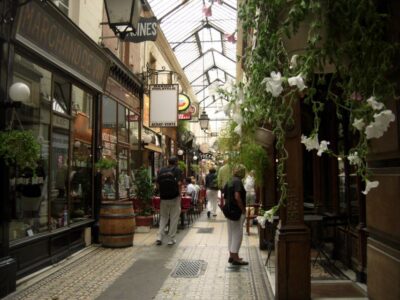
Le Marais is one of those Paris neighborhoods where you can accidentally spend an entire afternoon. On this tour, it is scheduled at about 20 minutes and described as full of stories and mysteries.
Admission is not included, which again signals orientation rather than a ticketed experience. Think of Le Marais here as your narrative bridge: it connects older Paris with the kind of fashionable, story-saturated streets that people love to explore on foot.
What I like about placing this stop mid-tour is pacing. By the time you reach Le Marais, you’ve usually already learned the city’s main “why” (origins and major historical centers). Now you get the “how it feels” and the “who lived there” energy—small details, odd corners, street-by-street character.
Tip: Le Marais is a great place to pick one side street to inspect more closely. If your guide gives you a hint—an old trade association, a famous family, a recurring motif—write it down and follow it later when the tour ends.



Montmartre: rebels, Sacré-Cœur area, and a view that makes sense
Montmartre can be overwhelming if you go in cold. This is where the choose-your-own approach really helps. The tour includes Montmartre for about 15 minutes and frames it around 10 legendary rebels of Montmartre that teach you to think differently.
In the feedback, guides are praised for making Montmartre workable even when it is busy. Emy, for example, is noted for energetic pacing and for explaining the panorama from the top of the hill, with Sacré-Cœur as a highlight. That type of guidance matters because Montmartre is not just a single sight—it is a whole geometry of streets climbing, views opening, and crowds changing direction fast.
What you should expect: this segment is usually best for viewpoint orientation and story cues—who these rebels were, what made Montmartre attract artists, and how the hilltop layout shapes the experience.
Possible drawback: 15 minutes goes fast. If you want long photo time at every viewpoint or want a deep inside look at Sacré-Cœur, plan extra time before or after the guided walk.
Eiffel / Invalides: the quick landmark ping that sets a later plan
The final landmark slot is Tour Eiffel / Invalides, listed at about 5 minutes and free. That short time is not about learning every detail of either site. It is about giving you a sense of where they sit in your mental map.
I love this kind of “landmark ping” when I’m building a multi-day Paris plan. After this, you can decide: should I return to see the Eiffel Tower up close at night? Should I plan a dedicated visit to Invalides? The guide’s job in this segment is mainly to connect those icons back to everything you’ve been learning.
How to use the moment: take one photo, note one direction for later, and pay attention to the relationship between viewpoints. Even a quick orientation helps you avoid the common frustration of walking past an icon and feeling like you never really understood it.
Price and value: what $180.24 per person buys you here
$180.24 per person is not cheap. You should ask what makes it worth it, and in this case the argument is pretty clear: you are buying time with a private guide and a tight narrative route across multiple iconic areas.
Because admission is not included at certain stops (Louvre and Notre-Dame area), the tour is not trying to sell you ticketed access. Instead, it sells interpretation—history, neighborhood logic, and the human story that makes street scenes feel less random.
This can be great value if you meet two conditions:
- You want guidance more than paperwork (you’re happy not to do full museum entry during the tour).
- Your schedule is tight and you want to cover several districts in one go without planning bus routes or guessing the best order.
One more detail: this is often booked about 14 days in advance. That doesn’t automatically mean it sells out quickly, but it does suggest this kind of format is popular—so you’ll get better pick of guide availability and timing if you book earlier.
Guide quality matters more than most people expect
This tour’s strongest praise isn’t about fancy extras. It is about guides who handle three things well: clarity, flexibility, and tone.
- Maryan is praised for giving a great overview of four arrondissements and staying flexible while covering what people wanted.
- Valentin is described as a true scholar with knowledge that covered both history and ballet, and he even spent extra time beyond the planned schedule.
- Helene earns top marks for humor and storytelling, with an almost cinematic flow of people, writers, artists, and actors who shaped Paris.
- Elena is credited with creating a romantic atmosphere for Valentine’s Day.
- Emy gets praise for keeping pace in busy Montmartre and for guiding the panorama and key sight highlights.
Even if you do not get these exact guides, the pattern tells you what to look for when you book: a guide who can explain Paris in human terms, not just dates and facts, and who can adjust when your interests shift.
Comfort, timing, and how to walk smarter in Paris
A tour that is about 2 hours means you need to show up ready to move. The good news: most of the stops listed are short and free to access, which makes it easier to keep momentum without long line headaches.
Here is how I’d handle it:
- Wear comfortable shoes, because multiple districts in a short window can add up to real distance.
- Have a phone battery plan. The tour uses a mobile ticket, so your device is part of the show.
- Keep your expectations aligned: this is orientation and storytelling, not a museum marathon.
Also note the tour is offered in English, and it is described as near public transportation. That helps if you want to build the rest of your day around the easiest subway and bus access.
Potential snags: when a museum closure changes the plan
With Paris, sometimes the venue plan changes. There’s at least one reported situation where a museum or foundation was closed on the chosen date, and the operator explained the issue was outside the guide’s control and tied to cancellation rules on the booking platform.
Here is the practical takeaway for you: if you are relying on a specific museum stop in the itinerary, keep an eye on opening hours close to your date. If a closure happens, ask your guide (or confirm with the provider) what alternative approach they can take with the time you still have.
That said, the overall tone from the information provided is that the company aims to resolve issues with alternatives or bonuses rather than leaving you stuck.
Who should book this tour, and who should skip it
This tour is a strong match if you want:
- A private guide and conversation.
- A fast way to understand several central districts rather than only one “deep dive” location.
- Story-based history that helps you walk away with a map in your head.
It may be less ideal if you want:
- A long museum visit with guided entry.
- A slow, detailed art-museum day.
- A totally jam-packed schedule where you can’t spare a few minutes for viewpoint and transitions.
Should you book the 3-hour walking tour around Paris
If your goal is to get oriented, learn what matters, and still have energy for the rest of your day, I’d book it. The private format and narrative route are the best parts of the deal, and the stop list is designed so you can build a smarter second day afterward.
My final decision rule is simple: if you’re willing to treat Louvre and Notre-Dame area moments as context rather than full admissions, you’ll get a lot out of the time. If those ticketed interiors are your top priority, you should plan separate museum time—and use this tour mainly for neighborhood storytelling.
FAQ
How long is the walking tour?
It runs for about 2 hours (listed as approx.), and it ends back at the meeting point.
Is the tour private?
Yes. It is a private tour/activity, meaning only your group participates.
What language is the tour offered in?
The tour is offered in English.
Do I need admission tickets for the stops?
Admission tickets are not included for the Louvre Museum and the Cathedrale Notre-Dame de Paris. The rest of the listed stops are marked as free.
Is there a mobile ticket?
Yes, it includes a mobile ticket.
Where does the tour start and end?
It starts in Paris, France, and ends back at the meeting point.
Is free cancellation available?
Yes. You can cancel up to 24 hours in advance for a full refund.
How far in advance should I book?
On average, it is booked 14 days in advance.
Are service animals allowed?
Yes, service animals are allowed.
Is it easy to reach by public transportation?
Yes, it is listed as near public transportation.