REVIEW · PARIS
Paris: Cruise on The Canal Saint Martin and The Seine River
Book on Viator →Operated by France Tourisme · Bookable on Viator
Locks and a tunnel make Paris feel new. This 2-hour cruise strings together Canal Saint-Martin engineering with a classic Seine highlights run, all with live guide talk. You get history in motion, plus photo angles you just can’t get from the sidewalks.
I especially love two things: the close-up locks experience where you watch water levels rise and fall, and the photo-friendly Seine viewing of Notre-Dame, the Louvre, Orsay, and the Eiffel Tower. The guide’s narration helps you connect the dots fast, even if you’ve only read a little about Paris before you arrive.
One thing to plan around: the first half can feel slower because of the long underground tunnel stretch. If you go on a hot day or in a crowded moment, you’ll want a strategy for heat and hearing the commentary.
In This Review
- Key takeaways before you go
- A Canal-and-Seine combo that saves your feet
- Canal Saint-Martin: trees, iron bridges, and cafés with a purpose
- Watching the locks: the most memorable part of the whole system
- The swing bridge and the canal’s daily choreography
- Under the Bastille: a tunnel that turns Paris quiet
- Port de l’Arsenal to the Seine: houseboats and the river gateway
- Île Saint-Louis and Île de la Cité: start seeing Paris like a map
- Notre-Dame, the Louvre, Tuileries, Orsay, and the bridge lineup
- Hôtel de Ville, the promenades, and feeling like you’re part of the Seine
- Pont Alexandre III, Grand Palais, Les Invalides: beauty with context
- The Eiffel Tower moment: the ride builds toward it
- Ending at Quai de l’Horloge near Pont Neuf: keep the day going
- Price and value: why $42 feels fair for what you see
- Practical tips: heat, sound, and getting the best seat
- Who should book this and who should skip it
- Should you book this Canal-and-Seine cruise
- FAQ
- How long is the Canal Saint-Martin and Seine cruise?
- Where do I meet, and where does the cruise end?
- Is the tour offered in English?
- Does the cruise include the canal locks and the underground tunnel?
- Is the tour canceled if weather is bad?
- What is the cancellation window and group size?
Key takeaways before you go
- Canal Saint-Martin’s locks and swing bridge: real-world water logistics, not just scenery.
- A surprising underground tunnel under Bastille: the city noise drops and the ride turns quiet.
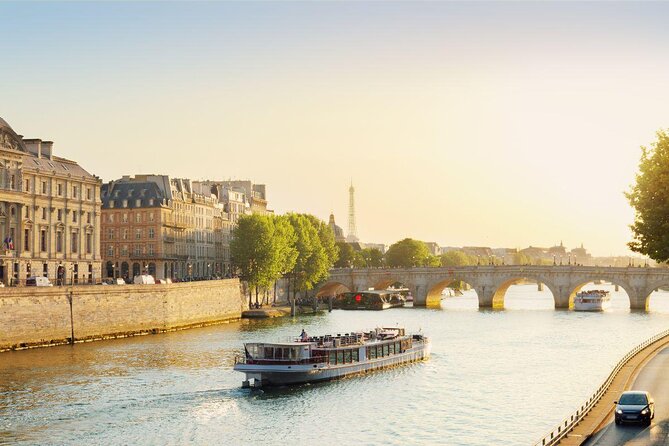
- Seine icons from the water: Notre-Dame to Eiffel Tower without stacking up hours of walking.
- Better-than-you-think photo angles: multiple landmarks line up along the river curve.
- Plan for deck comfort: upper-deck sun and sound levels can affect your experience.
- A smart ending point: you disembark near Pont Neuf, ready to keep exploring on foot.
A Canal-and-Seine combo that saves your feet
I like this tour because it’s designed to do two jobs at once. First, it shows you the Canal Saint-Martin side of Paris, with locks, iron footbridges, cafés, and canal-life details. Then it switches to the big-name Seine sights so you don’t have to spend your limited sightseeing time crisscrossing the city.
At around 2 hours, it’s also a good fit for your first full day or your last afternoon when you want highlights but not a full-on day plan. The live narration (offered in English) keeps the river cruise from feeling like a moving sightseeing slideshow. And because you’re on the water, you get a different sense of scale and placement, especially around Île de la Cité and the main bridges.
You can also read our reviews of more boat tours in Paris
Canal Saint-Martin: trees, iron bridges, and cafés with a purpose
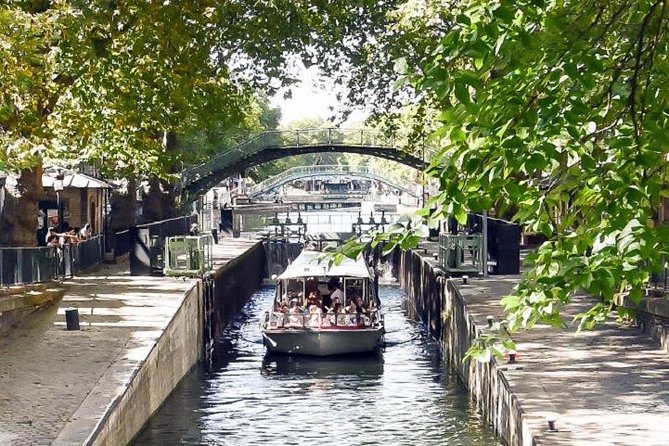
Your cruise starts at 73 Quai de Valmy, along the Canal Saint-Martin waterway lined with trees, iron footbridges, and lively waterside terraces. The guide explains why the canal was created in the first place: it was built to bring fresh water into Paris. Once you hear that, the canal stops being just pretty and becomes part of how the city actually worked.
You’ll cruise past places like Hôtel du Nord, and you’ll get a sense of how this district balances old industrial bones with today’s cafés and boutiques. The best part here is how easy the experience feels. You’re not scanning street corners or waiting for timed museum entries, you’re simply moving through a neighborhood at a comfortable pace while the commentary ties it together.
A small practical note: early in the trip you’ll likely want to be ready for photos. The light can change quickly around the water, and the canal segments move along steadily.
Watching the locks: the most memorable part of the whole system
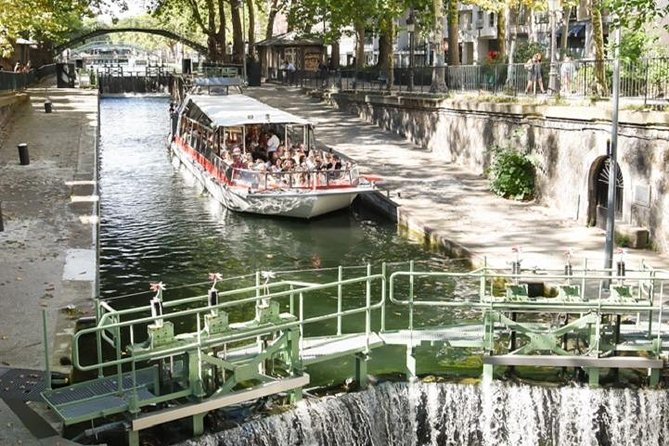
Then the tour leans into what makes canal travel so distinctive: the locks. You pass through gates that slowly open and close while the water level rises and falls around the boat. It’s one of those moments that feels equal parts engineering and everyday life.
This is also the section where you’ll notice canal residents and routines. You see locals on the quays, walkers crossing iron footbridges, and that contrast between older structures and modern waterside hangouts. If you care about how cities function beyond monuments, this part delivers.
Deck positioning matters. On busy departures, people often gather toward the front on the upper deck, so the lock action can be partly obscured. If you want the full view of the gates and water movement, try to claim a spot a bit away from the most crowded front area when you board.
The swing bridge and the canal’s daily choreography
After the locks, the cruise continues toward the swing bridge on Canal Saint-Martin. You’ll see how road traffic briefly stops while the boat passes, which gives you a real sense of how the canal interacts with street-level life.
This stretch works well because it’s short and visual. You’re watching a mechanical solution in motion, and the guide uses that to explain the canal’s role in both logistics and leisure. It’s a fun moment because the canal doesn’t feel frozen in the past. It’s still active infrastructure, just paired with a very Parisian social vibe.
Under the Bastille: a tunnel that turns Paris quiet
One of the tour’s biggest surprises is the long underground tunnel beneath the Bastille area. As you enter, the atmosphere changes fast. The vaulted passage blocks the usual city sound, and you glide along in near-silence while daylight shafts appear from above.
I like this segment because it breaks the expected pattern of a sightseeing cruise. Most river rides stay above ground the whole time. Here, the canal literally goes underground, and it turns the experience into something you don’t forget.
If you’re someone who prefers open-air scenery for the entire ride, this is the part to think about before you book. Some people feel the first half is heavier on tunnel time, and that’s not wrong. The payoff is that you get to experience something truly unusual.


Port de l’Arsenal to the Seine: houseboats and the river gateway
After the tunnel, the boat heads to Port de l’Arsenal, where Canal Saint-Martin connects to the Seine. This basin is interesting because you see both the calm leisure side and the canal-to-river transition.
Houseboats and pleasure craft moor here, and the guide explains how the former commercial port has been transformed into a pleasant harbor and garden. It’s a nice mood shift, like stepping from a tucked-away canal world into the wider, brighter feel of the Seine.
This section is also when your photo opportunities start multiplying. The river opens up, and the city begins to show its full curve and spacing.
Île Saint-Louis and Île de la Cité: start seeing Paris like a map
Once you join the Seine, the big icons come closer and the views become more postcard-like. You’ll pass Île Saint-Louis, known for its elegant 17th-century façades, and then you’ll get your first real glimpse of Île de la Cité, the historic heart of Paris.
From the water, you understand the river’s layout immediately. You see how the bends guide the city’s main bridges and how landmarks line up across banks. Even if you’ve been to Paris before, this angle helps you “read” the city in a different way.
I also appreciate that the guide points out what you’re actually looking at in real time. It turns your phone camera from a random habit into a tool you use with intent.
Notre-Dame, the Louvre, Tuileries, Orsay, and the bridge lineup
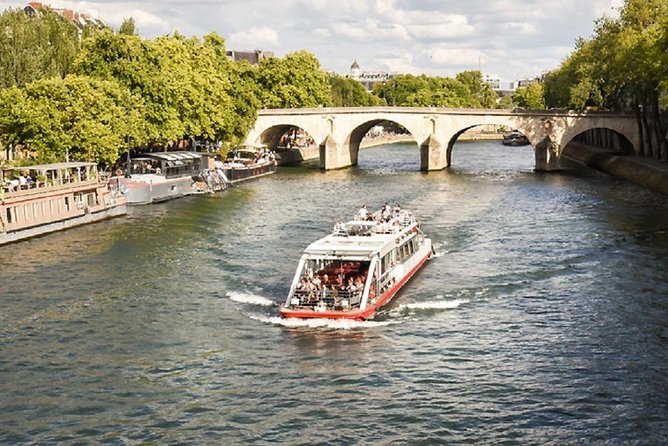
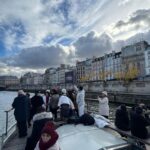
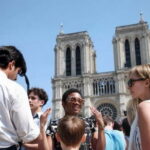
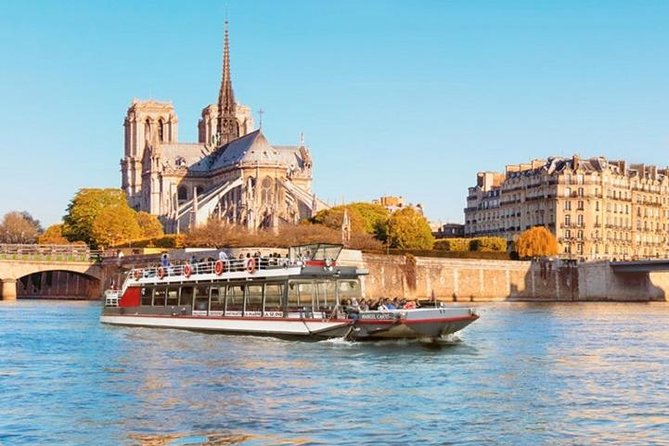
As the cruise continues along the UNESCO-listed riverbanks, the narration focuses on the monuments people most want to see. You’ll pass Notre-Dame Cathedral, the Conciergerie, the Louvre museum, the Tuileries gardens, the Orsay Museum, and later, the Eiffel Tower approach.
The open deck gives you a clear shot of the riverfront, and the experience is paced so you can pause for photos without feeling rushed. When the guide talks about architecture and history in context, it helps those buildings stop being just names.
A highlight for many photo folks is the view around the Pont des Arts footbridge. It’s one of the best viewpoints in Paris, and from the boat you can catch a strong single-glance lineup of key sights along the river.
Hôtel de Ville, the promenades, and feeling like you’re part of the Seine
You’ll also pass the ornate Hôtel de Ville (City Hall) and the stretch where the Seine promenades feel most lived-in. This is where you get the “local life” feeling from the water: people strolling, chatting, and spending time by the river.
This matters because it’s not only about architecture. Paris is also routines, and the Seine is one of the city’s main shared spaces. You’re not just viewing a museum of monuments, you’re watching a daily scene.
If you’re traveling with someone who doesn’t want to read every plaque, this section usually wins them over. The river energy is gentle, and the pace feels right.
Pont Alexandre III, Grand Palais, Les Invalides: beauty with context
Further along, you pass Pont Alexandre III, widely regarded as one of Paris’s most beautiful bridges. It features golden statues and Art Nouveau lamps, which look especially impressive from the waterline.
Near that area you’ll also see the glass roof of the Grand Palais, and on the Left Bank you’ll spot the golden dome of Les Invalides, where Napoleon is buried. The guide connects these sights so they don’t feel like separate stops. It becomes a continuous story along the same river corridor.
The Eiffel Tower moment: the ride builds toward it
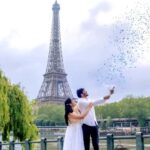
As you head toward the west end, the Eiffel Tower comes into full view above Trocadéro and Champ de Mars. This is the moment many people wait for, and the timing often works well because the tower reveals itself gradually rather than appearing all at once.
In the evening, the tower lights up, and the cruise gives you a front-row vantage. If you’re there at the right time, you’ll catch the sparkle when cameras come out and everyone seems to settle into that shared wow moment.
This is also where having the right spot on deck matters. If the boat is busy, you may want to move toward a less crowded area so you can see and shoot without getting elbow-to-elbow.
Ending at Quai de l’Horloge near Pont Neuf: keep the day going
The cruise ends at 19 Quai de l’Horloge on Île de la Cité, near Pont Neuf, Paris’s oldest bridge. I like this ending because it’s not a dead-end. You step out near central sights and can choose your next move.
From here, it’s easy to wander into the Latin Quarter, cross toward the Right Bank, or aim for places like Sainte-Chapelle. If you want a low-effort wrap-up, you can also simply grab a drink nearby and keep watching the river traffic.
Price and value: why $42 feels fair for what you see
At about $42.05 per person for roughly 2 hours, the value comes from compression. You get canal engineering, a tunnel surprise, and a full Seine highlight path without doing a long, tiring walking day.
You’re also paying for the main thing that makes this tour more than “sit and look”: live narration in English. With a good guide, it’s like adding context to every landmark you pass. And when the commentary is timed with what you’re actually seeing, it’s genuinely useful.
The boat setup can affect how much you get out of it. Some people find it hot on the upper deck in summer, and sound can be tricky if the crowd is loud. Still, even with those trade-offs, the overall route covers a lot of Paris in a short chunk of time.
Practical tips: heat, sound, and getting the best seat
Here’s how I’d make this cruise work smoothly.
First, plan on arriving early. One practical tip from real experience is getting there around 30 minutes ahead, so you can board calmly and choose a spot upstairs or down. If you wait until the last minute, you’ll likely lose your preferred view.
Second, dress for sun and heat if you’re going in summer. The upper deck can get very warm, and people tend to cluster where the views are best. Bring sunscreen and water if you’re sensitive to heat.
Third, think about hearing the guide. Even with live narration, the sound can be hard to catch if the group gets loud or if there’s multiple-language talking at the same time. If you want the clearest audio, aim for a spot where you can hear the guide without being swallowed by background noise.
Finally, it helps to know the human side of the ride. Some guides stand out for their friendliness and pacing, and you may hear examples of guides like Lea, Ben, or skilled onboard leadership like captain Pasquale. Either way, if the sound isn’t perfect, leaning in a bit and watching the landmarks appear as they’re mentioned can help you catch the key points.
Who should book this and who should skip it
Book it if you want a high-coverage Paris experience. It’s ideal if you like seeing how cities work (locks, bridges, tunnel engineering) and you also want the big-name monuments handled in one flowing route.
It’s also a good choice for mixed groups. Someone who only wants Eiffel and Notre-Dame gets those views, and someone who likes practical details gets the canal system.
Consider a different option if you strongly prefer open-air sightseeing the whole time. The tunnel portion under Bastille is part of the charm, but it’s also the part that can feel like the “slow stretch” for people who want constant outdoor scenery.
Should you book this Canal-and-Seine cruise
I think this is a solid pick when you want Paris highlights with a real twist. The combo of Canal Saint-Martin locks and the underground tunnel gives you a story you can’t replicate by walking around the city, and the Seine portion delivers the classic landmarks with strong photo angles.
If you’re flexible about the first half taking its time and you show up early to grab a good spot, you’ll likely feel like you got your money’s worth. For me, the biggest reason to book is simple: you see two sides of Paris in one ride, and the narration turns the views into something you understand, not just something you pass by.
FAQ
How long is the Canal Saint-Martin and Seine cruise?
It lasts about 2 hours.
Where do I meet, and where does the cruise end?
You start at 73 Quai de Valmy, 75010 Paris, and you end at 19 Quai de l’Horloge, 75001 Paris on Île de la Cité, near Pont Neuf.
Is the tour offered in English?
Yes, it’s offered in English.
Does the cruise include the canal locks and the underground tunnel?
Yes. You pass through locks on Canal Saint-Martin and you also go through a long underground tunnel beneath the Bastille area.
Is the tour canceled if weather is bad?
The experience requires good weather. If it’s canceled due to poor weather, you’ll be offered a different date or a full refund.
What is the cancellation window and group size?
You can cancel for a full refund up to 24 hours in advance. The tour is listed with a maximum of 100 travelers.