REVIEW · PARIS
Medieval Paris: Notre Dame, Sainte Chapelle and Conciergerie
Book on Viator →Operated by Toorers · Bookable on Viator
Medieval Paris is right on your doorstep. This private, 3-hour walk concentrates on three heavy-hitters—Notre-Dame, Sainte-Chapelle, and the Conciergerie—and ties them together with clear stories you can actually use to understand what you’re seeing. I like that the tour doesn’t just point at monuments. It explains the why behind the stone, stained glass, and prisons.
My favorite part is the way your guide can tailor the pace and questions. Guides like Elise Girard, Isabelle (with drawings and photos on an iPad), and Raphaëlle (who even adjusted for kids’ interests) kept things lively while still grounded in the facts. The only drawback to flag: time is tight. You’ll see key sections, but you won’t linger forever inside each stop—so if you want lots of solo wandering, plan extra time on your own.
In This Review
- Key Highlights to Expect
- Why This Medieval Paris Route Works (and Saves Your Energy)
- Notre-Dame on Île de la Cité: Gargoyles, the 2019 Fire, and the Facade You Can Read
- Sainte-Chapelle’s Stained Glass: Royal Power in One Super-Compressed Hour
- Conciergerie: From Royal Palace to Prison Fear (and the Marie Antoinette Beat)
- Notre-Dame Inside Again: What to Notice After the Outside Lesson
- Guides Make or Break It: What Their Styles Tell You
- Price and Value: $718.94 Per Group for Up to Four
- Who This Tour Fits Best (and Who Should Add Time)
- Before You Go: Small Things That Matter on Île de la Cité
- Should You Book Medieval Paris: Notre-Dame, Sainte-Chapelle and the Conciergerie?
- FAQ
- How long is the Medieval Paris tour?
- Is this tour private?
- What group size is it for?
- Is the tour offered in English?
- Are tickets included?
- Do I need a time slot to enter Notre-Dame?
- Where does the tour start and end?
- What happens if the Conciergerie is closed?
- Do I need to bring a ticket on my phone?
- Can I cancel for free?
Key Highlights to Expect
- Gargoyle vs. grotesque at Notre-Dame so you stop guessing what’s decoration and what’s function
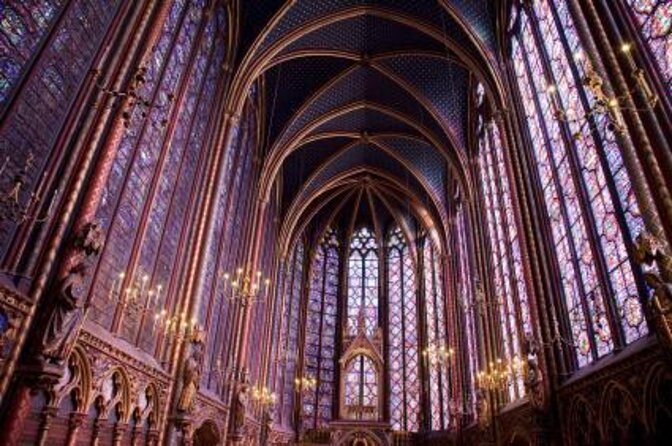
- Sainte-Chapelle’s stained-glass storytelling, including what the chapel was built to house
- Conciergerie prison details, from social-status cells to the Salle des Gens d’Armes
- Marie Antoinette’s route recreated in plain terms, not just as a scary footnote
- Short walks between sites on Île de la Cité, so you spend your time looking, not traveling
Why This Medieval Paris Route Works (and Saves Your Energy)
This tour makes sense because all three main sights sit close together on Île de la Cité. You’re not crisscrossing the city. You’re moving through one historical “layer cake” of medieval Paris: church power, royal pageantry, then revolutionary justice.
With a private group (up to four people), you also get something rare in Paris sightseeing: the chance to ask follow-ups without feeling rushed. In real reviews, guides were praised for staying prompt, helping people start smoothly, and answering questions on the spot. That matters, because medieval Paris can feel overwhelming. It’s stone, symbolism, and politics all mixed together. A guide helps you decode what you’re looking at so it clicks.
You’ll also appreciate the format. It’s about 3 hours total, with guided time inside the paid sites and outside-focused context around Notre-Dame. That structure keeps the “I’m tired of standing” risk low, while still giving you real information.
You can also read our reviews of more tours and experiences in Paris.



Notre-Dame on Île de la Cité: Gargoyles, the 2019 Fire, and the Facade You Can Read
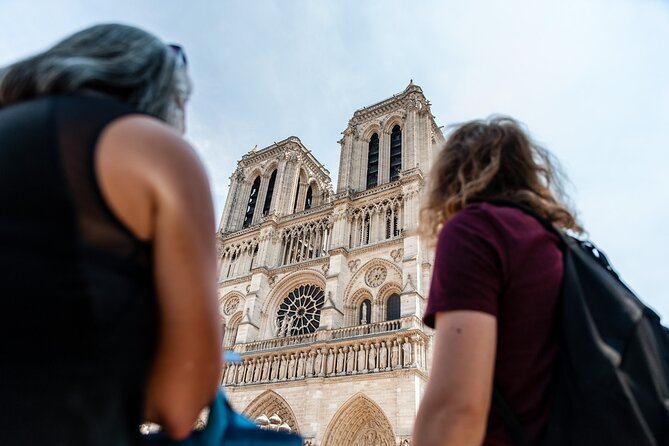
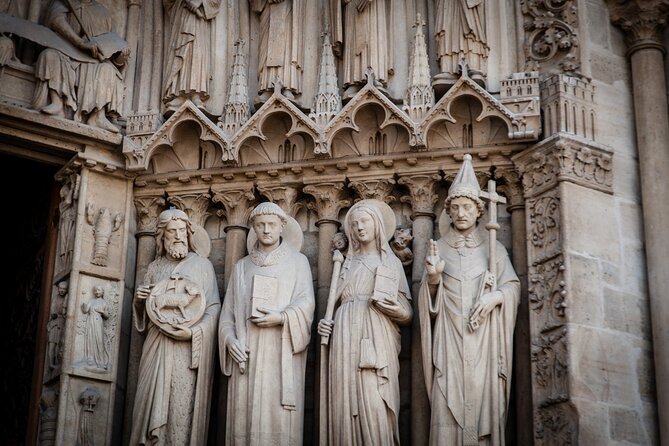
You begin on Île de la Cité in front of Notre-Dame. This is where the tour gives you a quick skill that makes future looking easier: how to spot and understand details on the facade—starting with a simple but satisfying lesson on the difference between a gargoyle and a grotesque.
You’ll also get context for the building’s modern reality. After the 2019 fire damaged parts of Notre-Dame’s roof and spire, you’ll hear what’s changed and what’s been addressed. The guide keeps things practical, focused on what you can actually observe from outside: sculpted stonework, the design logic, and how Notre-Dame became the kind of monument people wanted to preserve even as it evolved.
What I like for you here: the guide doesn’t treat Notre-Dame like a static postcard. You’ll learn how to “read” the facade instead of just staring at it.
One consideration: the tour includes time both outside and then later inside. If you’re the type who wants only interiors, you’ll still want to spend the outside time carefully, because that facade lesson pays off when you go back in.
Sainte-Chapelle’s Stained Glass: Royal Power in One Super-Compressed Hour
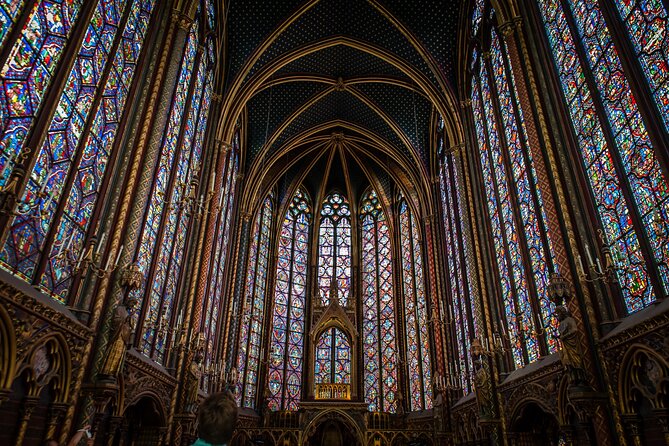
Then you head to Sainte-Chapelle. This is the stop that makes people stop walking. The chapel is famous for walls made entirely of stained glass, and your guide uses that spectacle to explain the bigger idea: medieval kings didn’t just commission art—they built political statements.
You’ll learn about the king behind the project and the high-profile relic the chapel was designed to house. The guide connects the budget, the ambition, and the symbolism so you understand why stained glass was worth the cost. (It wasn’t decoration-for-decoration’s-sake. It was messaging in light.)
Depending on your guide and your pace, you’ll likely get a clear look at how the chapel is organized, including the separate lower and upper chapel experience. One review specifically mentioned the contrast between what feels earthly and what feels divine, and that’s exactly the kind of effect the building is designed for.
Why this hour is such good value: Sainte-Chapelle can be easy to “see” but hard to “understand.” With a private guide, you don’t waste time on random guessing. You’re given a narrative, then shown the details that support it.
Trade-off: one hour goes fast. If you want to sit and stare until your phone battery dies, do that later on your own time. The tour gets you oriented and informed.
Conciergerie: From Royal Palace to Prison Fear (and the Marie Antoinette Beat)
The Conciergerie is where the mood shifts. You’re walking into a building that served as a royal palace and later became an infamous prison. Your guide explains it in two layers: how the space worked in everyday terms, and how the Revolution turned those spaces into history.
You’ll start with big visual cues, including the Salle des Gens d’Armes, described as the world’s largest Gothic hall. The vaulted ceilings are impressive, but what you’ll remember is how the guide frames what the hall meant and why it was designed that way.
Then comes the prison side. You’ll see old cells and learn that comfort wasn’t equal; it varied by social status. That detail matters because it changes how you experience the rooms. You’re not just looking at stone. You’re imagining the system that decided who sat where and why.
The story also brings you to the Revolution’s most famous turning point: the French royal executions, including Marie Antoinette’s fateful trip to the guillotine. The guide keeps it clear and chronological, so it lands as a human story rather than a list of dates.
What you’ll like if you love history with context: guides were praised for enthusiasm and for making the palace-to-prison transformation feel real. If you’re the type who likes asking questions, this stop is perfect because it has loads of angles—architecture, power, bureaucracy, punishment.
Time reality: this is the shortest guided stop (about 30 minutes). You’ll see key areas and get the story, but if you want a long, independent exploration, build in additional time after the tour.
Notre-Dame Inside Again: What to Notice After the Outside Lesson
After Sainte-Chapelle and the Conciergerie, you circle back toward Notre-Dame for the inside experience. One of the best tricks this tour uses is repetition with a purpose. You learn outside first, then step inside knowing what to look for—especially around the sculptural details like gargoyles and the broader mix of old and modern restoration.
The guide points you toward what matters in the renovated space. Notre-Dame’s interior is a different kind of awe than the facade or stained glass. Inside, it’s about scale, light, and the sense that craftsmanship survived disaster and time—and is still being repaired and understood.
You’ll also get a sense of how the restoration story fits into the building’s long life. If you only come once, you might miss the link between medieval design and today’s conservation work. Here, you get the link.
Practical tip for you: Notre-Dame interior access is free and open, and the tour’s guided access is meant to help you experience it smoothly. You can book a free time slot on Notre-Dame’s official website, and you can also walk in, but queues can get long at peak times. If you want less stress, plan the free time slot when you can.






Guides Make or Break It: What Their Styles Tell You
This tour is built for great guides, and the reviews give you a feel for what to expect.
- Elise Girard was praised for a smooth start, strong English, and clear pacing through Sainte-Chapelle and the Conciergerie, including handing you over to explore Notre-Dame once you’d gotten the essentials.
- Isabelle earned praise for showing background material using an iPad and for taking the time to make Saint-Chapelle and Notre-Dame feel understandable, not just impressive.
- Raphaëlle was highlighted as passionate and warm, and one review noted she tailored the tour to keep kids interested.
- Thomas and Erlon were praised for detailed Conciergerie knowledge and enthusiasm.
- Anaïs and Stefanie were both noted for friendliness and making the explanations feel simple.
The practical takeaway: if you want your tour to feel personal—more like a conversation with a local than a recital—this format fits well. Your guide has room for questions, and you won’t be herded like a factory product.
Price and Value: $718.94 Per Group for Up to Four
Let’s talk dollars without making it complicated.
This tour costs $718.94 per group for up to four people, running about 3 hours. That means your real per-person cost depends on how many of you are in the group. With four people, the value lands much better than if you’re a solo traveler or just two.
The bigger value lever is that admission is covered for the paid stops—Sainte-Chapelle and the Conciergerie—and the tour includes guided access and explanation that helps the sites make sense. Notre-Dame’s interior is free on its own, but having guided structure (and tips on what to notice) saves you time and confusion.
Also, because it’s private, you’re not sharing your best question moments with strangers. For many people, that’s the difference between a “saw the places” trip and a “I understand what I saw” trip.
Who This Tour Fits Best (and Who Should Add Time)
This tour is ideal if you:
- love medieval Europe and want the connections between church, royalty, and Revolution
- like photos, but also want the why behind the photo opportunities
- enjoy guided explanations and plan to ask questions
It’s also a smart choice if you’re short on time in Paris. Since the sights are close, you can get a lot of historical impact in about 3 hours without a long transit shuffle.
Add your own time if:
- you want slow museum-style wandering in Sainte-Chapelle or the Conciergerie
- you’re traveling with someone who needs quiet time after each stop
- you’d like additional Notre-Dame interior time beyond the guided chunk
Before You Go: Small Things That Matter on Île de la Cité
A few practical points so your experience stays smooth:
- Wear shoes you trust. Île de la Cité is walkable, but you’ll still be on your feet.
- Bring your questions. If something feels off—style, symbolism, dates—this tour format supports follow-ups.
- If Notre-Dame queues look gnarly, having a plan helps. Booking a free time slot on the official site can reduce waiting.
One more helpful note from the review style: guides were praised for being flexible about timing and for helping with the day’s logistics when it mattered. If you have a time constraint—like getting back to a cruise—say so at the start. A good guide will try to help you manage it.
Should You Book Medieval Paris: Notre-Dame, Sainte-Chapelle and the Conciergerie?
I’d book it if you want medieval Paris with structure and story, not just sightseeing. The combination works because Notre-Dame sets the tone, Sainte-Chapelle shows medieval ambition made visible, and the Conciergerie turns power into consequence. The private format (up to four) makes the whole thing feel personal, and guides like Elise, Isabelle, Raphaëlle, and Thomas show how strong this experience can be when your guide is engaged.
I’d hesitate only if you need lots of unstructured time inside each building. This is a tight, high-impact route. It’s great for orientation and understanding, then you can return later if you want to linger.
If you’re craving medieval detail and you like your Paris tours guided, this one is a very solid pick.
FAQ
How long is the Medieval Paris tour?
It runs about 3 hours.
Is this tour private?
Yes. Only your group participates.
What group size is it for?
It’s priced for up to 4 people per group.
Is the tour offered in English?
Yes, it’s offered in English.
Are tickets included?
Tickets are included for Sainte-Chapelle and the Conciergerie, and Notre-Dame entry is free on its own (the tour includes guided access and help with timing).
Do I need a time slot to enter Notre-Dame?
Notre-Dame interior access is free. You can book a free time slot on the official website, or you can walk in, but queues can be long during peak times.
Where does the tour start and end?
It starts at Cité75004 Paris, France, and ends back at the meeting point.
What happens if the Conciergerie is closed?
If Conciergerie closures apply, the included alternative is a visit to the Cluny Middle Ages Museum.
Do I need to bring a ticket on my phone?
You’ll have a mobile ticket.
Can I cancel for free?
Yes. You can cancel up to 24 hours in advance for a full refund. If you cancel less than 24 hours before the start time, you won’t receive a refund.