REVIEW · PARIS
Louvre masterpieces in 2 hours
Book on Viator →Operated by ALICE, professional guide in Paris · Bookable on Viator
Two hours in the Louvre can change everything. This small-group visit pairs a trained Louvre guide from the Ecole du Louvre with a tight route that hits big-name masterpieces and also points you toward lesser-seen objects you can spot later on your own. The cap of eight people keeps it personal, and the tour is offered in English, French, and Russian, so you’re not stuck with a generic overview.
What I like most is the way the guide explains what you’re looking at, not just what it is. You get the basics you need for Greek sculpture—including how to read the attributes you see next to figures—then you land on Venus de Milo with context that makes the statue feel less like a museum poster and more like a message.
One consideration: museum entrance tickets are not included, so you’ll need to buy them separately (kids under 18 don’t need tickets). Also, I did spot a couple serious past complaints about a no-show and payment pressure—rare, but enough that I recommend double-checking meeting details right before you go.
In This Review
- Key things to know before you go
- A 2-hour Louvre sprint that still feels human
- Where you meet, and how the timing sets you up
- Stop 1: starting inside the Louvre’s 13th-century warrior castle walls
- Greek sculpture stop: learning to read attributes in the galleries
- Venus de Milo with context you can actually use
- Renaissance throne-hall time: caryatids, the Three Graces, and a sense of scale
- Paintings and power: Napoleon and Josephine, then the Italian gallery line
- What makes Alice’s guiding style worth the money
- The price question: is $174.53 for 2 hours good value?
- Language options: English, French, and Russian
- Who this tour is best for
- Should you book this Louvre masterpiece tour?
- FAQ
- How long is the Louvre tour?
- What is the meeting point for the tour?
- Where does the tour end?
- Is museum admission included in the price?
- How many people are in the group?
- What languages are available?
- Do I get a mobile ticket?
- Who leads the tour?
- What’s the cancellation option if plans change?
Key things to know before you go
- Max group size of eight means more questions and less standing in a crowd
- Ecole du Louvre–trained guide gives context that you can carry into the rest of the museum
- Core route in 2 hours: castle walls, Greek sculpture, Renaissance throne hall, and painting galleries
- Venus de Milo plus “left off most itineraries” pieces helps you see more than the standard checklist
- Mobile ticket format reduces paper hassle on the day
A 2-hour Louvre sprint that still feels human
The Louvre is enormous. If you go in with only a list of famous artworks, you can spend most of your time walking and still miss what makes each piece click. This tour is built like a sprint with good coaching: you get a focused route, and your guide gives you the story threads that help you see the museum’s logic instead of treating it like random rooms full of stuff.
The tour runs about two hours, and that time limit matters. It means you’ll leave with a stronger sense of what to look for next, not because you’ve “seen everything,” but because the guide trained your eye. And because the group is capped at eight people, you’re less likely to get lost behind slower walkers or have to crane your neck for details.
You can also read our reviews of more tours and experiences in Paris



Where you meet, and how the timing sets you up

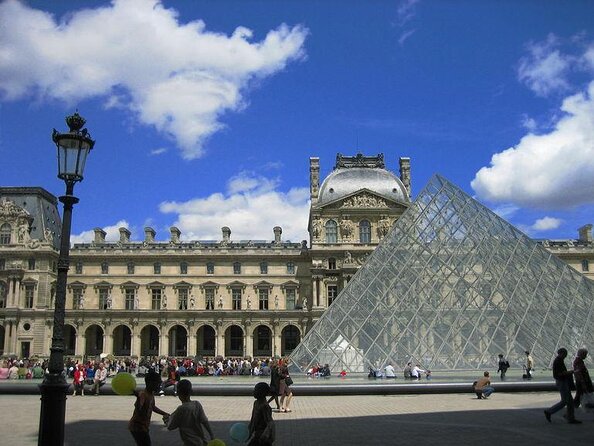
The meeting point is Carrousel du Louvre, at 99 Rue de Rivoli, near the Louvre entrance zone. You finish at the Musée du Louvre, still in the central area, with the tour ending at the museum’s exhibition space so you can keep going if you want.
Here’s the practical advantage: starting at the Carrousel side usually means you’re close to a main flow of entrances and transit connections. Two hours also works well if you have limited time in Paris, especially if the Louvre is one of those “must-do” stops you’d otherwise over-plan.
If you’re the type who likes to linger in front of art for long stretches, this won’t replace a full-day visit. Think of it as the best kind of warm-up. You’ll walk in faster, understand more, then decide where to slow down after the tour ends.
Stop 1: starting inside the Louvre’s 13th-century warrior castle walls
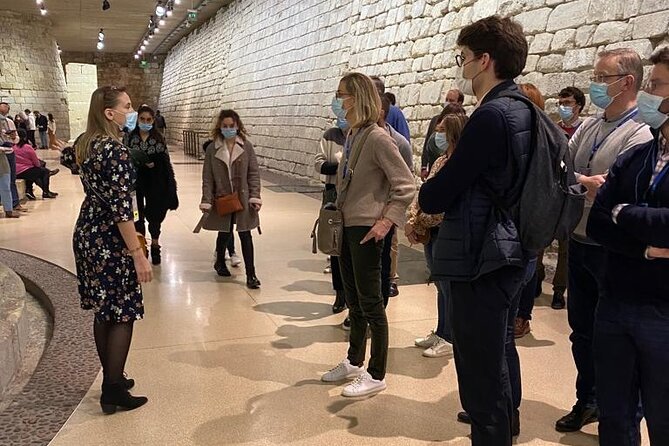
One of the smartest choices in this tour is where it begins: the Louvre’s ancient walls of a 13th-century warrior castle. That’s not just a history flex. It changes how you experience the building.
Most first-time visits treat the Louvre like a stand-alone art warehouse. Starting with the old fortress walls reminds you that this place wasn’t designed at the beginning for paintings. It evolved. Once you get that idea, you start noticing the building as part of the story, not just a container for masterpieces.
You also get an immediate lesson in how the Louvre’s past is layered. The walls make it easier to remember that the museum grew through time—architecture, power, and taste shifting together.
Greek sculpture stop: learning to read attributes in the galleries
After the fortress-walls intro, the route moves you into the museum’s Greek sculpture area. This part is valuable because it tackles a common problem: you might recognize names, but you don’t always know what to look for.
The guide focuses on why attributes matter. In Greek sculpture, those are the visual clues—objects, symbols, and details—that help identify a figure or explain a role. Without that mindset, you can stare at a statue and miss what the maker was signaling.
Once you learn that framework, everything you see next becomes easier to decode. You stop asking only, “What is this?” and start asking, “What is the figure doing in the language of its culture?”
Venus de Milo with context you can actually use
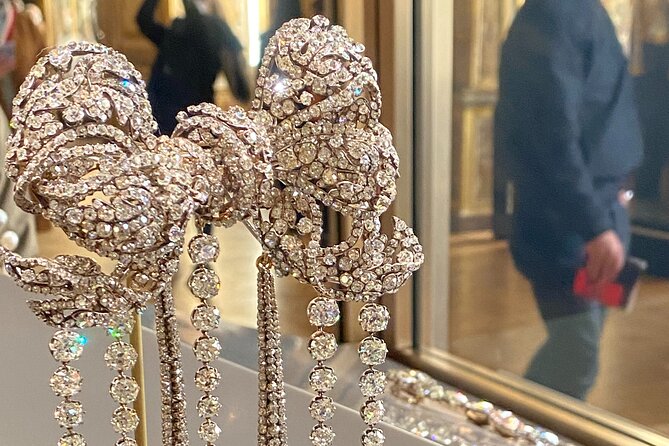
Then comes the big moment: Venus de Milo. You’ll see why it’s famous quickly, but the real win is the guide’s context around how to interpret Greek sculpture in a practical way.
You don’t need a degree to enjoy this statue. But you do need a couple of keys, and that’s what this tour tries to give you. If the attributes lesson clicks, you’ll move through the next Greek pieces with more confidence—less guessing, more noticing.
This is one reason I like small-group formats here. When a guide can watch your attention, they can point out the details you’d otherwise walk past. And in a group of eight, those pointers land without you feeling rushed.






Renaissance throne-hall time: caryatids, the Three Graces, and a sense of scale
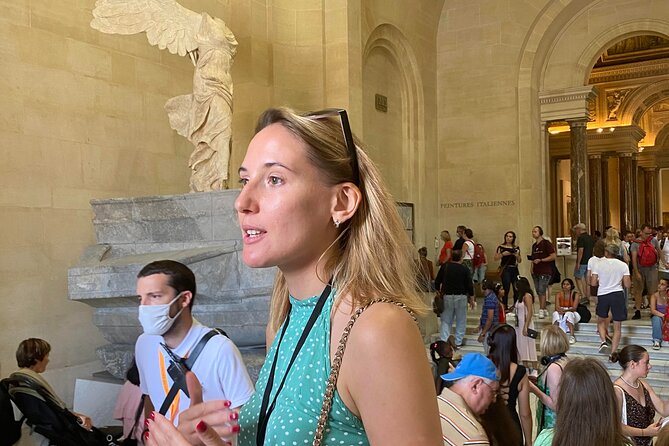
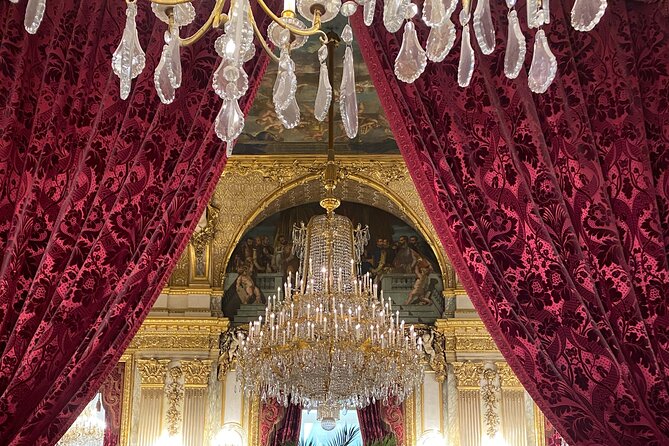
Next, you head to an early Renaissance throne hall. This is where the tour shifts from “spot the statue” to “understand the room.”
In that hall, you’ll encounter features like caryatids and the Three Graces, plus other sculptures dated back to about 500 B.C. That date anchor is important because it helps you place Greek artworks inside later decorative programs. The Louvre doesn’t just preserve works—it arranges them into conversations across centuries.
Renaissance visitors cared about classical models. Seeing these sculptures in a throne-hall setting helps you understand that the past wasn’t treated like a museum item. It was treated like raw material for new meaning.
A drawback here: if you hate standing and waiting, this might feel like the only “museum-y” part of the tour. Rooms in the Louvre can be crowded, and the guide may pause to explain before you can move on. Still, the payoff is that you’ll get a reason for the stop, not just a name on a wall.
Paintings and power: Napoleon and Josephine, then the Italian gallery line
After sculpture, the tour shifts into Renaissance painting territory. You’ll visit the hall where Napoleon celebrated his marriage to Josephine—a detail that instantly makes the Louvre feel political and personal, not just artistic.
That matters for your understanding, because it shows how art spaces overlap with state power. Paintings aren’t hanging there in a vacuum. They were chosen, displayed, and supported within systems of influence. Once you connect the palace-life story to the art, you’ll read the galleries differently.
From there, you continue into the Grande Galerie area with Italian painting. This gives you a nice chain: Greek sculpture logic, then Renaissance staging and storytelling, then painting as the next major language. If you only had time for one major art stop, you could argue for the painting rooms. But the route makes the paintings feel earned, not random.
What makes Alice’s guiding style worth the money
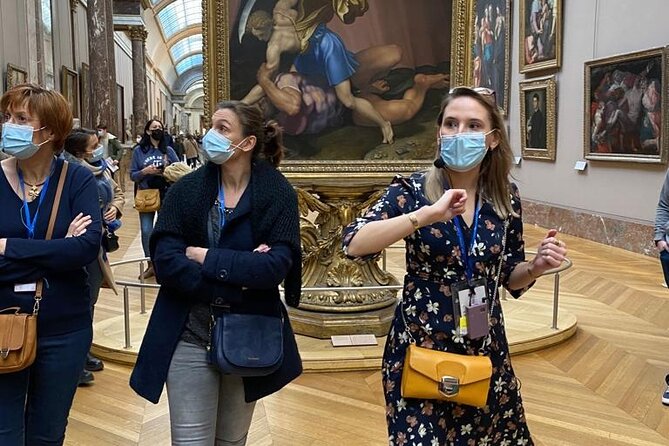
The tour is led by ALICE, a professional guide in Paris who is tied to the Ecole du Louvre training. The reviews we have point to a consistent pattern: Alice’s approach is friendly, attentive, and focused on the core highlights without turning the experience into a lecture.
That combination is what you should look for in a Louvre tour. In a big museum, the difference between a good guide and a great one is not whether they can name artworks. It’s whether they help you interpret what you’re seeing fast enough that you still feel energized after the tour ends.
A couple of positive comments also highlight that the tour gives enough direction that you’ll want to return and explore on your own. I like that goal. If a guide helps you build a map in your head—even a simple one—you can turn a short visit into a longer relationship with the museum.
The price question: is $174.53 for 2 hours good value?
At $174.53 per person, this is not a bargain-basement tour. What you’re paying for is the guide expertise and the convenience of a tight, planned route.
But there’s a catch: admission tickets are not included. That means your total cost depends on what ticket type you buy. The tour covers the guided experience, while the museum entrance is a separate line item. If you’re traveling with kids under 18, they don’t need museum entrance tickets, which can help your overall budget.
When I judge value for a guided Louvre experience, I ask:
- Are you getting a route that saves you from wandering?
- Does the guide explain enough to make the time feel worth it?
- Is the group size small enough to keep it interactive?
Here, you’ve got the right pieces: a small group (up to eight), a guide trained through the Ecole du Louvre, and a route designed to connect sculpture, Renaissance staging, and painting. For many people, that’s exactly what turns a two-hour squeeze into something satisfying.
Language options: English, French, and Russian
You can choose English, French, or Russian. That matters more than it seems. The Louvre is full of labels and wall text, but a guide’s explanation pulls together the meaning and helps you make sense of why objects are where they are.
If you’re traveling with friends who speak different languages, this matters for planning. If you’re choosing between tours, language flexibility is a genuine quality-of-life upgrade.
Who this tour is best for
This experience is a strong fit if:
- You have limited time and want the Louvre’s major “anchors” in two hours
- You like learning the small details that make artworks easier to understand
- You prefer a group that stays small enough for interaction
- You want a plan for what to look for after the guide hands you back the museum
It may not be your best match if:
- You want to spend long, quiet minutes in front of one artwork
- You expect the tour to replace a full museum day
- You’re very sensitive to the risk of a no-show situation (I saw serious complaints about that in past experiences, so it’s smart to re-check details before you go and plan for a backup)
Should you book this Louvre masterpiece tour?
I’d book it if your goal is a smart, coached Louvre overview in a short window—and if you’ll take advantage of it by continuing on afterward. The route makes sense (castle walls → Greek sculpture → Renaissance throne-hall drama → painting with real-world context), and the fact that Alice is an Ecole du Louvre professional guide is exactly the kind of training that helps in a museum this big.
I’d also book with one mindset: treat it as the first chapter. Buy your museum ticket ahead of time, arrive with enough buffer to find the meeting spot comfortably, and plan to explore after you finish.
If you hate any chance of logistical surprises, I suggest you confirm everything the day before and keep your schedule flexible for that afternoon. Some people have reported issues like a guide not showing up, and even if that’s not typical, it’s the kind of risk you should weigh.
If you’re ready for a well-guided sprint that leaves you seeing more—not just seeing more names—this is a good bet.
FAQ
How long is the Louvre tour?
The tour runs for about 2 hours.
What is the meeting point for the tour?
You meet at Carrousel du Louvre, 99 Rue de Rivoli, 75001 Paris, France.
Where does the tour end?
The tour ends at the Musée du Louvre, 75001 Paris, and it finishes at the museum’s exhibition area so you can continue exploring.
Is museum admission included in the price?
No. Entrance tickets to the museum are not included. Children under 18 don’t need museum entrance tickets.
How many people are in the group?
The tour has a maximum of 8 travelers.
What languages are available?
Tours are available in English, French, and Russian.
Do I get a mobile ticket?
Yes, the tour includes a mobile ticket.
Who leads the tour?
The tour is led by ALICE, a professional guide in Paris.
What’s the cancellation option if plans change?
You can cancel for a full refund up to 24 hours in advance of the experience start time.
If you want, tell me your travel month and whether you prefer English or French, and I’ll suggest a smart time-of-day plan for fitting this into a tight Louvre schedule.