REVIEW · LOUVRE MUSEUM
Louvre Guided Treasure Hunt for Families and Kids
Book on GetYourGuide →Operated by MEET THE LOCALS FOR FAMILIES · Bookable on GetYourGuide
The Louvre can feel like a maze for kids. This family treasure hunt turns the museum into a game with skip-the-line tickets and age-based activity booklets that keep children engaged while you still get the big masterpieces. The guides, including names like Marcella and Justine, are especially good at staying patient with busy kids. One possible downside: the pace can feel a bit slow at each stop, since children answer questions and do activities while you’re there.
I like the fact that the tour isn’t just a walk-and-talk. Kids collect clue cards (with coloring and drawing for the younger age groups), then they solve a final puzzle as the tour wraps up, which makes the whole thing feel purposeful. For adults, that usually means less frustration and more time to actually look. Still, the exact mix of works can lean more toward sculptures than paintings, so older art lovers might want a follow-up plan to see extra favorites.
In This Review
- Key Highlights You’ll Care About
- Getting To The Louvre: Meet at the Louis XIV Statue
- Skip-The-Line Tickets: Turning Waiting Into Looking
- Two Hours Inside: Why the Tour Length Works for Kids
- Age-Matched Booklets for Ages 3–6 and 7–12
- The Louvre Highlights Route: Venus of Milo and Victory of Samothrace
- How the Clue Cards Turn the Museum Into a Puzzle
- Mona Lisa Time: Spotting Details Without Losing Everyone
- The Adult Advantage: A Parent Break Built Into the Tour
- Price and Value: $743 for Up to 4 People
- Who This Works Best For (and Who Should Rethink)
- Practical Tips for a Smoother Louvre Hunt
- Should You Book This Louvre Treasure Hunt?
- FAQ
- How long is the Louvre guided treasure hunt for families?
- What does the tour include for kids?
- Are skip-the-line tickets included?
- What are the guided tour languages?
- Where do we meet for the tour?
- Is this tour private?
- What age ranges are the activity booklets designed for?
- What items are not allowed inside the museum?
Key Highlights You’ll Care About
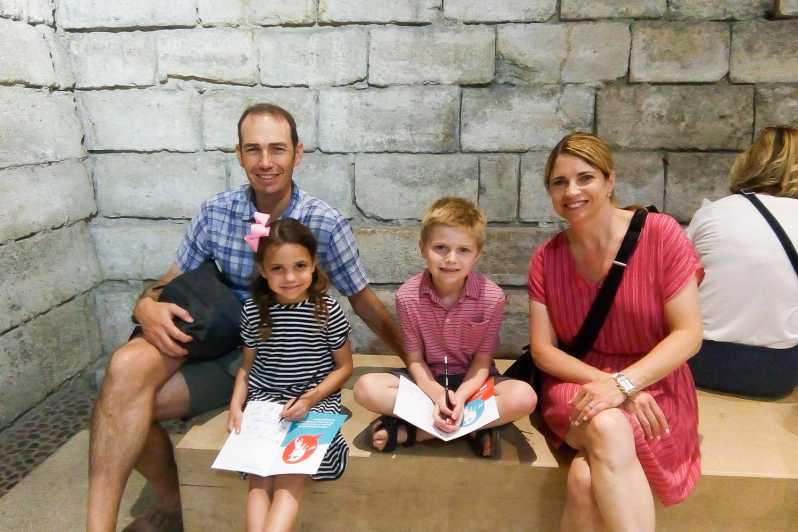
- Skip-the-line entry to reduce the toughest part of the Louvre visit.
- Age-matched booklets for kids ages 3–6 and 7–12, using adapted challenges on the same route.
- Clue-card system where answers earn cards that lead to one final puzzle.
- Big-hits included like the Venus of Milo, Victory of Samothrace, and the Mona Lisa.
- A built-in parent moment, where another staff member helps keep kids focused so you can look longer.
- Private group format (up to your group size), which helps keep the experience from getting chaotic.
Getting To The Louvre: Meet at the Louis XIV Statue
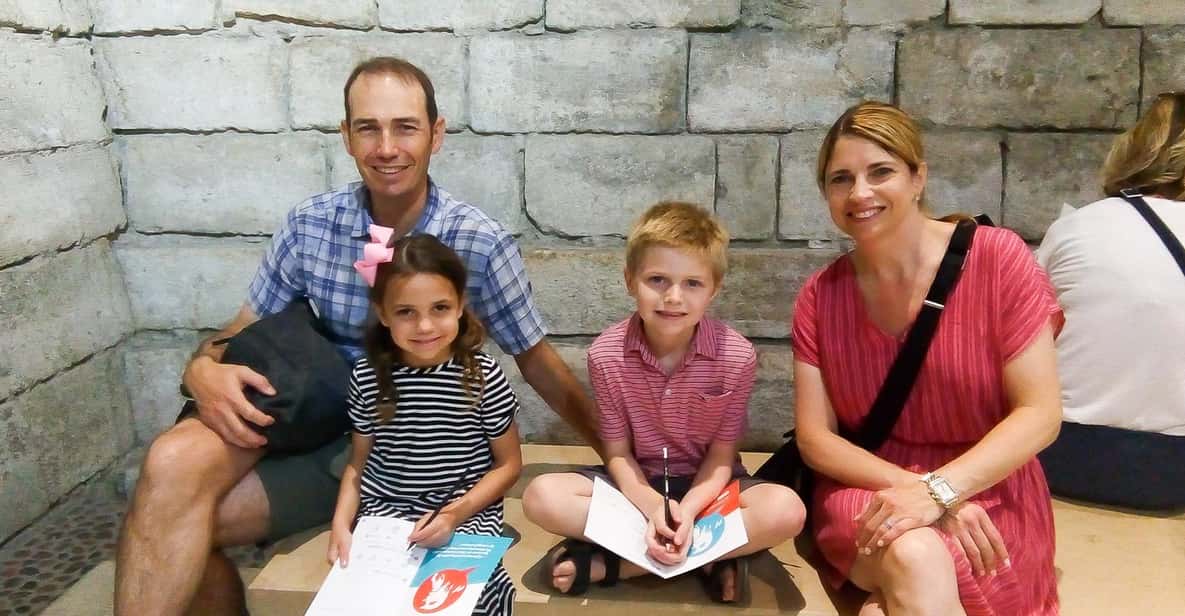
You’ll meet at the equestrian statue of Louis XIV near the Louvre glass pyramid. It’s a smart choice for families because it puts you at the Louvre’s most famous landmark, which helps kids orient fast and helps you find the group without a stressful scavenger hunt of your own.
Plan to arrive a few minutes early, dressed in comfortable clothes. The tour has rules that affect your experience, like restrictions on bags and luggage, so you’ll want an easy, low-fuss setup when you arrive. Also, this is a live English guide, so if your family wants quick explanations and clear instructions, that language is baked in.
It’s private group, which matters in the Louvre. With kids, the “wrong” group size and rhythm can drain your energy. Here, you get a more controlled visit style, and that makes it easier to follow the treasure-hunt flow instead of wandering or getting pulled off-route.
You can also read our reviews of more guided tours in Louvre Museum


Skip-The-Line Tickets: Turning Waiting Into Looking

The Louvre is famous for crowds, and families often feel that pressure within the first few minutes. What I like here is that your ticketing includes skip-the-line entry, so you spend less time standing and more time using your one good museum window.
This matters because the tour is only about two hours. With a short window, the museum’s bottleneck times can eat your whole plan. Skip-the-line helps you start seeing things while kids still have patience, snacks (if you brought them outside the museum), and energy.
The tour also focuses you. Instead of trying to cover too much on your own, you’re guided through a sequence that hits major highlights. In a place this huge, that’s not just convenient—it’s a sanity saver.
One small thing to keep in mind: there’s no food or drinks included. So before you go, decide how you’ll handle breaks (usually outside the museum rules or at natural pauses you can manage on your own schedule).
Two Hours Inside: Why the Tour Length Works for Kids
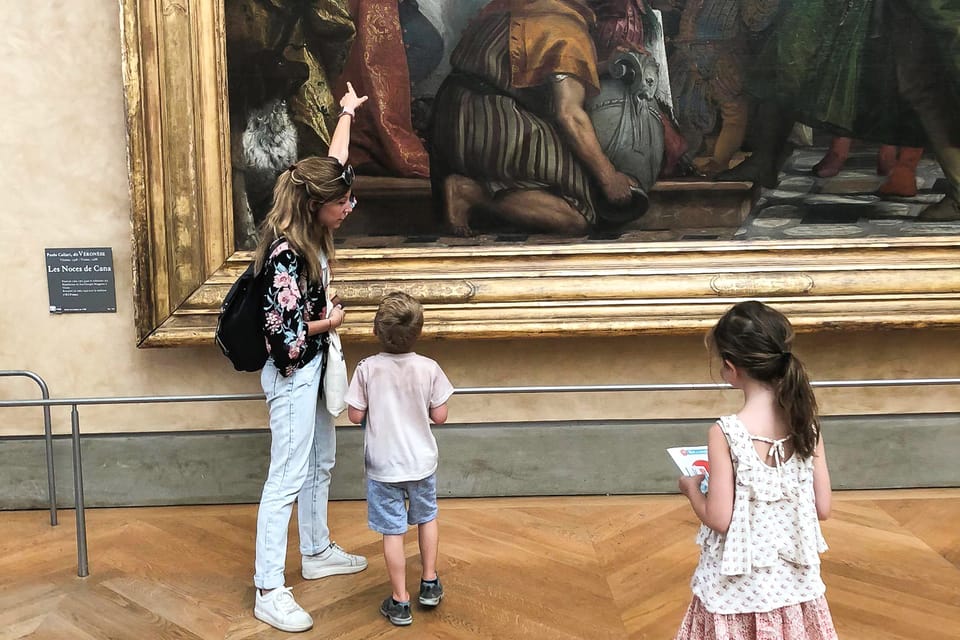
Two hours can sound short in a museum like the Louvre. But for families, short often wins. Kids’ attention spans don’t expand just because the building is famous, and the treasure hunt is designed around that reality.
The way it’s structured helps kids feel like they’re “doing” something, not just “watching.” Each stop has a purpose, and the booklet gives them tasks that match their age group. That keeps the experience active rather than stressful.
Also, the guide doesn’t just hand out a game and walk away. You’re led step-by-step through the route, with the guide offering amusing and informative context while kids work through their challenges. That’s one of the reasons families repeatedly highlight the guide’s patience and ability to explain things in a way children can actually hold onto.
If you’re traveling with older kids who want deeper art history and lots of downtime, you might still find the format a bit “activity-heavy.” But for most families with children in the target age range, the pace feels like the sweet spot.
Age-Matched Booklets for Ages 3–6 and 7–12
The core of the experience is the activity booklet. Your guide gives each child a treasure-hunt booklet tailored to an age range, with options for ages 3–6 and for ages 7–12. Kids may follow the same general course, but the challenges are adapted so the younger group isn’t overwhelmed and the older group isn’t bored.
For the younger kids, you can expect more coloring and drawing-style tasks. That’s a practical win because small children often learn best by doing with their hands. It also gives them something to focus on while the adults listen to explanations.
For older kids, the booklet relies more on observation and answering questions. The goal is to make them look closely rather than just “recognize” a famous painting. Instead of waiting for the Mona Lisa moment like it’s a one-time payoff, they’re trained to notice details throughout the tour.
I like that the booklet approach also protects the visit from the typical family problem: one child gets restless, then everyone loses the thread. With a task in their hands, the tour stays smoother.
The Louvre Highlights Route: Venus of Milo and Victory of Samothrace
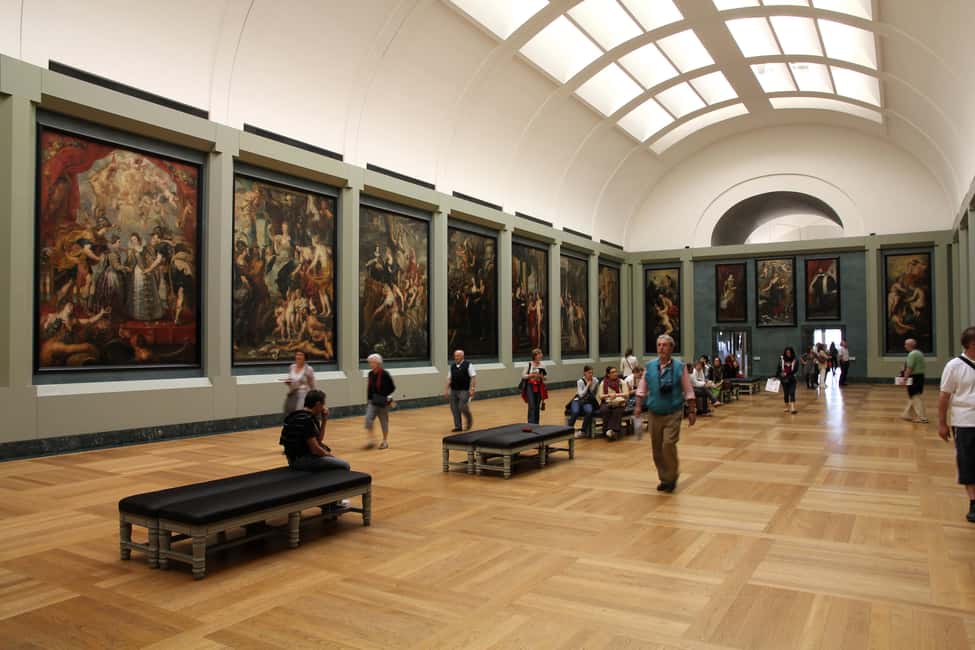
You’ll see major masterpieces during the hunt, including the Venus of Milo and the Victory of Samothrace. These are not casual pick-ups. They’re big, famous sculptures that many first-time Louvre visitors feel unsure how to approach—especially if they’re also managing kids.
The guide’s job is to connect the art to something kids can grasp. Instead of dumping facts, the explanations are paced to match the game. That’s where the treasure hunt format pays off: children aren’t just waiting for you to finish reading labels.
As you move from piece to piece, kids use the observation-based tasks in their booklet to progress. Each correct response earns a clue card. Collect enough clue cards, and the tour leads to the final puzzle step near the end.
One more real-world benefit: the guide navigates the museum rhythm so your family isn’t stuck in slow-moving crowd choke points every time you arrive at a new room. In the Louvre, that can make or break a family day.

How the Clue Cards Turn the Museum Into a Puzzle

This tour uses a classic “question → reward → next step” structure. Kids answer prompts, collect clue cards, and then—when they’ve gathered the full set—they help solve the final puzzle that ends the treasure hunt.
That simple loop is powerful. It gives children a reason to stay engaged, and it also creates natural stopping points. Instead of wandering ahead, children know exactly what they’re working toward.
It also gives adults a more relaxed experience. When kids are busy earning clues, you can listen without feeling like you need to constantly negotiate attention. It’s easier to focus because the tour has a built-in logic.
The final puzzle moment is also where you’ll see how the booklet learning sticks. Even if kids don’t remember every fact later, they usually remember the feeling of solving the mystery and completing the mission. That kind of memory is often what makes families ask to go back.
Mona Lisa Time: Spotting Details Without Losing Everyone
The Mona Lisa stop is a highlight for adults, but it can be tricky with kids. Here, your guide uses the treasure-hunt framework to keep attention on tasks tied to what’s in front of you.
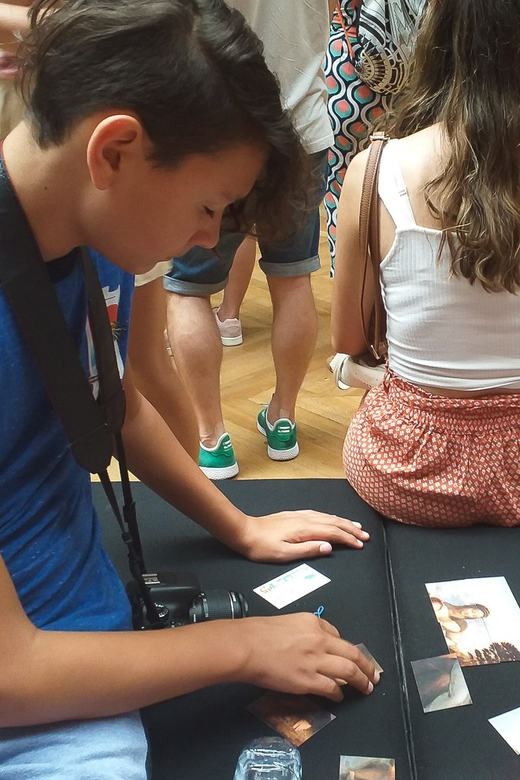
In at least some cases, the activity may include a quick interactive-style element like a spot-the-difference task using a device while you’re near the painting. That’s not everyone’s favorite approach, and one family found it a little odd given how close the real masterpiece is.
Still, the broader point is that the tour doesn’t treat the Mona Lisa like a photo stop. It treats it like a moment to work through together. Kids are guided to observe and respond, which usually makes the experience feel less chaotic than it would during an unguided visit.
If you’re worried your kids might dislike screen-based activities, you can still go in with a good mindset: the guide is running the show, and the booklet is designed to keep them participating even if the exact format shifts by age group.
The Adult Advantage: A Parent Break Built Into the Tour
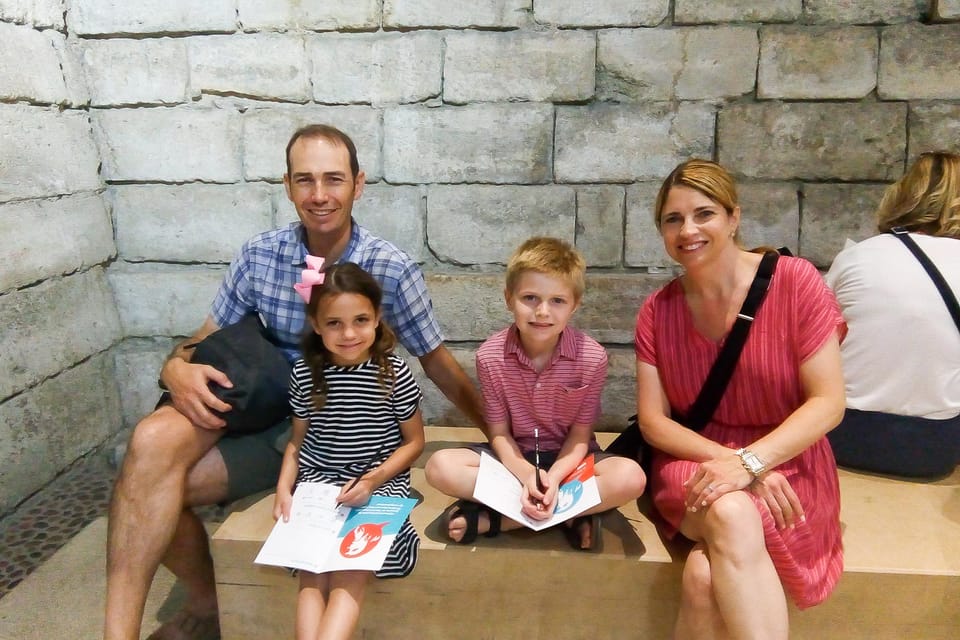
One detail that’s easy to miss until you experience a family museum day: adults need a moment to actually look. This tour builds that in.
At the end of the clue process, there’s time where someone helps keep kids focused so you can take in the artworks yourself. That’s huge in the Louvre, where even confident adults often feel rushed by crowds and by the sheer number of rooms.
For the adult side, that means you can slow down near the pieces you care about. Instead of constantly scanning for your kids and re-centering the group, you get breathing room to stand, watch, and absorb.
It also helps your family remember the visit as more than a chore. When adults feel calm, kids feel calm. That’s the whole trick with successful family touring.
Price and Value: $743 for Up to 4 People
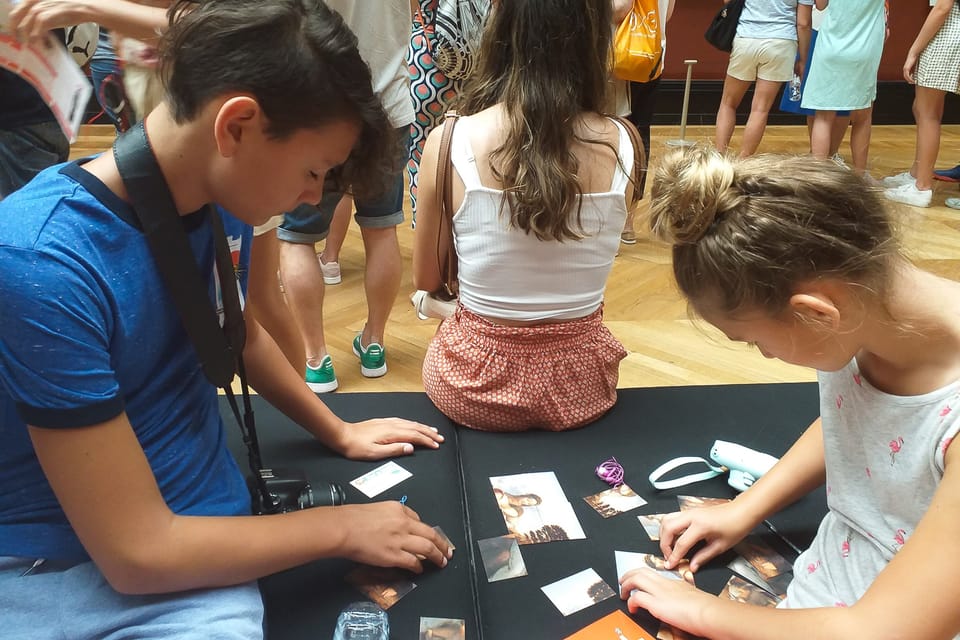
At $743 per group up to four people, this isn’t a budget add-on. It’s closer to buying time and structure in one package.
Here’s the value logic that makes sense for many families:
- You’re paying for a private, English live guide who manages both kids and adults.
- You’re getting skip-the-line tickets, which reduces wasted waiting time.
- You’re getting activity booklets and a full treasure-hunt kit, so kids have everything they need to stay engaged.
- You’re buying a focused route that hits major highlights rather than trying to “wing it” across a museum this big.
If you have more than two adults, cost may feel easier to justify because the guide time is shared across the group. If you’re a family of three or four, this can feel like good value compared to assembling your own plan, repeatedly stopping for kid management, and still arriving at the worst crowd moments.
If you’re a solo adult or a couple with no kids, you may not get enough value because the tour is built around family tasks and engagement. But for the right group, paying more to reduce chaos can be the smartest kind of spending.
Who This Works Best For (and Who Should Rethink)
This is a great fit if you’re traveling with kids in the target range and you want a guided route through the Louvre’s famous sights without losing your day to crowd stress.
It also works well for families who want the highlights—Venus of Milo, Victory of Samothrace, Mona Lisa—without having to decide where to go every five minutes.
It may be less ideal if:
- Your kids are prone to frustration with quiz-like tasks or puzzles.
- Your group expects a heavy focus on paintings only. One family felt the tour leaned more toward sculptures with fewer paintings.
- Your family wants long, slow contemplation. The structure moves at a kid-friendly pace, and some stops can feel like they take extra time because kids must complete prompts and activities.
For most families, the biggest win is that it keeps the visit moving while still delivering actual art moments. For families who prefer “free roaming,” this won’t feel like that.
Practical Tips for a Smoother Louvre Hunt
A couple of practical things will help your day go smoother.
First, bring comfortable clothes. You’ll do a fair amount of standing and walking. Also, plan around the museum size limits: anything larger than 55x35x20 cm isn’t permitted inside.
No luggage or large bags are allowed, which means you should travel light. This matters because if you show up with bulky items, you can waste energy dealing with restrictions rather than enjoying the tour.
Bring your ID (or a photocopy). That’s an easy requirement to meet, and it prevents last-minute stress.
Finally, remember tips are not included in the cost of this tour. If your guide does a great job, you’ll likely want to tip, so keep some cash or card options ready.
Should You Book This Louvre Treasure Hunt?
I’d book this when you want the Louvre’s greatest hits with a child-friendly structure. If your family has kids who get restless in museums, the treasure hunt booklet approach is exactly the kind of solution that keeps everyone on the same page.
I also like it for first-time Louvre visitors. It saves you from the overwhelm of choosing rooms, and it guides you through famous sculptures and the Mona Lisa with a route that keeps kids active.
If your priority is lots of extra art beyond the highlights, or you want the most painting-heavy plan possible, consider adding a separate self-guided time after the tour. Two hours is designed for engagement, not for exhausting the collection.
If you can travel light, bring your ID, and want skip-the-line convenience, this is one of the most straightforward ways to turn the Louvre into a family win.
FAQ
How long is the Louvre guided treasure hunt for families?
The tour lasts about 2 hours.
What does the tour include for kids?
Each child receives an activity booklet and a treasure hunt kit for the scavenger hunt.
Are skip-the-line tickets included?
Yes, skip-the-line tickets to the Louvre Museum are included.
What are the guided tour languages?
The live guide speaks English.
Where do we meet for the tour?
Meet by the equestrian statue of Louis XIV near the Louvre glass pyramid.
Is this tour private?
Yes, it’s a private group.
What age ranges are the activity booklets designed for?
The booklet is tailored for ages 3–6 or for ages 7–12.
What items are not allowed inside the museum?
Luggage or large bags are not allowed, and items exceeding 55x35x20 cm are not permitted in the museum.