REVIEW · PARIS
Drawing workshop / creative notebook during an unusual walk in Montmartre
Book on Viator →Operated by iN ARTS · Bookable on Viator
A pen and a view can change the whole walk. This drawing-and-history route through Montmartre turns familiar landmarks into live sketch prompts, led by artist-guide Evelyne with a friendly, practical approach. You’ll stop at places tied to the neighborhood’s artists and cabarets, then put what you see onto paper—right there on the street.
I love that you get real guidance for beginners, not just “go draw.” You’ll work through a few different sketch setups (pencil hardness, charcoal/sanguine-style tools, and finishing touches with watercolor pencils), so the afternoon feels like skill-building, not busywork. I also like the pace: it’s part art class, part neighborhood walk, so you’re never just looking at sights from afar.
One thing to consider: this is not a long indoor art class. If you want a strict, step-by-step studio course, you may feel the instruction time is lighter than you expected.
In This Review
- Key things to know before you go
- The real trick: turning Montmartre into a sketchbook mission
- Meeting at Place des Abbesses: a 2 pm start with good legs-friendly pacing
- Stop 1 at Le Bateau-Lavoir: sketching where artists once worked
- Stop 2 on Rue Lepic and the Moulins de Montmartre story
- Stop 3 at Au Lapin Agile: the cabaret scene at the foot of the vineyards
- Sacré-Cœur finish: sketching at the top of the Butte
- Place des Abbesses metro drawing: a small detail with big meaning
- What you’ll draw (and how beginners usually handle it)
- Materials, tools, and that “starter-art-class” feeling
- Price and value: is $94.82 worth it?
- The Montmartre reality check: timing, hills, and weather
- Who should book this drawing workshop walk
- Should you book this Montmartre sketch walk?
- FAQ
- How long is the drawing workshop walk?
- What language is the tour offered in?
- Where does the tour start and end?
- How large is the group?
- Do I need prior drawing experience?
- Can I cancel for a full refund?
Key things to know before you go
- Small group (max 10) means more time for personal help while you sketch
- Multi-stop route with built-in drawing breaks at major Montmartre landmarks
- Beginners welcome with guidance on tools and simple techniques
- Hands-on media changes: pencils, charcoals, and watercolor pencils show up during the walk
- Hill-and-stroll format fits a moderate fitness level and lots of scenic pauses
The real trick: turning Montmartre into a sketchbook mission
Montmartre is packed with “look at that!” moments. The problem is, most people just look. This experience flips the script. You walk with a plan, stop in meaningful spots, and then draw what you notice—buildings, signs, rooftops, even metro details—so the neighborhood sticks in your brain.
What makes it work is the combination of art direction + local context. You’re not only copying scenery. You’re learning why these places mattered to artists and performers, then using that context to choose what to emphasize in your drawing. It’s a smart way to make the area feel personal, even if you’re brand-new to sketching.
And it’s exactly the kind of “Paris day” you can repeat mentally later. You’ll remember the corners, the angles, and the little details that tourists usually rush past.
You can also read our reviews of more tours and experiences in Paris



Meeting at Place des Abbesses: a 2 pm start with good legs-friendly pacing
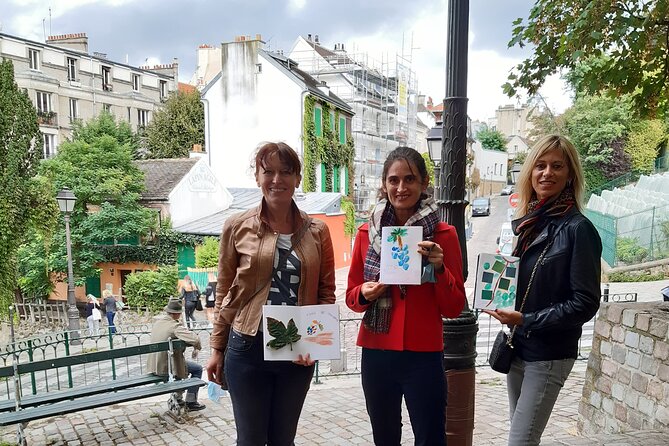
You meet at Place des Abbesses (near public transportation) and set off at 2:00 pm. The total time is about 3 hours, with breaks built in for sketching at each stop. The walking is not a long-distance trek, but Montmartre does have slope and uneven ground, so plan for hills and take it at a comfortable pace.
This matters because the activity is timed around drawing moments. If you sprint to “see everything,” you’ll miss what makes the tour special: the chance to slow down enough to notice shape, texture, and light—and then translate that into marks on paper.
Also, you’re in a small group (up to 10), which changes the whole feel. You’re less likely to get lost, and it’s easier for the guide to check in on your technique without everyone waiting in a single line.
Stop 1 at Le Bateau-Lavoir: sketching where artists once worked
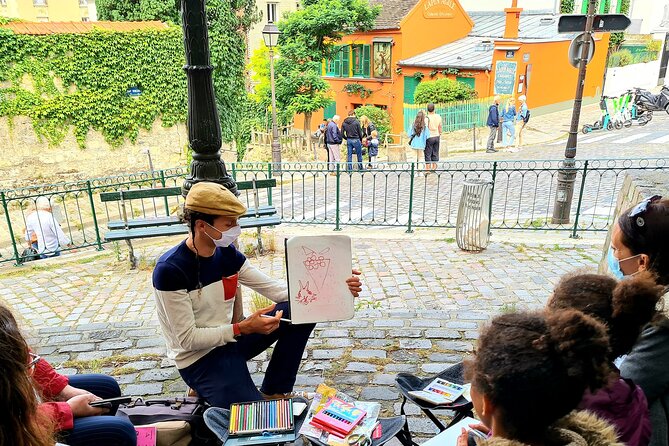
One early stop is Le Bateau-Lavoir, a site tied to the creative studio culture that helped define Montmartre. The format here is simple and effective: you learn the basics of why this place matters, then you draw on or near the square in front of it.
This stop is a good warm-up. The area gives you classic Montmartre building rhythms—facades, windows, and the kind of angled perspective that makes drawings look “right” even when you keep them loose. It’s also a morale boost. After a quick dose of local art lore, your pencil finally has something to do.
If you’re worried about drawing in public, this is also where you can relax. The goal isn’t a museum-perfect result. It’s capturing the feeling and structure of the scene.
Stop 2 on Rue Lepic and the Moulins de Montmartre story
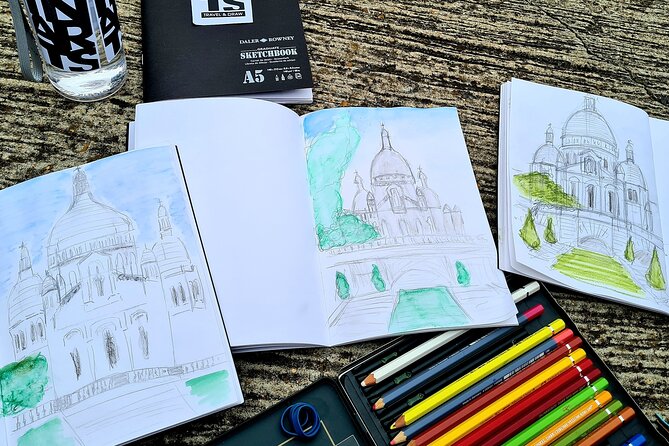
Next you head to Rue Lepic, with the Moulins de Montmartre area nearby and the emblematic Moulin de la Galette in view. This is a short stop, which works in your favor. You get a burst of context, then you’re back on your feet.
Rue Lepic is great for sketchers because it offers layers: street life energy, architectural lines, and that Montmartre mix of tourist landmarks and everyday streets. Even if you only manage a quick outline, the subject is strong enough to make your sketch feel like it belongs in Paris.
Practical note: short stops benefit people who like momentum. If you’re the type who wants long time on every subject, you might prefer doing one longer sketch later in the afternoon (more on that below).
Stop 3 at Au Lapin Agile: the cabaret scene at the foot of the vineyards
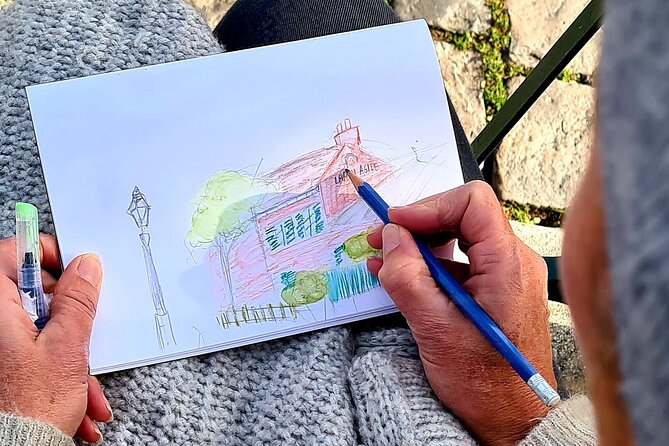
One of the most fun parts is drawing near Au Lapin Agile, the cabaret and performance-life symbol of Montmartre—set near the area where the vineyards sit lower on the hillside.
This stop tends to be a favorite because it feels like you’re drawing more than “a building.” You’re sketching a mood. Cabarets have signs, shapes, and contrast. There’s often enough going on that you can practice a key skill: choosing what details to include, and what to simplify.
In one useful example, the guide’s instruction can include working with different tools as you go—like moving from pencils to charcoal-style marks—so your sketch starts to gain personality. You’ll also see how to keep the drawing lively even when you’re not trying to render every detail.
And if it’s windy or cold, this is a good stop to imagine continuing later in a warm spot. One of the nice realities of this kind of activity is that the work you started outdoors often looks even better once you slow down with a drink indoors.





Sacré-Cœur finish: sketching at the top of the Butte
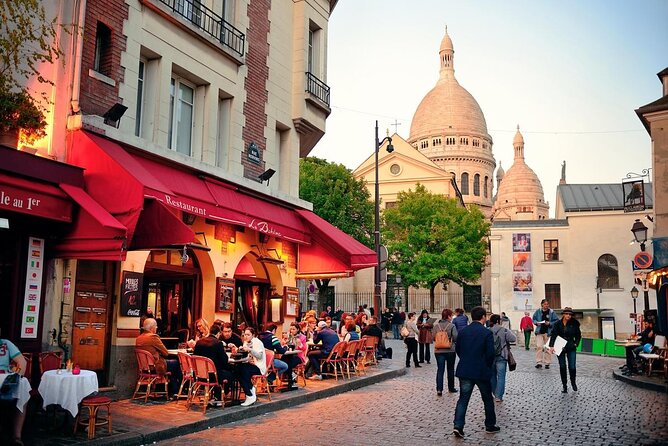
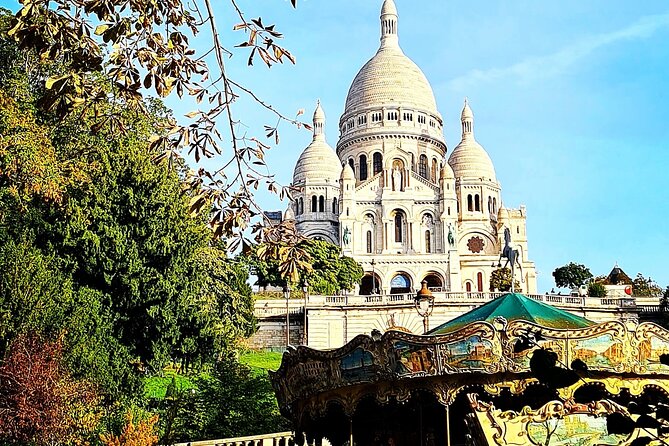
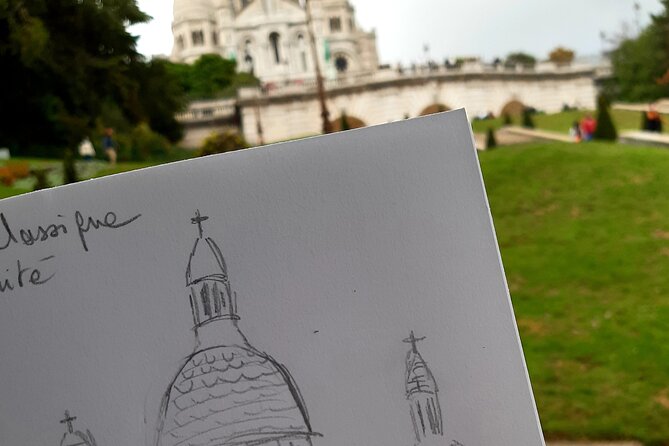
You end facing Sacré-Cœur at the top of the Montmartre hill. The tour wraps up with a sketch experience near the finish point, giving you a last chance to capture the panorama or the “big silhouette” moment that people come here for.
This is where the technique you practiced earlier pays off. You’ve already learned how to simplify forms, how to use different tools for different textures, and how to build a composition without overworking it.
Also, it’s a satisfying ending. You start with art culture, pass through street stories, draw performance life, and then finish with the landmark view. Even if you don’t consider yourself an artist, that sequence makes the afternoon feel complete.
Place des Abbesses metro drawing: a small detail with big meaning
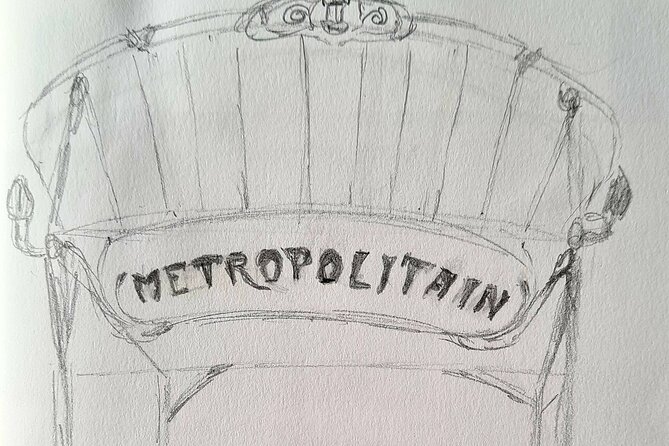
Even though your walk is aimed at art and landmarks, one of the clever stops is at Place des Abbesses again (or in the route’s loop) for a sketch prompt tied to the Paris metro—specifically the Abbesses station entrance.
This part works because it trains your eye. You’re not just drawing the famous church. You’re drawing transit design, signs, and the kind of everyday Paris detail that often becomes invisible once you get used to the city.
It’s also a good reminder that Montmartre isn’t only about one postcard hill. It’s also a working neighborhood with rhythms, streets, and architecture you pass every day—now you’ll notice it.
What you’ll draw (and how beginners usually handle it)
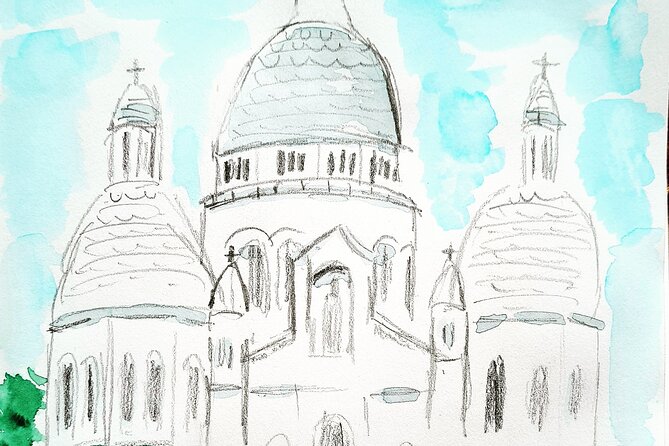
The experience is built around repeated sketch moments. In different sessions, people end up making multiple sketch setups across the afternoon—often using pencils (including different hardnesses), then switching to tools like charcoal or similar dark media, and finishing with watercolor pencils for color accents.
Here’s the helpful part: the guide doesn’t just hand you materials and hope. The teaching approach is practical. You’ll get prompts that steer your hand toward a result that reads as a sketch—structure first, details second.
If you’re a complete beginner, aim for this mindset: draw the big shapes first, then add a few chosen lines for character. That keeps you from getting stuck. You’ll be amazed how far you get with a simplified version of the scene, especially with strong subjects like Moulin de la Galette, cabaret signage, and Sacré-Cœur views.
If you’re more confident, you can use the tour as a warm-up and a composition exercise: practice line weight, practice negative space, and try turning real landmarks into drawings that feel personal rather than literal.
Materials, tools, and that “starter-art-class” feeling
The tour format is friendly toward supplies-light travelers. You’ll have art tools available during the experience, including watercolor pencils and other media used for sketching. One detail I’d flag: different parts of the afternoon often use different tools, so don’t plan on doing one single medium the whole time.
Also, the guide’s instruction tends to include quick technique tips. For example, using pencil hardness variations can help you separate sketch lines from shadows. Moving to charcoal-style marks helps you build contrast fast. And adding watercolor pencil color lets you finish without needing paint bottles, brushes, or heavy setups.
If you’re worried about supplies being “cheap,” the better sign is that the instruction centers around using the tools correctly, not showing you perfect results. The point is learning control.
Price and value: is $94.82 worth it?
At $94.82 per person for about 3 hours, this is priced in the “small-group, guided experience” range. For me, the value comes from three things you don’t easily replicate on your own:
First, you’re paying for a small-group guide who teaches while walking. You’re not just touring Montmartre; you’re practicing sketching with feedback and prompts at multiple stops.
Second, the route is built around drawing moments at meaningful landmarks. That structure is hard to copy if you’re trying to DIY it and don’t know where to stop.
Third, you’re getting access to an artist-guided toolbox of techniques—pencil hardness, darker media, and watercolor pencil finishing—so you leave with both a sketch and a better way to see.
If you want a hands-on afternoon that combines history, movement, and tangible results (even if your drawings aren’t museum-ready), this price makes more sense than it first appears.
The Montmartre reality check: timing, hills, and weather
This is a hillside neighborhood. Even with moderate pacing, you’ll want comfortable shoes with grip. Also, plan for wind and temperature changes—especially higher up near Sacré-Cœur.
One smart strategy is to treat your sketching like a living project. If the weather turns, you can take your work to a nearby café and keep going. The drawings already started outdoors often benefit from a steadier pace and warmer hands.
Finally, remember the tour is designed around short drawing sessions. Don’t expect to finish elaborate artwork in one afternoon. Think of it as progress practice.
Who should book this drawing workshop walk
This works best if you fit one (or more) of these:
- You want a hands-on way to experience Montmartre beyond photos
- You’re a beginner and want direction that doesn’t embarrass you
- You like stories tied to places you can actually see and sketch
- You want a small-group activity rather than a big “tour bus with stops” style day
If you’re an advanced artist seeking a deep, hours-long technique class, you might find the time too short. And if you want strict studio-style instruction, you may need a different format.
Should you book this Montmartre sketch walk?
Yes—if you want an afternoon where Montmartre feels fresh and personal. The biggest reason to book is the blend of guided sketching + neighborhood context, with enough structure to help you make real marks without drowning in technical detail.
I’d especially recommend it as a first “Montmartre day.” The route helps you understand the place quickly, and the drawings give you a memory you can hold in your hands. Just go in with the right expectation: you’re not enrolling in a full studio course. You’re doing something more fun—learning to see, then drawing what you see before the moment passes.
FAQ
How long is the drawing workshop walk?
It’s about 3 hours.
What language is the tour offered in?
The experience is offered in English.
Where does the tour start and end?
It starts at Place des Abbesses and ends at the Parvis du Sacré-Cœur.
How large is the group?
The maximum group size is 10 travelers.
Do I need prior drawing experience?
No. It’s geared for beginners, with guidance during the sketch stops.
Can I cancel for a full refund?
Yes. Free cancellation is available if you cancel at least 24 hours before the experience starts. If you cancel less than 24 hours before, the amount paid is not refunded.