REVIEW · PARIS
Drawing workshop/creative notebook during a walk from the Invalides to the Petit Palais
Book on Viator →Operated by iN ARTS · Bookable on Viator
That sketchy pause can be a great way to see Paris. This drawing workshop turns an iconic walk—Invalides through Petit Palais and on to Pont Alexandre III—into a hands-on sketchbook session. I love how the instructor balances Paris stories with practical drawing help, and you’ll actually practice techniques like perspective and composition, not just take photos. The only drawback: you’re partly outside, and it’s a walking format, so comfortable shoes matter.
You’ll leave with more than nicer lines. You’ll learn how to look: how to simplify big architecture into shapes, how to place lines so the scene feels real, and how to build a page with mixed media ideas. The group is capped at 10, which keeps the attention focused and helps if you’re a beginner or rusty.
In This Review
- Key highlights worth planning around
- A sketchbook walk from Invalides to Petit Palais
- What you actually create in 3 hours (and how the pace feels)
- Stop 1: Petit Palais and learning composition without freezing
- Stop 2: Pont Alexandre III and turning a famous bridge into lines
- The Invalides side: dome-focused seeing and on-location technique
- Techniques you’ll practice: perspective, mixed media, and composition
- Why the guide’s Paris stories matter (not just entertainment)
- Price and value: what $94.93 buys you in real terms
- Logistics that actually matter: English, distance, and weather
- Who this workshop suits best
- Should you book this drawing workshop?
- FAQ
- How long is the drawing workshop?
- Where does the tour start and end?
- What language is the workshop taught in?
- Is the group size small?
- Is there a lot of walking?
- What should I bring or wear?
- What is the cancellation policy?
Key highlights worth planning around
- A small group (max 10) means the instructor can correct your lines without crowd pressure.
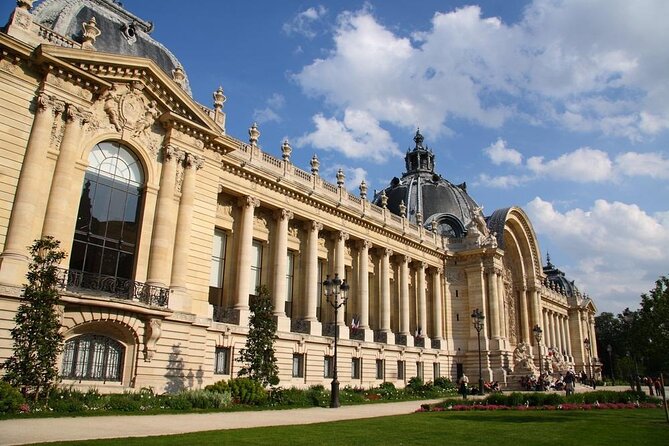
- Petit Palais + Pont Alexandre III give you two very different architectural subjects for perspective practice.
- You’ll create a sketchbook page using multiple techniques, including mixed media approaches.
- Perspective and composition are taught in real locations, not just on a tabletop.
- Expect a guided arts-and-Paris story loop, so every sketch connects to place and context.
- Partly outdoors, but weather-adapted, so you’re not stuck waiting out bad conditions forever.
A sketchbook walk from Invalides to Petit Palais
Paris can feel like a blur when you’re rushing. This experience slows you down on purpose. You start in the Invalides area (75007) and spend about three hours moving through the center with one clear goal: make a creative notebook as you go.
The premise is simple and smart. You don’t just walk past the monuments. You stop, observe, and translate what you’re seeing into a drawing. That single shift helps your brain notice proportion, angles, and details you’d normally skip—like how a dome sits against the sky, or how a bridge lines up toward a vanishing point.
And because it’s a guided walk, you’re not left guessing what to draw or how to draw it. The instructor also ties in cultural anecdotes as you move, so your sketch page feels connected to the city rather than random scribbles.
You can also read our reviews of more tours and experiences in Paris


What you actually create in 3 hours (and how the pace feels)
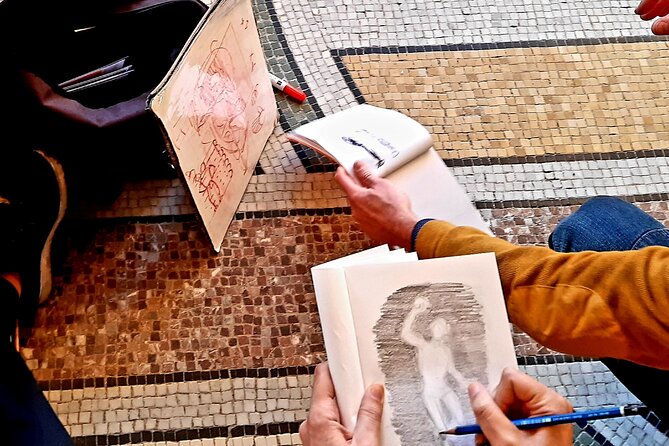
This is a compact, 3-hour format. The walking distance isn’t heavy—under 1 km total—yet it’s still a real walking workshop, with stops that take time. Expect a moderate physical level and some time outdoors, which is why the tour asks for comfortable shoes and clothing suited to temperature.
The pace works for most people because it’s structured in small bursts:
- brief location setup
- an instruction moment (technique + what to focus on)
- sketching time
- a quick reposition to your next subject
The goal isn’t to produce a finished masterpiece. It’s to leave with a usable sketchbook page that shows you a method. That makes it a good value even if you’ve never drawn before, because you’ll practice repeatable skills like perspective rules, composition choices, and mixing media effects.
Stop 1: Petit Palais and learning composition without freezing
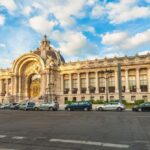
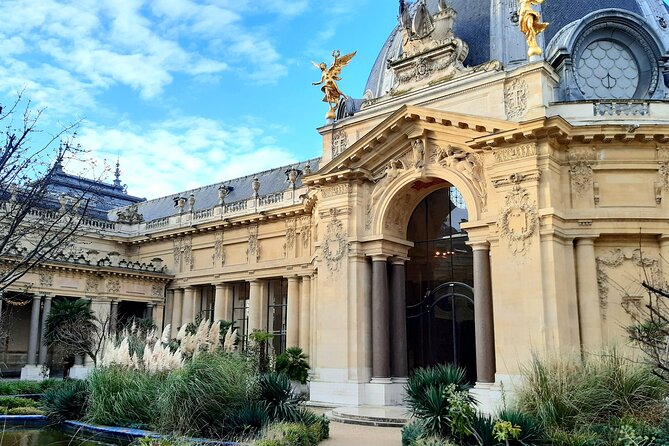
Petit Palais is the kind of place that can feel visually “big.” The architecture invites attention, and inside you get plenty of surfaces and angles that can overwhelm a first attempt. The workshop’s approach helps you manage that.
Instead of pushing you to copy everything, you’re taught to build a composition in stages. That usually means you start with the big shapes and line structure, then you add detail only after the scene sits correctly on the page. It’s a relief when you realize accuracy comes from method, not talent.
If you’ve ever stared at a museum interior and thought I don’t know where to begin, this is exactly where the instructor’s support shines. The teaching style is patient and encouraging, with practical advice that helps you feel comfortable drawing in and around the Petit Palais setting.
You’ll also practice techniques that make the subject easier:
- perspective cues to prevent “everything looks flat”
- composition steps so your page has a clear focal point
- mixed media ideas so your sketch feels like an artistic page, not a copy exercise
Stop 2: Pont Alexandre III and turning a famous bridge into lines
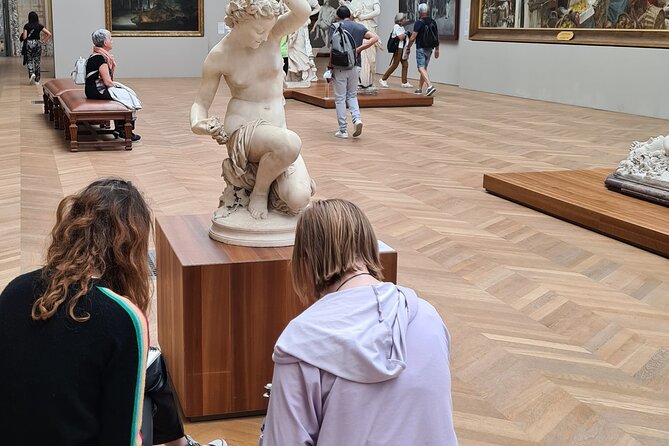
Pont Alexandre III is majestic in real life, and that makes it a tricky sketch subject—there’s a lot going on. The good news is the workshop uses that challenge as training. The bridge gives you strong visual “geometry”: long spans, repeated elements, and a natural sense of direction across the Seine.
This is where perspective becomes more than a theory. You’ll work on techniques that help your drawing read correctly even when you simplify ornamentation. Done right, you’ll capture the bridge’s overall rhythm without needing to replicate every sculptural detail.
The “value” here is that you’ll learn how to choose what to emphasize:
- Use big structural lines to anchor the scene
- Keep repeated decorative parts consistent (or simplify them)
- Let composition do some of the heavy lifting
By the end of this section, you’ll have a drawing practice you can reuse on other bridges and street scenes around Paris.
The Invalides side: dome-focused seeing and on-location technique
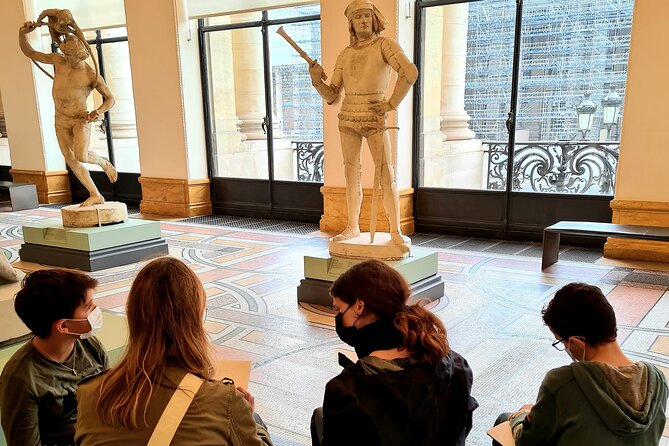
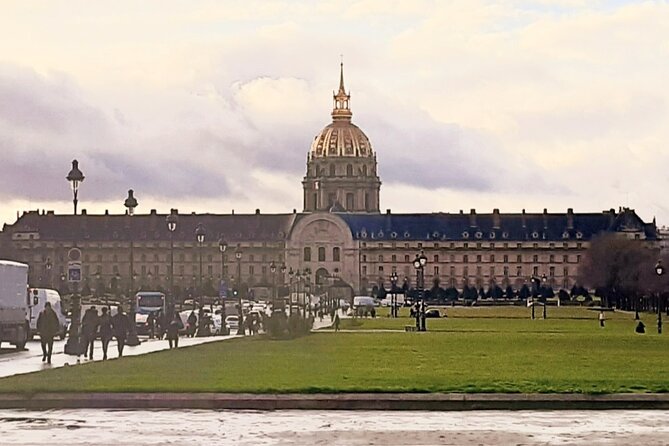
The walk ties into the Esplanade des Invalides area, and the Invalides setting is ideal for learning accuracy. The dome and the surrounding architectural forms teach you a big lesson: scale and curvature. Even if your drawing isn’t perfect, you’ll learn how to observe angles and curves in a way that makes your page look credible.
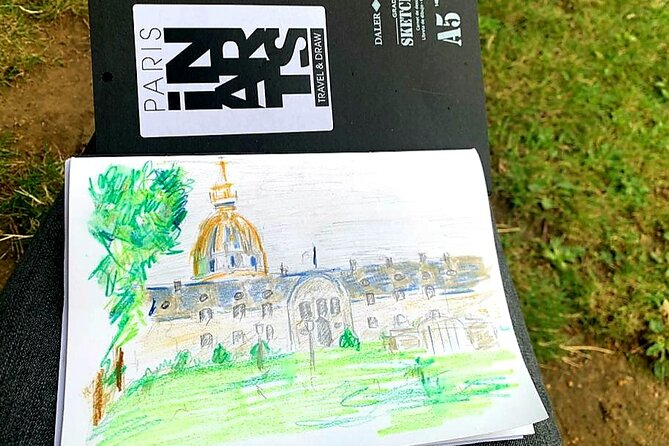
One of the standout teaching moments in this workshop is guidance on how to draw the Invalides dome accurately. That matters because domes are where many people lose confidence. If you’ve ever felt like curves don’t come out right, you’ll learn a method for translating that smooth geometry into lines you can control.
This part of the experience also helps with confidence. Once you’ve drawn something recognizable in a tough setting, the rest of your sketchbook feels more doable.



Techniques you’ll practice: perspective, mixed media, and composition
The workshop is built around multiple drawing techniques, and you’re not limited to one style. The stated approach includes:
- perspective
- mixed media creative activities
- composition
What that means in practice is you’ll rotate through different ways of working while you’re still at the same “big Paris subject.” That keeps your brain engaged and prevents the classic problem of getting stuck in one medium for too long.
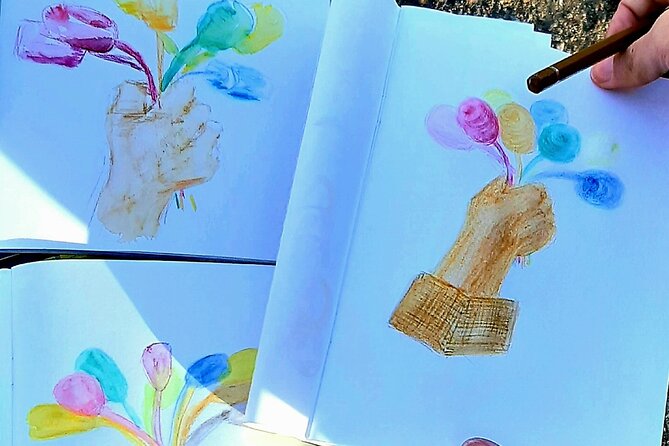
You can also expect to try specific media. From the instructor’s teaching approach, you may work with materials like sanguine and water color pencils. If you’ve only ever used standard graphite, this is a fun change. It also teaches you something important: different media can help different goals—contrast, warmth of tone, and texture effects that make architecture look more alive.
Even if you keep your pages simple, the technique practice gives you a toolkit. You’ll be able to look at another landmark later and ask, Which drawing method matches this scene?
Why the guide’s Paris stories matter (not just entertainment)
This isn’t a lecture-only tour. The cultural anecdotes are threaded into the sketching. That changes how you remember what you saw.
When you learn a place’s context while you’re drawing it, you’re doing two memory tricks at once:
1) you’re visually encoding the landmark’s shapes
2) you’re attaching a story or historical note to those shapes
That’s why the tour feels more meaningful than a standard sightseeing walk. The stories also give you “permissions” while drawing. Instead of worrying about getting every detail right, you understand what you’re looking for—what’s important visually and why it was built that way.
And with a small group, you’re more likely to get personalized attention instead of staying quiet while everyone else’s questions take over.
Price and value: what $94.93 buys you in real terms
At $94.93 per person for roughly three hours, this isn’t the cheapest thing on your Paris list. But it also isn’t overpriced for what you get—especially if you value guided creative instruction.
Here’s the value logic:
- Small group size (max 10) means more time with the instructor.
- You’re not just paying for access to a landmark. You’re paying for technique teaching in place.
- You’re practicing multiple creative activities, including trying different media approaches.
- The walk format bundles key city highlights into one structured session, so you’re not stitching together separate experiences.
If you’re the type who likes doing something with your hands—writing, drawing, photography with a method—this can be one of the best “keep it and remember it” purchases of the trip.
If you only want passive sightseeing and don’t care about creating a notebook, then you may feel the cost more than the benefit. This experience is for makers.
Logistics that actually matter: English, distance, and weather
The workshop runs in English, and you’ll get a mobile ticket. Meeting is in the Invalides area (75007), and the activity ends back at the meeting point.
One practical plus: the course runs in typical conditions, and it’s maintained even in bad weather. The itinerary can be adapted to keep you comfortable, which matters because sketching in wind and rain gets miserable fast. You’ll still want to dress for the weather because it’s partly outdoors, even if the walk isn’t long.
For footwear, take the “real world” advice seriously. You’ll be stopping, standing, and shifting positions around monuments. If your shoes aren’t comfortable, you’ll feel it in the middle of the session.
Who this workshop suits best
This is a great match if:
- you like walking tours but want a purpose beyond looking
- you want a structured way to learn drawing techniques
- you want a smaller, calmer group experience (max 10)
- you’re traveling solo or with friends and want an activity that creates something together
It also works if you’re new to drawing. The teaching approach is designed to help you start, and the instructor’s support is aimed at reducing intimidation—especially when the subject is grand, like Petit Palais.
If you’re a hardcore artist expecting a private, fully professional art lesson, you might wish the class were longer. But for most travelers, the combination of instruction + city sights + a finished sketchbook page is exactly the sweet spot.
Should you book this drawing workshop?
I think you should book it if you want a Paris experience that doesn’t just pass by. A sketchbook session gives you a souvenir you made, not just one you bought. The pairing of Petit Palais and Pont Alexandre III is strong for learning perspective, and the Invalides dome focus helps you build confidence fast.
Skip it if you hate standing outdoors, or if you’re only interested in strict museum time and zero walking. Also, if you’re expecting lots of free time with no instruction, this isn’t that kind of class—it’s a guided creative workshop with technique teaching.
If you fall in the middle, it’s a smart choice. It’s small, structured, and built around real places—so your time in Paris feels earned.
FAQ
How long is the drawing workshop?
It lasts about 3 hours.
Where does the tour start and end?
It starts at Invalides 75007 Paris and ends back at the same meeting point.
What language is the workshop taught in?
The workshop is offered in English.
Is the group size small?
Yes. The tour has a maximum of 10 travelers.
Is there a lot of walking?
The journey is under 1 km, but it is partly outdoors and involves walking between sketching stops. Comfortable shoes are recommended.
What should I bring or wear?
Wear comfortable shoes and clothing adapted to the temperature, since it takes place partly outdoors. The course can be adapted for weather comfort.
What is the cancellation policy?
Free cancellation is available up to 24 hours in advance for a full refund.
If you want, tell me your drawing level (total beginner, “I sketch sometimes,” or more advanced) and the month you’re going. I can help you decide if the timing and subject matter fit what you want out of Paris.