REVIEW · PARIS
Drawing workshop/creative notebook & cultural walk in the Tuileries
Book on Viator →Operated by iN ARTS · Bookable on Viator
Sketching Paris in the Tuileries beats another museum day. I love the step-by-step drawing guidance and the garden-to-monuments route that pairs what you see with what you learn, but the only real catch is that you’ll still walk between stops—so comfortable shoes help.
This isn’t about being an artist first. In a small group (up to 10), guides like Evelyne and Romain make it work for people who feel rusty, and even kids can follow the tasks at a good pace.
You’ll start at 2:00 pm near Place de la Concorde and finish near the Arc de Triomphe du Carrousel after about three hours of sketching and strolling in the central city. If you want a strictly seated experience, this one may feel too active.
In This Review
- Key things that make this Tuileries drawing walk work
- A creative way to see the Tuileries, Louvre area, and Carrousel
- Meeting at Place de la Concorde: what the timing feels like
- Stop 1: Jardin des Tuileries drawing stations with cultural context
- Stop 2: Louvre Pyramid sketch break in 15 minutes
- Stop 3: Arc de Triomphe du Carrousel pass-and-draw
- Guides who keep it friendly: Evelyne and Romain
- Value check: what $94.82 buys you in central Paris
- What to bring and how to prepare for an easy afternoon
- Who should book this drawing workshop in Paris?
- Should you book this Tuileries drawing walk?
- FAQ
- What’s the duration of the drawing workshop and cultural walk?
- Where does the tour start and where does it end?
- What time does the tour begin?
- Is the tour offered in English?
- How many people are in a group?
- Are admission tickets required for the stops?
- Can I use a mobile ticket?
- What’s the cancellation policy if plans change?
- Is it suitable for children or people who don’t draw much?
Key things that make this Tuileries drawing walk work
- Small group size of max 10 keeps the guidance personal
- Evelyne and Romain offer patient instruction for beginners and kids
- Tuileries drawing time takes center stage, not just a quick photo stop
- Fast sketch breaks at the Louvre Pyramid and Arc de Triomphe du Carrousel add variety
- English instruction makes the art tasks and history easier to follow
- Free admission areas around the route keep your money focused on the workshop
A creative way to see the Tuileries, Louvre area, and Carrousel
Paris can be a lot of standing still: line up, look, move on. This experience flips that. You slow down on purpose, and instead of rushing through the scenery, you practice seeing it—then you sketch what you notice.
What I like most is that the history doesn’t feel like a lecture. You’re told what you’re looking at, then you immediately translate it into drawings using practical tasks. That rhythm makes the Tuileries feel less like a background and more like the main character.
You’ll spend the bulk of the time in the Jardin des Tuileries, then add two quick drawing-linked stops near major landmarks. It’s a smart mix: enough structure to stay on track, enough variety to keep your attention.
You can also read our reviews of more tours and experiences in Paris



Meeting at Place de la Concorde: what the timing feels like
The tour meets at 9 Pl. de la Concorde, 75001 Paris, and it starts at 2:00 pm. You end at the Arc de Triomphe du Carrousel area, right at Pl. du Carrousel.
Because the schedule is about three hours, you’re not stuck all afternoon. You’ll be moving at a walking pace between landmarks, but the stops are planned so you get time to draw, pause, and listen without constantly marching.
One more practical note: the experience is offered in English, and it’s designed for most people to participate. That matters if you’re traveling solo, or if your group includes someone who thinks they are not the creative type.
Stop 1: Jardin des Tuileries drawing stations with cultural context
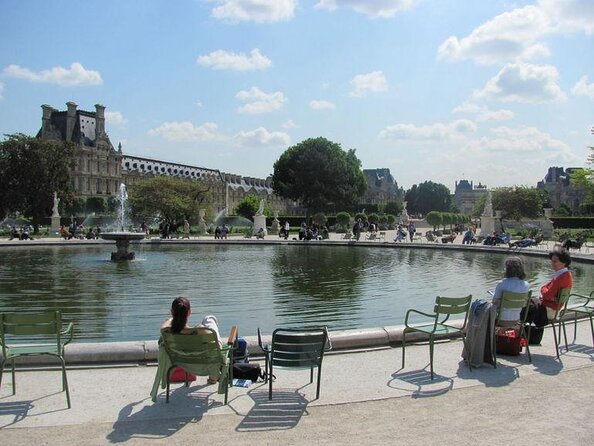
This is the heart of the experience. Most of the tour happens inside the Jardin des Tuileries, where the trainer shares the place’s story and leads you to different spots so you can draw along the way.
You’re not asked to copy an image perfectly. The guidance focuses on helping you make a recognizable rendition—even if you have only limited practice. In the reviews, people describe starting as rusty, then gradually getting their hand into a rhythm.
A big value here is that you get the history while you’re still in the setting. The Tuileries isn’t just a pretty garden. It’s a living part of Paris, and the walk helps you notice details you’d normally miss when you’re just sightseeing.
You also get variety in how you work. At the garden stops, you’ll do drawing (and in some cases painting) using different techniques and short tasks. That’s great for two reasons. First, you don’t overthink it. Second, you build skills by trying multiple approaches, not just one style.
Possible drawback to consider: If you’re expecting a long uninterrupted drawing session at one spot, this is more like a guided sequence of mini-stops. That keeps it fun, but it’s still a walking tour in a garden.
Stop 2: Louvre Pyramid sketch break in 15 minutes
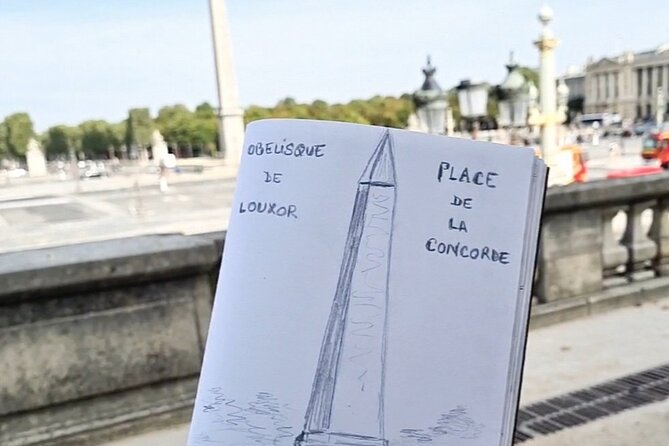
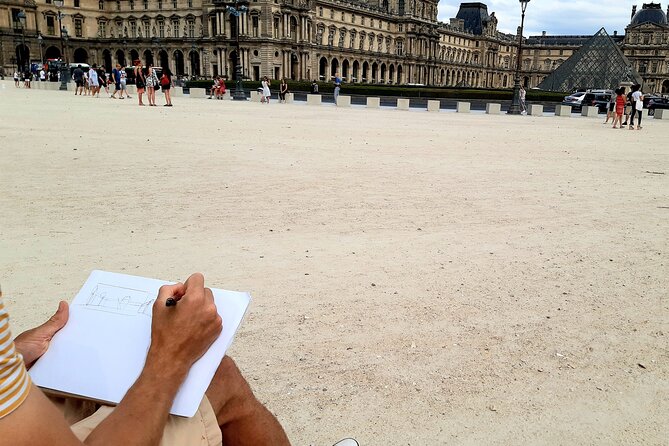
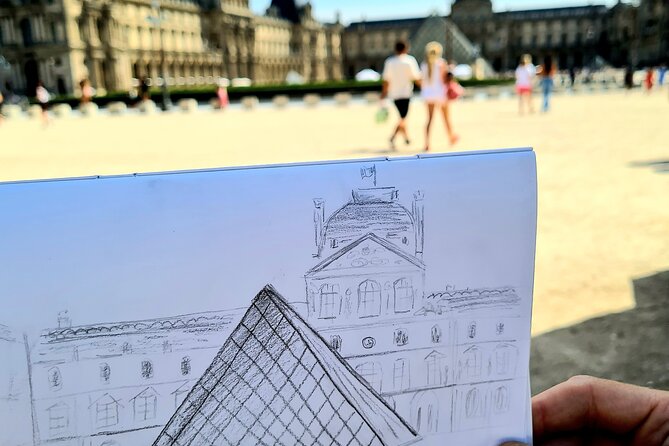
After the garden, you move to the Louvre Pyramid area. The stop is short—about 15 minutes—but it has a specific purpose: you draw something connected to the Pyramid.
This is a nice change of pace. The Tuileries gives you softer, organic lines and lots of viewing angles. The Louvre Pyramid, on the other hand, brings sharper geometry. Even in a brief slot, it forces your brain to shift how it sees: structure versus atmosphere.
Because the time is limited, you won’t feel stuck trying to perfect the drawing. You’ll get coaching to keep working and to finish something you can actually use later in your sketchbook or creative notebook.
Stop 3: Arc de Triomphe du Carrousel pass-and-draw
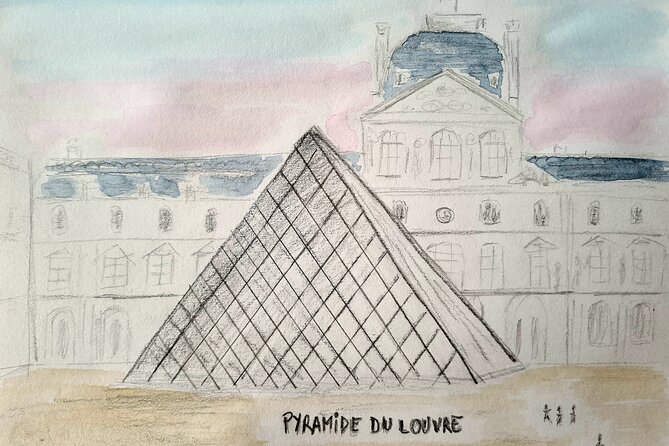
The final landmark is the Arc de Triomphe du Carrousel. You’ll pass by, hear its history, and do a drawing-linked activity tied to what you see. This segment is around 10 minutes, so it’s concise on purpose.
Short stop, big payoff. At this stage you’ve already warmed up your eyes and your hand in the garden, and now you add a final landmark form. The arc gives you a clean, architectural subject that’s easy to understand even if you’re not a trained artist.
And because you finish near Pl. du Carrousel, you’re set up to keep exploring the area afterward. It’s a convenient ending point if you want to follow up with more Louvre-adjacent sightseeing or just wander along the Seine.





Guides who keep it friendly: Evelyne and Romain
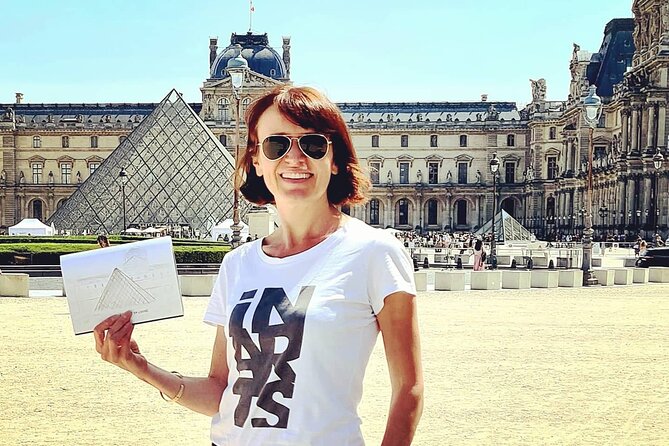
The biggest theme in the feedback is how supportive the instructors are. Names that come up clearly are Evelyne (who leads the cultural and drawing guidance) and Romain (who is described as patient and encouraging, especially for people who feel they lack drawing talent).
That combination matters. If you’re a beginner, you need patience more than you need confidence. The tone described in the reviews is practical: you get nudges when you’re stuck, encouragement when you’re hesitant, and structure so you know what to do next.
It’s also described as working well for children. One review highlights that an 11-year-old enjoyed the class and left inspired to buy art supplies and practice. That’s a good sign if you’re traveling with kids, because you want an activity that holds their attention while still teaching something real.
Value check: what $94.82 buys you in central Paris
At $94.82 per person for about 3 hours, you’re paying for more than walking around. You’re paying for guided instruction that turns sightseeing into a hands-on workshop.
The good news is that the places you visit are free to access in the sense that the tour lists ticket-free admission for the garden and the landmark viewing areas. So your spending isn’t eaten up by attraction fees; it’s directed toward the teaching and the route design.
Also, the group stays small (max 10 travelers). In this kind of activity, that’s not a “nice to have.” It’s often the difference between feeling lost and actually getting help with how to place lines, capture proportions, or complete your task.
If you compare this to doing three separate expensive museum tickets, this is a different kind of value: you’re leaving with a skill spark (and likely some paper you’ll want to keep). It’s a good option when you want a memorable Paris moment that isn’t only photos.
What to bring and how to prepare for an easy afternoon
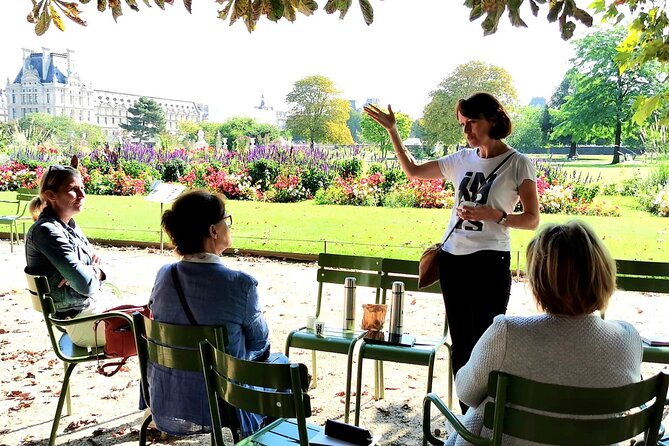
The tour is about drawing in the outdoors, so your practical prep is simple. Plan for walking in the Tuileries area and the central streets around the Louvre and Carrousel. Comfortable shoes are the biggest must.
Bring a flexible mindset about your skill level. The tour is set up for people who aren’t confident artists. The guidance and the task format are built to get you moving from blank page to recognizable results.
One more useful point: you’ll have an art-and-history mix, and it’s offered in English. If English is your comfort zone, you’ll likely enjoy the pace because you can follow the stories while you sketch. If you prefer a language other than English, you might want to confirm what’s covered before booking.
Finally, since it’s described as a creative notebook style workshop, it’s worth having something to write and sketch with. Even if you’re unsure what you’ll use exactly, it’s smart to come ready to draw. If you have questions about materials, check with the provider when you reserve.
Who should book this drawing workshop in Paris?
Book this if you want a hands-on way to experience central Paris without a rigid museum schedule. It’s especially good for people who like structure: short stops, clear tasks, and guidance so you’re not left wondering what to do with your time.
It’s also a great fit if your travel group includes a mix of interests. One person can love the art side, another can love the architecture or history side, and both can participate at the same time. The route is compact, but the viewpoints vary.
If you dislike walking, this may not be your best choice. Even though the stop times are defined, the experience still involves moving between the Tuileries, the Louvre Pyramid area, and the Carrousel arc.
Should you book this Tuileries drawing walk?
I’d book it if you want an afternoon that feels calmer than typical sightseeing and more creative than just wandering. You’ll get real guidance, patient coaching, and a route that teaches you how to look—then gives you a chance to draw what you see.
I’d skip it if you want a quiet, low-movement activity or if you only want landmark viewing without a workshop component. The entire point is that your pencil joins the itinerary.
If you’re deciding between another standard tour and something different, this is one of the better choices for leaving Paris with both memories and a little new creative momentum.
FAQ
What’s the duration of the drawing workshop and cultural walk?
It runs for about 3 hours.
Where does the tour start and where does it end?
It starts at 9 Pl. de la Concorde, 75001 Paris, and ends at Arc de Triomphe du Carrousel, Pl. du Carrousel, 75001 Paris.
What time does the tour begin?
The start time is 2:00 pm.
Is the tour offered in English?
Yes, it’s offered in English.
How many people are in a group?
The maximum group size is 10 travelers.
Are admission tickets required for the stops?
The tour lists admission ticket free for the Tuileries garden and the nearby landmark stops.
Can I use a mobile ticket?
Yes, it includes a mobile ticket.
What’s the cancellation policy if plans change?
You can cancel for free up to 24 hours in advance for a full refund.
Is it suitable for children or people who don’t draw much?
It’s designed so most travelers can participate, and it has worked well for children and beginners in the experience feedback, with patient guidance from the instructors.