REVIEW · VERSAILLES
Versailles: Path of the Heroes on original electrics 2 wheels
Book on Viator →Operated by TRIP IN TROTT · Bookable on Viator
Versailles has a quieter, tougher side. This 4-hour scooter route takes you to the Path of the Heroes sites tied to American soldiers and volunteer pilots, with a guide and practical ride support. It’s a great match if you want more than palace postcards and you like history you can actually walk between.
What I like most is the balance of meaningful stops and movement. You get a full hour at the Lafayette Escadrille memorial, then quick hits at other Pershing-and-Lafayette landmarks, before a break at Haras de Jardy—so the story keeps flowing without feeling like a classroom. I also like the practical setup: helmets, gloves, walkie-talkies, snacks, and even rain gear (kway), so you’re not scrambling when the weather turns.
One thing to consider: this is outdoors and you’re riding. If it’s cold or rainy, you’ll want to dress for it, and there’s a firm requirement that everyone must know how to ride a bike (and children must be 14+).
In This Review
- Key things you’ll notice on this electric-scooter Versailles route
- Why this Versailles tour feels different from the palace circuit
- The 4-hour plan: what the timing really means
- Memorial de L’Escadrille La Fayette: the hour that sets the tone
- Monuments Pershing and Lafayette: quick stop, big meaning
- Place d’Armes: close the eyes moment, then open them
- Trianon Palace area: the Treaty of Versailles story in real surroundings
- Near the town hall: war memorials and the Germans-before-the-treaty clue
- Haras de Jardy break: when you’ll actually feel the day
- Price and value: what $177.52 covers (and why it can be worth it)
- What it’s like to ride: skills, speed, and confidence
- The guide style: what you’re buying besides wheels
- Who should book this tour (and who should skip)
- Should you book Versailles: Path of the Heroes on original electrics 2 wheels?
- FAQ
- How long is the Versailles: Path of the Heroes tour?
- How much does the tour cost?
- Is the tour offered in English?
- What’s included with the scooter experience?
- Is there an age limit or riding requirement?
- Is there a weight limit?
- Can I cancel for free?
Key things you’ll notice on this electric-scooter Versailles route
- An American WWI theme that actually connects the stops: from Lafayette Escadrille to Pershing and the Treaty of Versailles neighborhood.
- A full 1-hour memorial visit at the Lafayette Escadrille site, not just a quick photo stop.
- Small-group feel (max 6 travelers), which helps you keep pace and ask questions along the way.
- Scooter support built in: helmets, gloves, and walkie-talkies for keeping the group together.
- Weather-proofing details like kway, plus extra cold-weather help mentioned in reviews.
- A photo keepsake: you’re given a camera with memory card at the end of the discovery.
Why this Versailles tour feels different from the palace circuit
Most Versailles days follow one track: gates, gardens, and the big-ticket château rooms. This one takes a different route—still Versailles, but with a focus on war memory and the American connection to WWI and the diplomacy that followed.
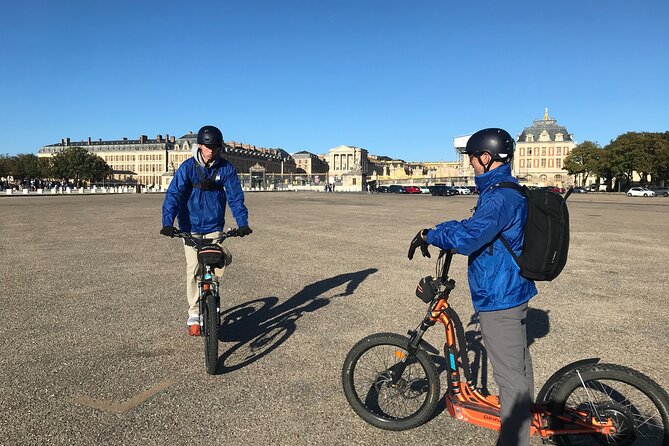
You ride electric scooters (plus helmets and gloves) instead of shuffling on foot. That matters here because the stops are spread around the area, including spots up on heights and along paths you’d likely skip if you were walking on your own. You get more angles and more context in the same half-day.
The price—$177.52 per person—can sound steep until you look at what’s bundled. You’re paying for a live guide, the scooter equipment, snacks, rain gear, and a camera with memory card. When you add up those pieces, it’s not just sightseeing transport; it’s a structured outing with the logistics handled.
You can also read our reviews of more tours and experiences in Versailles.



The 4-hour plan: what the timing really means
This experience runs about 4 hours (starting at 2:00 pm), and the route is built around six stops. The stated stop times are: 1 hour, 5 minutes, 15 minutes, 5 minutes, 30 minutes, and a 15-minute break.
Those quick segments aren’t there to waste time. They’re short because the key points are visual and thematic—like the face-off memorials—while the deeper interpretation is concentrated at the longer stop. That rhythm helps if your attention span is human.
Also, it ends back at the meeting point. No transfer stress, no “then figure out the rest of your afternoon” feeling.
Memorial de L’Escadrille La Fayette: the hour that sets the tone
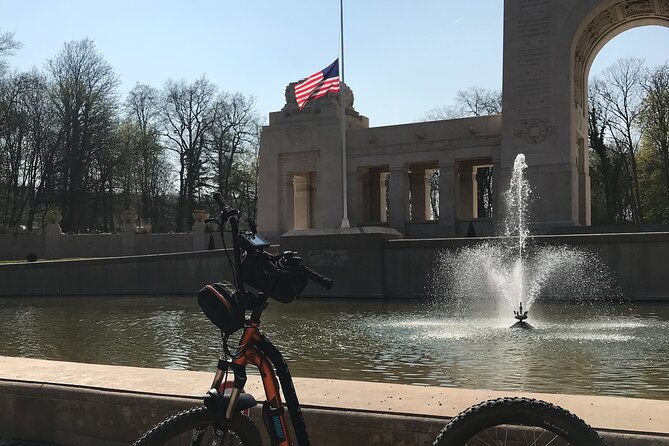
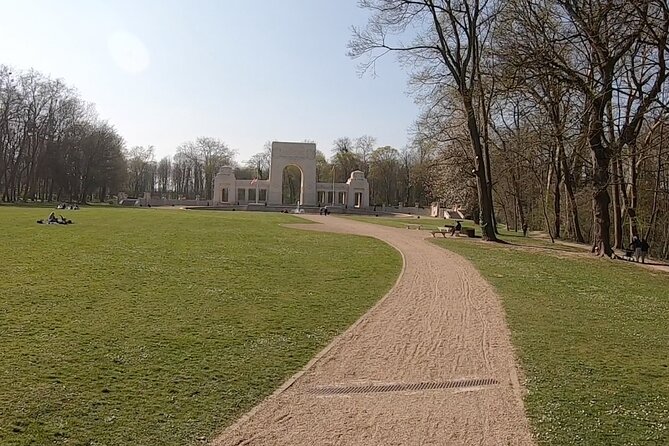
Stop one is the Memorial de L’Escadrille La Fayette, and it takes a full hour. This is where the tour’s theme gets clear: the memory of American volunteer pilots who died during the First World War, flying under French uniforms before the United States officially entered the war.
The memorial is tied to timing that makes history feel sharper. The Escadrille La Fayette was created on April 20, 1916, which is about a year before the U.S. Congress declared war on April 6, 1917. That gap is one of those details you don’t usually pick up if you only skim general WWI timelines.
If you’re the type who likes facts you can hold onto, this stop is where they land. You’re there long enough to read, process, and listen, rather than racing through. And because this is the anchor stop, it’s also where a guide’s voice matters most.
Practical ride tip: treat the memorial as your “warming-up” moment for the entire route. Once you get the story here—who these pilots were, why it mattered—you’ll understand what you’re seeing at the next memorials.
Monuments Pershing and Lafayette: quick stop, big meaning
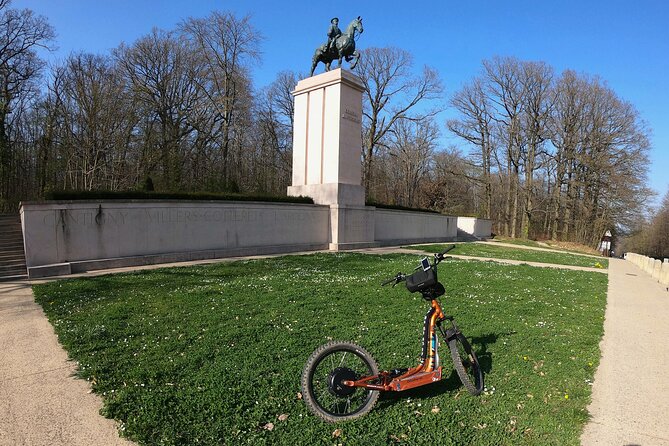
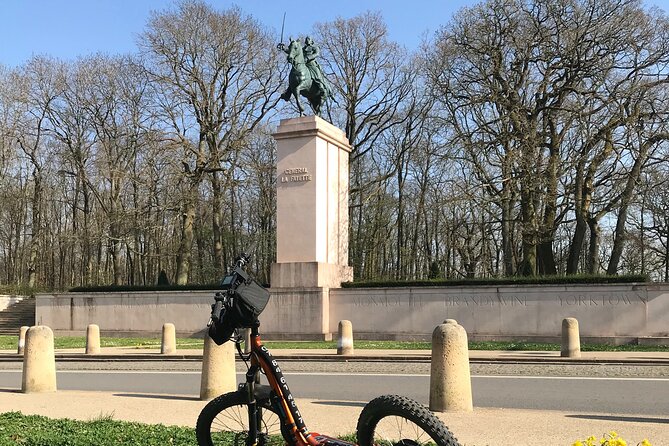
Stop two is Monuments Pershing and Lafayette, placed on the heights of Versailles. You’ll reach it at the end of a forest path, where the memorial faces down the theme of the tour: General Pershing and General Lafayette as symbols of two alliances and shared fight.
This stop is only 5 minutes on the schedule, but it’s designed for impact. The key value here is the “look and absorb” factor—you don’t need a long lecture to grasp the visual. You just need a moment to stand, take in the placement, and connect it to what you learned at the memorial.
Admission here is listed as free. That means your money is still doing its job: paying for the guided navigation and the storytelling chain, not for optional add-ons at every corner.
Place d’Armes: close the eyes moment, then open them
Stop three is Place d’Armes, kept short on purpose at 15 minutes. Before you look at the Château de Versailles, the itinerary asks you to close your eyes. It’s a small instruction that pushes you to imagine the place when it wasn’t about court ceremony.
After France entered the war against Germany, Versailles became a gathering point: soldiers, horses, and equipment assembled there before leaving for the front. The point of this stop isn’t to turn Versailles into a grim museum. It’s to show how quickly a royal setting can become a military logistics hub.
Even if you know Versailles already, this reframing can change your whole day. You start seeing the ground as a stage that shifted roles.






Trianon Palace area: the Treaty of Versailles story in real surroundings
Stop four is the Waldorf Astoria Versailles – Trianon Palace area, used as a 5-minute connector stop. It’s positioned at the entrance of the Château park, so you get a quick sense of the geography—how close these “power” spaces sit to each other.
There’s a specific diplomacy thread you’ll hear: Georges Clemenceau dictating the conditions of the Treaty of Versailles, which was signed a few days later at the Château. That one detail ties the political aftermath directly to the physical world you can see.
Because this is brief, it works best as a hinge. After the war memory at the earlier stops and the wartime gathering at Place d’Armes, you shift to what happens next: the terms, the signing, the long tail of WWI politics.
Near the town hall: war memorials and the Germans-before-the-treaty clue

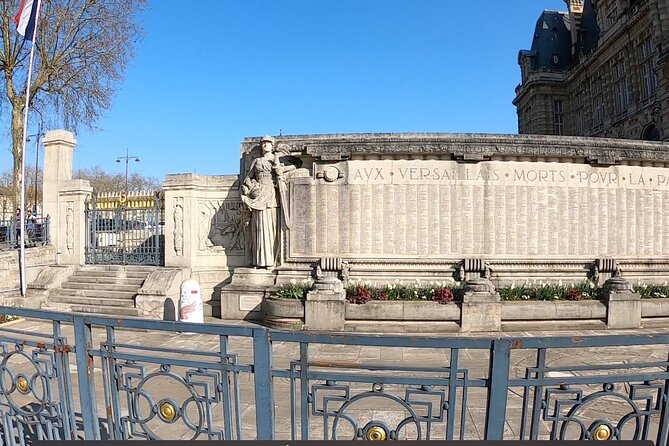
Stop five is where the tour broadens inside the Versailles town area. It lasts 30 minutes and includes the war memorial near the town hall, plus other nearby points such as the hotel that housed Germans before the signing of the Traité de Versailles.
That “before the treaty” idea is more than trivia. It’s the kind of detail that makes a treaty feel less like an abstract document and more like something negotiated in rooms surrounded by real tension. You’re also given time here to read and ask, which helps if you prefer to understand the full sequence rather than catching fragments.
Admission is listed as free for this portion too. So again: your payment isn’t buying separate entry tickets for every stop; it’s buying a stitched-together narrative and a ride plan that keeps you moving.
Haras de Jardy break: when you’ll actually feel the day
Stop six is Haras de Jardy, and it’s your 15-minute reset. After the memorial-heavy parts, this is the moment to refuel mentally and physically—especially if you’ve been under gray skies or wind.
Snacks are included, and this stop lines up with the tour’s physical reality. Even with scooters doing the heavy lifting, you’ll still be out walking small distances between photo points and memorials. A short break keeps you alert for the final part of the loop.
In one review example, the day was snowing and raining, and the guide helped with extra cold-weather comfort. Windbreakers and gloves were mentioned, plus hot chocolate as a warmth option after the memorial visit. If you tend to feel cold easily, this matters more than you’d think.
Price and value: what $177.52 covers (and why it can be worth it)
At $177.52 per person for about four hours, you’re paying for four things at once:
1) Guided interpretation. The tour includes a guide during the experience, and the schedule gives the Lafayette Escadrille memorial a full hour for deeper focus.
2) The scooter + safety gear. You get e-scooters, helmets, and gloves. You’re also given walkie-talkies, which is a small detail that helps with group control on shared paths.
3) Food and weather protection. Snacks are included, and kway (rain ponchos) are provided. If you show up thinking it’ll be sunny all afternoon, you’ll be glad you didn’t.
4) A photo keepsake. You’re provided a camera with memory card at the end. If you’ve ever watched your group fall back into phone-camera mode, this kind of setup can save time and make the results more consistent.
Not included is lunch or dinner, plus private transportation and personal spending. So plan a meal around this outing rather than expecting it to replace a full day of eating.
What it’s like to ride: skills, speed, and confidence
This isn’t a “stand there while someone else drives” experience. It’s a scooter ride that assumes basic comfort.
The operator lists two key requirements: children under 14 aren’t allowed, and everyone must know how to ride a bike. You also need to meet a maximum weight per participant of 130 Kg / 285 pounds.
If you’re nervous at first, treat it like the learning curve it is. In a review example, the guide helped with instruction, and a test run made the whole ride feel easy. If you want your day to go smoothly, take that learning time seriously—don’t rush past it.
Also, remember this tour is outdoors in real weather. Review feedback specifically calls out that a cold, wet day can reduce comfort. The good news is they provide gear to help you handle it, not just the scooter.
The guide style: what you’re buying besides wheels
The tour is offered by TRIP IN TROTT, and the name that shows up in reviews is JB. That matters because it hints at the human factor: friendly, accommodating, and willing to adjust to the group’s pace.
I like that the tour structure keeps questions possible. You’re not just blasted from one stop to the next with no time to understand. The itinerary uses longer stops where you’ll want explanation (especially Lafayette Escadrille) and short stops where a visual moment is enough (like the Pershing-Lafayette monuments).
If you like history that’s tied to place, this is the sweet spot. You’ll connect names and events to the ground under your wheels.
Who should book this tour (and who should skip)
This is a strong fit if you want:
- Versailles history beyond the château, with American WWI and treaty connections
- an active way to cover ground without long uphill walking
- a small group experience capped at 6 people
- weather-aware support like gloves, windbreakers, and rain gear
You might skip it if:
- you’re uncomfortable riding scooters or you can’t meet the bike-riding skill requirement
- you’re traveling with kids under 14
- you expect a fully indoor, climate-controlled experience
Should you book Versailles: Path of the Heroes on original electrics 2 wheels?
Book it if you’re looking for a Versailles day with a clear theme and practical pacing. The itinerary isn’t random; it’s built to connect American volunteers, Pershing and Lafayette symbolism, and the surrounding world of the Treaty of Versailles. The scooter format makes it easier to see more without turning the afternoon into a leg workout.
Don’t book it if your ideal Versailles trip is purely palace-and-chateau only. This route spends its time on war memory and political aftermath, not royal interiors.
My final advice: dress for weather first, then worry about fashion. Even when the story is great, cold wind and rain can make the ride feel longer than it is. Bring layers, accept the provided kway, and take the initial ride instructions seriously. If you do that, this tour is one of the more memorable ways to see Versailles with your eyes open and your legs rested.
FAQ
How long is the Versailles: Path of the Heroes tour?
It’s about 4 hours.
How much does the tour cost?
The price listed is $177.52 per person.
Is the tour offered in English?
Yes, it’s offered in English.
What’s included with the scooter experience?
You get a guide, e-scooters, helmets and gloves, snacks, walkie-talkies, kway, and a camera with memory card given at the end. A mobile ticket is also provided.
Is there an age limit or riding requirement?
Yes. Children under 14 are not allowed, and participants must know how to ride a bike.
Is there a weight limit?
Yes. The maximum weight per participant is 130 Kg / 285 pounds.
Can I cancel for free?
Yes. You can cancel up to 24 hours in advance for a full refund, with the local time cutoff rules applied.