REVIEW · PARIS
The Musée d’Orsay in Focus: Impressionists & Beyond (Max 6)
Book on Viator →Operated by Fat Cat Tours · Bookable on Viator
A quick walk through history usually lasts longer than you expect. That’s the idea here: you get a tight, skip-the-line route with an expert guide through the Musée d’Orsay, then you keep going on your own for the post-Impressionist galleries. I like that it’s paced for real viewing, not a rushed checklist, and I especially like the way the guide links the artists’ ideas and relationships, not just their techniques. The one possible snag: two hours is short for a museum as huge as Orsay, so you’ll want to choose your follow-up rooms carefully after the tour.
I also like the group size cap of 6 travelers. Smaller groups mean questions actually get answered, and you can hear the guide without craning your neck. The tour is offered in English, runs about two hours, and includes your entry ticket—so you’re not doing extra admin while you’re trying to look at paintings.
If you’re someone who needs a very slow, room-by-room museum day, you might find this format a bit structured. It’s best for people who want a strong start, a few must-see anchors, and then freedom to finish at your own pace.
In This Review
- Key highlights worth your time
- Musée d’Orsay in two hours: what this small-group format really buys you
- The Orsay location: starting at Esplanade Valéry Giscard d’Estaing
- Skip-the-line entry plus a licensed guide: why it’s worth paying
- How the guided route works: from 1848–1914 to the Impressionists
- Impressionists: Monet and Renoir, seen with the right questions
- Degas and the lived-in edge of observation
- Post-Impressionists: Van Gogh’s intensity, placed in context
- Guided insight, then you break away: how to use your own time inside Orsay
- Group size, pacing, and comfort: the real-world experience
- Price and value: is $190.52 a smart spend?
- Who should book this Orsay in Focus tour?
- Should you book Musée d’Orsay in Focus: Impressionists & Beyond (Max 6)?
- FAQ
- How long is the Musée d’Orsay in Focus tour?
- What’s the group size limit?
- Is the tour offered in English?
- Does the price include museum entry?
- Where does the tour start and end?
- Is there free cancellation?
Key highlights worth your time
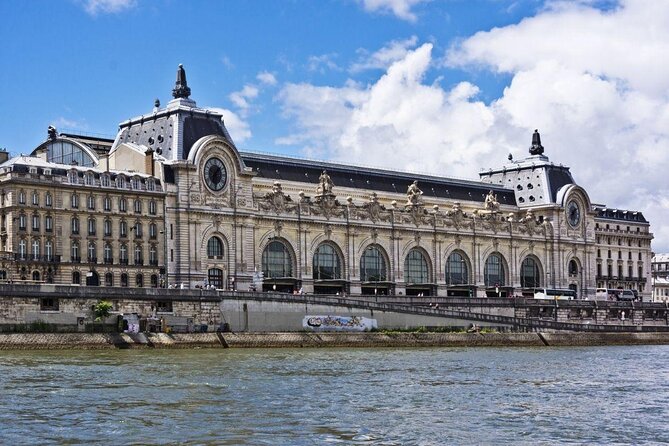
- Skip-the-line entry into Musée d’Orsay so you can start looking sooner
- Max 6 travelers, keeping the guide close and the questions flowing
- Licensed English guide who focuses on connections among the artists
- Impressionists plus Post-Impressionists, centered on Monet, Renoir, Degas, and Van Gogh
- Guided insight first, self-guided time after, so you control what to linger on
Musée d’Orsay in two hours: what this small-group format really buys you
Orsay is one of those Paris museums where your brain wants to sprint. New visitors often get stuck in the same trap: you walk in, see something famous, and then spend the rest of the day bouncing between rooms without a clear storyline.
This tour is built to prevent that. With a group capped at 6, your guide can slow down at the right moments and point you toward the paintings that help the whole period make sense. You’re not just collecting titles; you’re building a timeline from the broader 19th-century world into the Impressionists and then onward to Post-Impressionism.
At about 2 hours, this is not a full-museum plan. It’s a smart on-ramp. Think of it like getting the museum’s “map in your head” first, then using your time to explore what grabs you most.
You can also read our reviews of more tours and experiences in Paris.



The Orsay location: starting at Esplanade Valéry Giscard d’Estaing
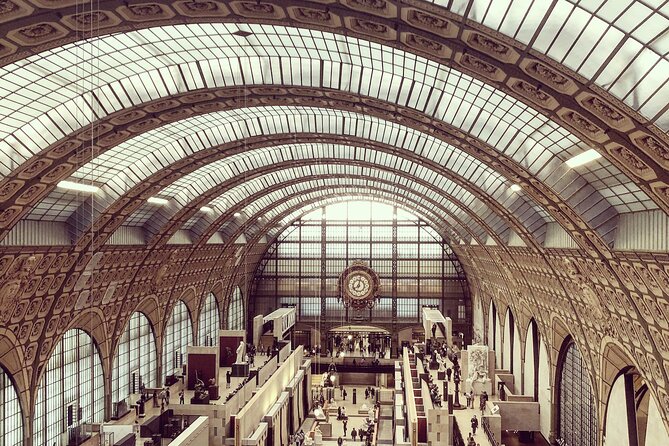
Your tour meets at Musée d’Orsay Esplanade Valéry Giscard d’Estaing, 75007 Paris and ends inside the museum. That matters because Orsay can feel a little like a maze once you’re inside, and you don’t want to spend your limited time searching for the right entrance, then missing the best early rooms.
This meeting point is also in a convenient part of central Paris with near public transportation, which helps if you’re combining Orsay with other sights the same day. And since the tour ends inside the museum, you avoid the classic problem of reconvening outside where everyone is tired and hunting for landmarks.
Skip-the-line entry plus a licensed guide: why it’s worth paying
You’re paying for three things here: time, a clear route, and an informed voice in your ear.
Skip-the-line entry means you start the museum portion without burning half your tour waiting your turn. In a museum like Orsay, that can be the difference between seeing your priority works and only hearing about them secondhand later.
More importantly, the guide is a licensed, English-speaking expert. And the best part, based on the strongest comments from guide performances, is that the tour is not just lecture mode. People praised guides like Adam and Lilijana for being easy to understand, for helping participants feel involved, and for steering the visit so you’re looking at the right things at the right time.
If you’re traveling with limited time in Paris, that’s a big deal. Museums are great, but time is the currency. This tour helps you spend your currency where it actually pays off: on art you’ll remember.
How the guided route works: from 1848–1914 to the Impressionists
The heart of the experience happens in one place: the Musée d’Orsay galleries, covering a sweeping period from 1848 to 1914. That span is not just a label—it’s the context. The guide frames why this era changed so much: new technology, shifting society, and the ways artists responded to modern life.
One of the most useful angles in this tour is that you’re not treated like a passive audience. You get led through the collection with themes that connect the era’s inventions—things like tubes of paint, trains, and electricity—to what people began to notice in everyday scenes and how that affected artistic choices.
Impressionists: Monet and Renoir, seen with the right questions
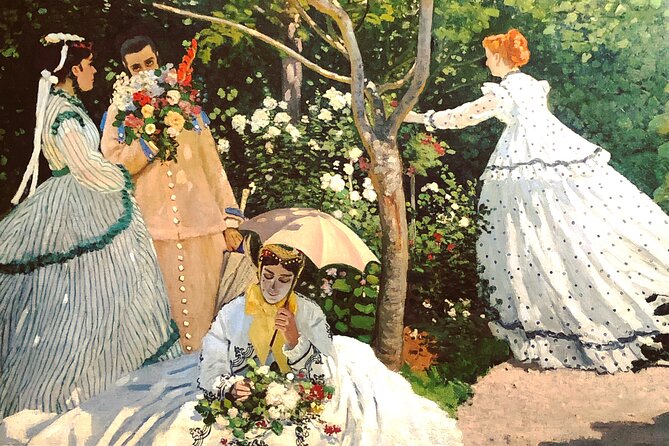
The tour highlights major Impressionists including Monet and Renoir. The point isn’t only to stand in front of famous paintings. It’s to understand what was rebellious about the style for its day: the fresh way of seeing light, atmosphere, and everyday moments.
In a guided setting, you can ask better questions than you’d think to ask alone. For example:
- What did the artist choose to emphasize?
- How does brushwork and color support the feeling of a scene?
- What does the painting assume you already know about modern life?





Degas and the lived-in edge of observation
Degas gives you a different flavor—more studied, often more angled toward observation and the choreography of modern spaces. A guide helps you avoid the common trap of only noticing the most obvious detail. You’ll be encouraged to look again, usually at something small that changes how you read the whole work.
Post-Impressionists: Van Gogh’s intensity, placed in context
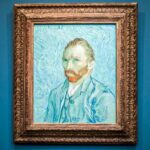
Then you move toward Post-Impressionism, including Vincent Van Gogh. This transition is where the tour’s structure shines. Impressionism can feel like a window into perception; Post-Impressionism can feel like that window turning into a statement.
Van Gogh in particular is best understood when you’re not just chasing the most emotional areas of the painting. You want context for why his choices feel urgent—how he differs from what came right before, and how that fits into the bigger shift from shared perception to more personal, expressive direction.
Guided insight, then you break away: how to use your own time inside Orsay
The tour doesn’t end when the guided portion ends. It sets you up for your own exploring, especially in the post-impressionist sections.
Here’s how I’d use that follow-up time so you don’t lose momentum:
- Pick one artist you’re most curious about after the guide. Then spend extra time with that artist’s rooms.
- Choose one painting you didn’t expect to love. Those are often the works that turn a day in a museum into a real memory.
- If you’re traveling with someone who has different taste, treat the self-guided time as your flexibility window.
Because the guided part is already giving you the storyline, you’ll be better at finding meaning fast once you’re wandering. You won’t feel like you’re reading a label; you’ll feel like you’re in conversation with what you just learned.
Group size, pacing, and comfort: the real-world experience
A maximum of 6 travelers changes the day more than you might think. It means:
- You’re less likely to get separated in crowded galleries.
- The guide can adjust pace if someone needs extra time to see details.
- Questions don’t get swallowed by the group noise.
The tour also supports people who may need brief seating moments. One highlight from the experience was that the guide accommodated requests for occasional seats for older participants. If you think you’ll want to pause, plan to mention it at the start so your guide can adapt the route and pacing.
Finally, the tour requires a moderate physical fitness level. That usually means you should expect walking inside the museum and time on your feet. If your day includes other big sights, schedule Orsay when you still have energy left for looking closely.
Price and value: is $190.52 a smart spend?
At $190.52 per person for about 2 hours, you’re not paying for a long museum day. You’re paying for focused access plus expert direction—especially the skip-the-line part.
Value comes from reducing three hidden costs:
- Time cost: less waiting, less wandering, more looking.
- Decision cost: fewer “Which room do we do next?” moments.
- Understanding cost: an expert helps you notice what you’d otherwise miss.
If your Paris schedule is tight, or you want a high-confidence path through Impressionists to Post-Impressionism, this price can be reasonable. If you have a full day at Orsay and you like to work slowly on your own, you might prefer a self-guided visit. This tour is for the people who want structure and payoff.
Who should book this Orsay in Focus tour?
This experience fits best if you:
- want a guided path through the Impressionists and Post-Impressionists
- appreciate learning the backstories and relationships among artists, not just collecting facts
- travel with only a limited window for Orsay
- like smaller groups and clear communication in English
It may be less ideal if you:
- want to linger for hours on one theme without any built-in pacing
- prefer totally independent wandering with no group meeting points
- need a very flexible, slower itinerary throughout
Should you book Musée d’Orsay in Focus: Impressionists & Beyond (Max 6)?
Yes, if you want the best possible use of a short time window. This tour is a smart way to start Orsay with a storyline, then finish with freedom. The biggest reason I’d recommend it is the combination of skip-the-line entry, a licensed English guide, and the small-group limit that keeps the experience personal.
If you’re the type who likes to leave a museum understanding why the art looks the way it does—and how artists pushed against what came before—this is a strong choice. If you’re chasing a full, unhurried Orsay marathon, you may prefer a self-guided plan. For everyone else, this is a good way to see the period’s “why” along with its masterpieces.
FAQ
How long is the Musée d’Orsay in Focus tour?
The tour lasts about 2 hours.
What’s the group size limit?
The experience has a maximum of 6 travelers.
Is the tour offered in English?
Yes, it is offered in English.
Does the price include museum entry?
Yes. All entry tickets are included.
Where does the tour start and end?
It starts at Musée d’Orsay Esplanade Valéry Giscard d’Estaing, 75007 Paris, France, and ends inside the Orsay Museum.
Is there free cancellation?
Yes. You can cancel up to 24 hours in advance for a full refund.