REVIEW · PARIS
The covered passages of Paris
Book on GetYourGuide →Operated by Cultival · Bookable on GetYourGuide
Paris’s covered passages are tiny worlds tucked into the city. This 90-minute walk turns you into a careful observer, moving from place to place where shopping, art, and old-school Paris habits still leave traces.
I especially love how the tour strings together multiple galeries into a single easy loop, so you see the variety instead of one highlight. I also like that you’re guided through the story of the passages, not just told what to look at.
One possible drawback: the guide covers some context while you’re outside the galeries near the Palais Royal area. If you’re hoping for maximum time strictly inside shops and arcades, you may want to set expectations.
In This Review
- Key highlights at a glance
- Why Paris’s Covered Passages Feel Like a Time Machine
- Meeting at Place Colette near the Comédie-Française
- Palais Royal to Galerie Véro-Dodat: Art books in a roofed world
- Galerie Vivienne: Italian mosaics and a glass roof
- Galerie Colbert: exhibitions in a passage setting
- Passage des Panoramas and the road toward the Grands Boulevards
- The 30 roofed passages idea: why this tour matters
- You get a lot of variety for $17 in 90 minutes
- A guide-led experience in French only: plan for that
- Who should book this covered passages tour (and who shouldn’t)
- Should you book the tour of Paris’s covered passages?
- FAQ
- What is the duration of the tour?
- How much does it cost?
- Where does the tour start?
- What should I look for at the meeting point?
- Is the tour guided?
- What language is the tour in?
- What places are included during the walk?
- Are there any days when some galleries may be closed?
- What happens if the weather is bad?
- Is there a transfer included?
- Is there free cancellation?
Key highlights at a glance
- Passages couverts time-warp feel: roofed walkways that cut you off from street life
- Galerie Vivienne details: Italian mosaic flooring and a glass roof
- Book lover stop: Galerie Véro-Dodat is known for art bookshops
- Gallery life: Galerie Colbert’s spaces host exhibitions
- Philatelist-friendly stop: Passage des Panoramas links to the Grands Boulevards vibe
- French-only guiding: you get the full experience if you’re comfortable in French
Why Paris’s Covered Passages Feel Like a Time Machine
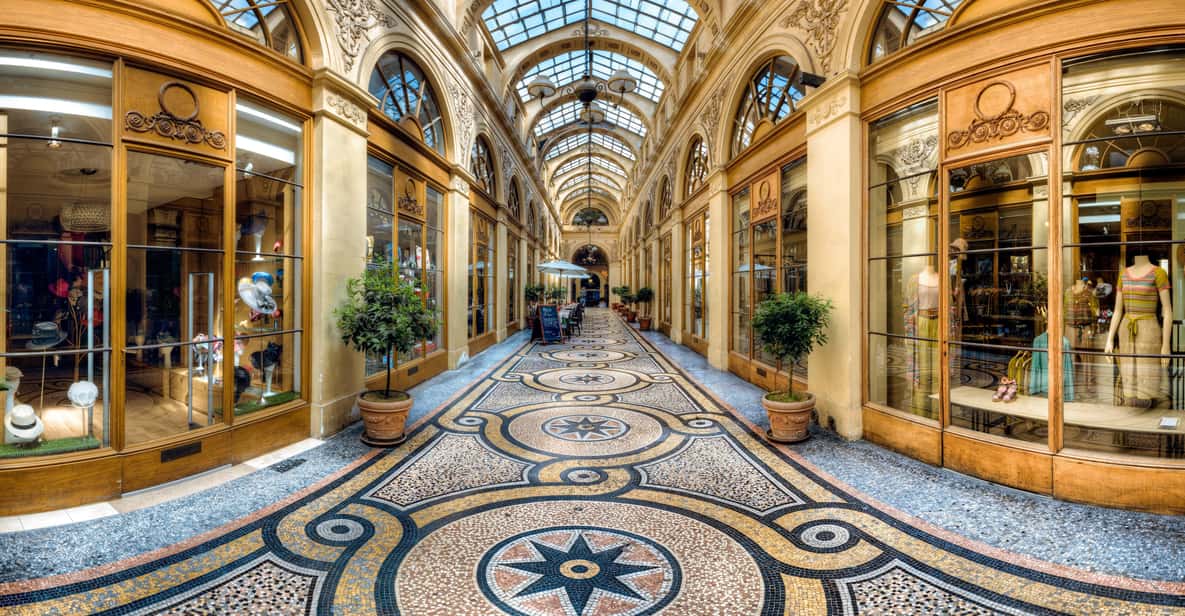
Paris has a special talent for hiding beauty in plain sight. These passageways—roofed, narrow, and just long enough to make you slow down—were built for strolling when going out meant showing yourself as much as running errands.
The tour’s big promise is simple: you walk from one emblematic passage to the next and you notice how each one has its own personality. You’re not looking at one postcard scene; you’re moving through an entire system of elegant corridors that once connected important parts of the city.
Historically, these arcades mattered because they offered a covered path between major streets. Today, that same logic still works. You get shelter, a calmer pace, and a surprising sense of separation from the bustle outside.
You can also read our reviews of more tours and experiences in Paris.


Meeting at Place Colette near the Comédie-Française
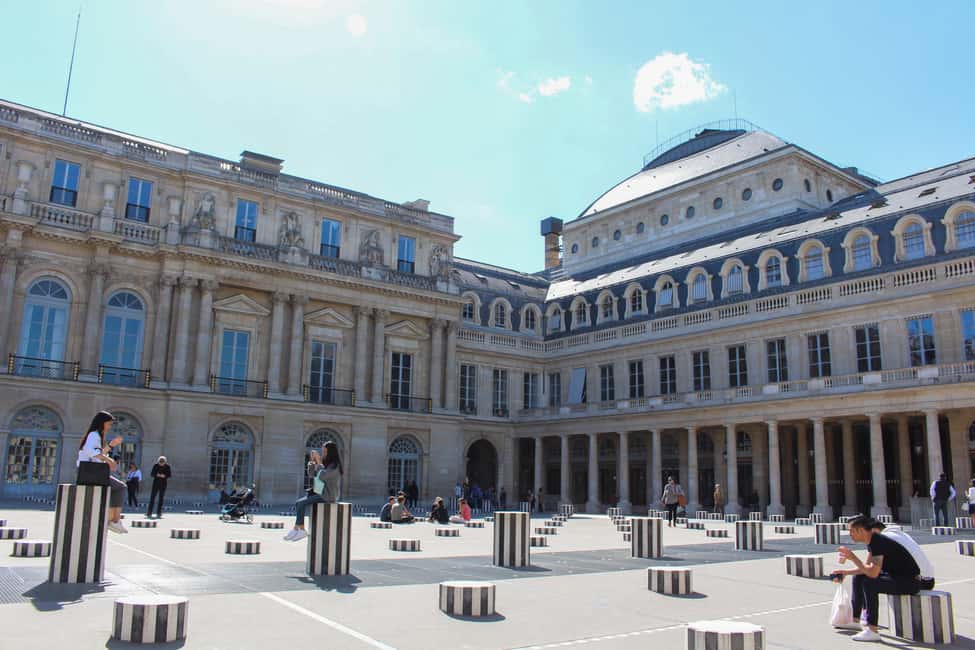
Your tour starts at Place Colette in Paris’s 1st arrondissement, right in front of the Comédie-Française. It’s also near the metro station Palais Royal – Musée du Louvre, which makes it straightforward to reach before you head into the passages.
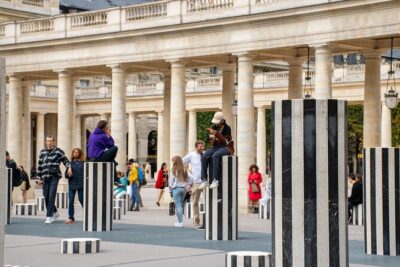
One detail I like here is that the meeting area includes the glass-bead artwork by Jean-Michel Othoniel. Even if you’re not into public art, it helps you get oriented fast. You’ll know exactly where to gather without standing around guessing.
Because the tour is a walking format, arriving on time helps. You’ll want comfortable shoes, since you’ll spend most of the 90 minutes on your feet.
Palais Royal to Galerie Véro-Dodat: Art books in a roofed world
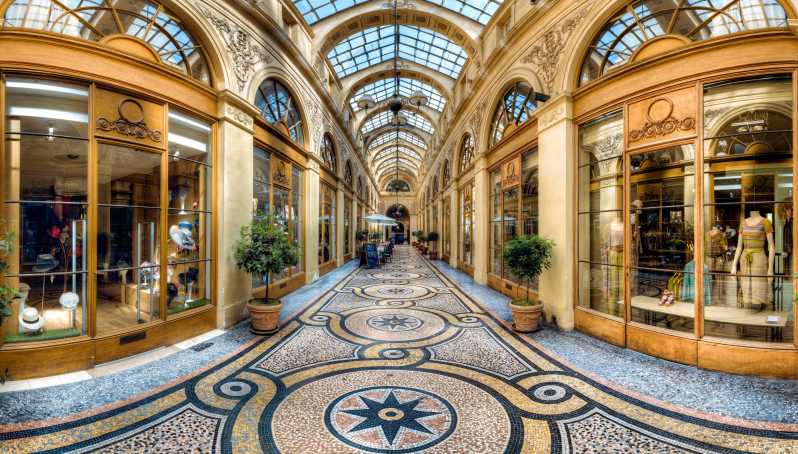
The first part of the route takes you from the Palais Royal area toward Galerie Véro-Dodat. This is the kind of stop that works even if you’re not shopping: you’re inside a passage, looking at how Paris supports culture on a small scale.
Galerie Véro-Dodat is particularly known for art bookshops. That matters because it changes the feel of the walk. Instead of only seeing general-purpose retail, you catch a glimpse of Paris as a place where the gallery world, publishing, and collecting sit close together.
What I find useful is that this segment gives you a rhythm. Your eyes start adjusting to the passage format: the curved perspective, the storefront intimacy, and the way the roof light changes the mood.
Galerie Vivienne: Italian mosaics and a glass roof
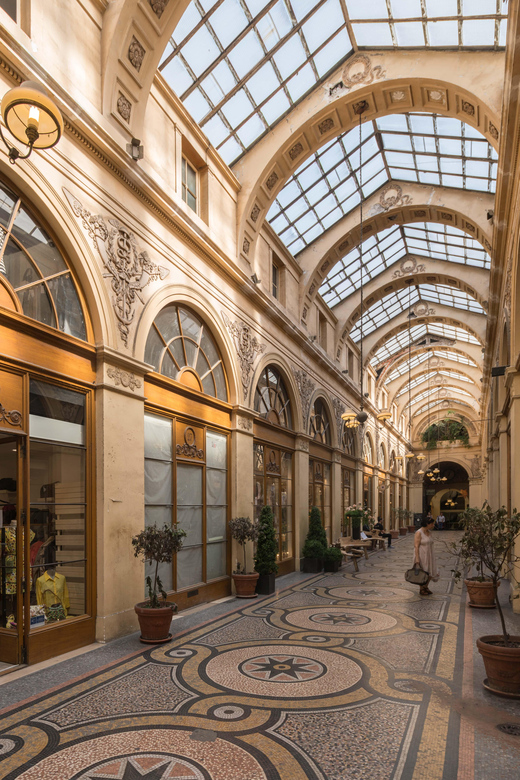
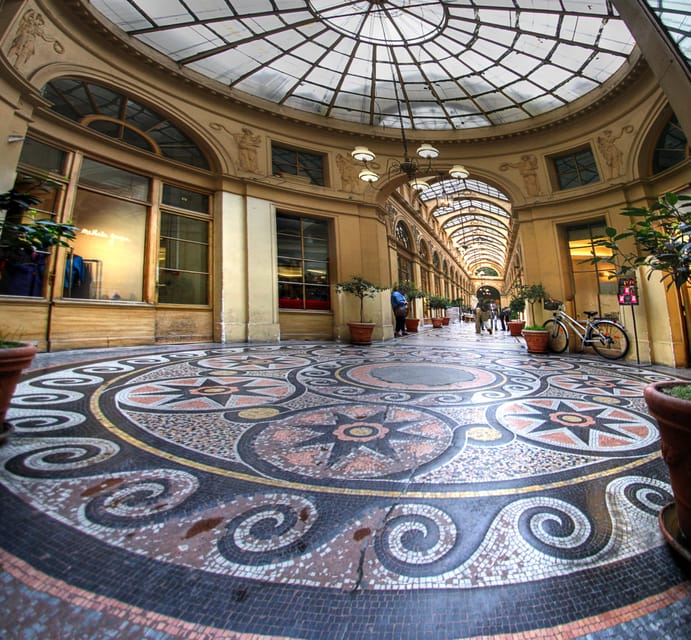
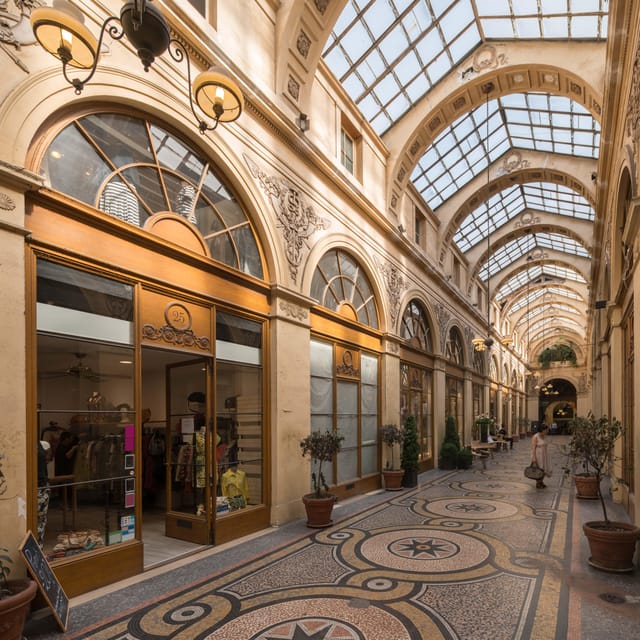
If there’s one stop that feels like the tour’s centerpiece, it’s Galerie Vivienne. This is often described as one of the most majestic passages for good reason: the Italian mosaics on the floor pull you in immediately, and the glass roof brings in a softer, more gallery-like daylight.
Look down when you enter. The mosaic pattern isn’t just decoration; it’s part of the architecture’s identity. It also helps you slow your pace, which is exactly what these passages are best at—moving like you have time, not like you’re racing to the next stop.
The glass roof is another key reason the space feels special. Outdoor Paris lighting can be harsh or change fast. Under a roof like this, the light becomes steadier, and the whole place feels less like a street shortcut and more like a small interior landmark.
One more practical tip: if you’re taking photos, you’ll get better results when you pause near the center and let your eyes adjust first. Don’t rely on the brightest edge of the passage.
Galerie Colbert: exhibitions in a passage setting
After Vivienne, the walk continues to Galerie Colbert. This is where the tour adds a modern pulse to the historic setting.
The standout here is that exhibitions are regularly organized. That means the passage isn’t just a preserved relic; it’s actively used. You might see displays that fit your interests, and even if you don’t, the idea is important: these corridors keep working as public space.
For you, that changes the value of the visit. You’re not only checking off an architectural stop; you’re experiencing how Paris keeps cultural venues alive in everyday places. It’s a reminder that these passages weren’t built for one moment in time—they were designed for foot traffic and commerce, and they still earn their place.
If you’re a person who likes to peek into art without committing to a full museum visit, this stop is a strong match.



Passage des Panoramas and the road toward the Grands Boulevards
The route then moves toward Passage des Panoramas, which is especially appreciated by philatelists. Even if stamps aren’t your hobby, it’s a fun example of how specialized interests can attach themselves to very specific corners of Paris.
Just as important, this passage connects the mood of the covered walk to the energy of the Grands Boulevards. The tour links it to the entertainment world—those broad, famous avenues made memorable through music and performance, including references to Yves Montand’s songs.
This part of the experience is useful because it puts the passages back in context. The covered walk wasn’t an isolated fantasy. It was a practical way to reach major streets and major people-watching zones.
When you step from the roofed passage feeling back into open streets, you can feel the contrast immediately. That’s part of why the tour format works: you understand the city by comparing atmospheres.
The 30 roofed passages idea: why this tour matters
Here’s the big concept the guide brings into focus: in the 19th century, there were around 140 roofed passages. Today, only about 30 remain.
That reduction changes what you’re doing on this walk. You’re not just touring charming storefront corridors. You’re seeing a survival story—Paris preserving enough of the passage network to let you experience the original idea, even if the city has changed around it.
Another thoughtful aspect is how the passages created a “time-warp” effect. The tour emphasizes that they helped people slip away from the street rhythm. You get a sense of old habits: strolling, browsing, and parading oneself were part of daily life, at least for those who had the time.
So when you feel like the passage is quieter than the street outside, don’t ignore it. That calm is part of the history.
You get a lot of variety for $17 in 90 minutes
At $17 per person for a 90-minute guided walk, this is priced like a good-value intro to an overlooked slice of Paris. It’s not trying to be a long “catch everything” tour. Instead, it does something smarter: it samples multiple passages with strong identity.
That matters for planning. If you only have a short window—maybe you’re squeezing in Paris between major museum visits—this tour helps you add flavor without committing half a day.
You’ll also cover enough territory that the stop list doesn’t feel repetitive. Vivienne delivers the wow-factor. Véro-Dodat gives you a cultural-shopping angle. Colbert adds the exhibition element. Passage des Panoramas connects the whole experience back to the wider city.
This is the kind of activity that rewards curiosity. The passages aren’t huge, but the details add up quickly—mosaic floors, glass roofs, and the simple fact that the city has architecture designed for walking comfort.
A guide-led experience in French only: plan for that
This tour is guided in French only. If you speak French well enough to follow stories at street level, you’ll get the full benefit—especially because the tour includes explanation about the passages and their evolution over time.
If your French is limited, consider whether you’re still comfortable. The stops are visually strong on their own, but a guided narrative is a core part of the value here.
One useful note from past experiences: guides like Loïc have been praised for sharing knowledge and anecdotes during the walk. That anecdote-driven approach is exactly what makes the time pass faster than you expect.
Also note the rhythm: there will be some talking outside the galeries near the Palais Royal area before you’re fully inside. That’s not wrong—it’s how the guide sets up what you’re about to see—but it’s worth knowing if you prefer quiet visual wandering.
Who should book this covered passages tour (and who shouldn’t)
You’ll likely enjoy this tour if you like:
- Architectural details and interior spaces that feel different from the street
- Walking through specialized Paris shops, not only big-ticket landmarks
- A guided story that explains the why behind the design
You might not be the best fit if:
- You want nearly all your time inside the galleries with minimal street talk
- You need a tour in English (this one is French only)
For most people, it lands in the sweet spot: a short enough commitment to do on a busy trip, but structured enough to make the passages feel meaningful.
Should you book the tour of Paris’s covered passages?
Yes—if your ideal Paris day includes quiet beauty, clever architecture, and a guide who connects the dots between places. This tour works especially well as a contrast piece to the big monuments: instead of climbing steps or standing in crowds, you’re learning how Paris used to move people through the city while staying sheltered.
I’d book it when you want value without rushing. In 90 minutes, you get multiple named passages with different vibes, plus context that makes the experience stick.
Quick decision checklist:
- If you can handle a French-only tour, you’ll probably have a great time.
- If you love looking down (mosaics) and up (glass roofs), you’ll enjoy the details.
- If you want pure gallery time only, be aware the guide talks some outside first.
FAQ
What is the duration of the tour?
The tour lasts 90 minutes.
How much does it cost?
It costs $17 per person.
Where does the tour start?
The meeting point is Place Colette (75001 Paris), in front of the Comédie-Française, near metro Palais Royal – Musée du Louvre.
What should I look for at the meeting point?
You’ll find the spot near the glass-bead public artwork by Jean-Michel Othoniel.
Is the tour guided?
Yes. It includes a walking tour with a guide.
What language is the tour in?
The tour is French only.
What places are included during the walk?
You’ll visit areas including Galerie Véro-Dodat, Galerie Vivienne, Galerie Colbert, and Passage des Panoramas, moving from the Palais Royal area toward the Grands Boulevards.
Are there any days when some galleries may be closed?
Yes. Some galleries are closed on Sundays and public holidays.
What happens if the weather is bad?
In case of bad weather, Cultival may postpone the visit.
Is there a transfer included?
No. Transfer is not included.
Is there free cancellation?
Yes. You can cancel up to 24 hours in advance for a full refund.