REVIEW · PARIS
Paris Landmarks & Crepes
Book on Viator →Operated by Bonjour Local Tours · Bookable on Viator
Paris is best when it feels like a story with good shoes. This tour strings together Bastille to Eiffel landmarks with a guide who explains what you’re seeing as you move through real neighborhoods.
I especially like the combo of famous sights and local-feeling streets, from the Marais squares to Saint-Germain-des-Prés. You also get a proper crêpe break in the Latin Quarter, not some rushed snack.
The main trade-off is time: you’ll see big monuments like Notre-Dame and the Louvre area from the outside, and you’ll get near the Eiffel Tower but not up it. If you hate walking, this probably won’t feel relaxing.
In This Review
- Key things I’d plan around
- The route: Bastille, Marais, Latin Quarter, Seine, then Eiffel
- What you actually see: outside monuments, inside-free planning
- The crêpe stop that keeps this tour from feeling like homework
- Bastille and the revolution-to-now vibe of Place de la Bastille
- Marais highlights: Place des Vosges, Hôtel de Sully, and Hôtel de Sens
- Notre-Dame and Saint-Germain-des-Prés: where Paris gets personal
- Crossing the Seine at Pont des Arts and shifting toward the Louvre axis
- Tuileries and Place de la Concorde: where the walk turns into a stage set
- Ending at the Eiffel Tower area: near enough, fast enough
- Price and value: is $153.80 worth four hours?
- Who should book this tour, and who should skip it
- Should you book Paris Landmarks & Crepes?
- FAQ
- How long is the Paris Landmarks & Crepes tour?
- Where does the tour start and end?
- Is lunch included?
- Are crêpes included?
- Do you enter the Louvre Museum?
- Do you go up the Eiffel Tower?
- What language is the tour offered in?
- Is this tour private?
Key things I’d plan around
- A guided path through three neighborhoods: Marais, Saint-Germain-des-Prés, and the Seine corridor
- Short stops at lots of landmarks, which is great for first-timers but means no slow museum wandering
- Crêpes at Place Saint Andre des Arts, included and timed for a break
- Seine views from Pont des Arts before you shift toward the Louvre/Tuileries side of town
- Outside-only sightseeing, including the Louvre exterior and a near-Eiffel finish
- An active pace with “a ton of steps” energy, so comfy shoes matter
The route: Bastille, Marais, Latin Quarter, Seine, then Eiffel
This tour is built like a straight line across Paris, starting in the east and working you toward the Eiffel Tower. You begin near the Place de la Bastille area and end on the Champs de Mars with the tower close by. In about four hours, you’ll cover a lot of ground, but the route makes sense: each stop helps you understand why these places matter, not just where they are.
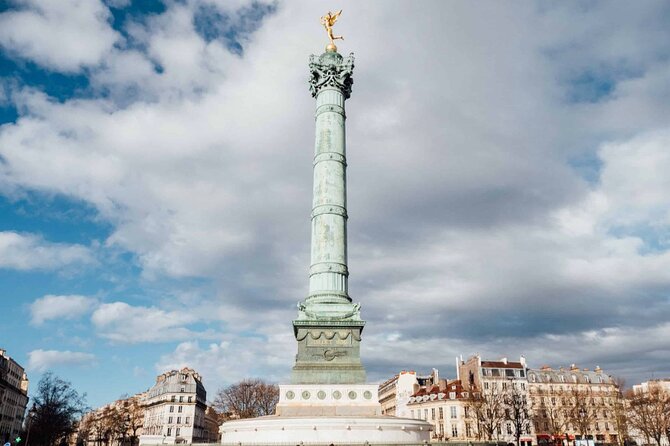
Early on, you’re in Bastille, where the prison once stood and nothing of it remains today. What you get instead is a sense of how revolutionary history shaped the city—plus the July Column in the center of the square, and a feel for the area’s modern life with landmarks like the Bastille Opera and the Bastille subway station. It’s a strong start because it frames Paris as something built on major turning points, not just postcard buildings.
From there you drift into the Marais, one of the most enjoyable areas to walk in any daylight. The tour pauses at Place des Vosges, Paris’s oldest planned square, and then moves into the quiet, historic courtyard-and-garden vibe of Hôtel de Sully and the older architecture of Hôtel de Sens. It’s like switching from big-city motion to protected pockets of time.
Then you move to the Left Bank side of the Seine, hitting Notre-Dame’s neighborhood and the Saint-Germain-des-Prés area. You’ll cross over with a pedestrian bridge stop at Pont des Arts, then turn toward the Right Bank for the Louvre area, Tuileries Garden, and Place de la Concorde. Finally, you finish with the Eiffel Tower area after a quick metro ride—an efficient way to end strong without burning your whole day on transit.
You can also read our reviews of more tours and experiences in Paris.



What you actually see: outside monuments, inside-free planning
One of the best things about this tour is also the reason it works so well for a short visit: you’re not stuck inside ticket lines or galleries. The plan is built around outside views and street-level context, which means you can keep moving and still understand the story behind each location.
Here’s what that looks like in practice:
- Notre-Dame de Paris: you’re there for the cathedral experience from the outside, with a quick orientation to why it’s considered a top example of French Gothic architecture (rib vaults, flying buttresses, rose windows, and sculptural decoration).
- Louvre: you visit the Louvre area for its major landmark status, including the fact that the palace dates back to medieval fortress origins and later royal residence. You won’t go inside the museum.
- Eiffel Tower: you end near the tower, but you do not go up it.
That outside-only setup is great when you want the best-known Paris highlights without committing half a day to one ticketed attraction. The drawback is also obvious: if Eiffel Tower views from the top are a must for you, you’ll need a separate plan.
The crêpe stop that keeps this tour from feeling like homework
At Place Saint Andre des Arts, the tour pauses for crêpes at a traditional French crêperie. This is the kind of scheduled comfort break that matters on an energetic route. You get 30 minutes here, which is long enough to order, eat, and actually reset your brain.
Why I like this as a tour element: it’s not tacked on at the end as a reward for suffering. It’s placed mid-route, when your feet are already awake and your tastebuds can benefit from a real local staple. And since the Latin Quarter is a classic walking area, the crêpe stop feels like part of the day’s rhythm instead of a random detour.
If you’ve had crêpes in tourist traps before, this is the chance to do it right in a neighborhood where the habit has deeper roots.
Bastille and the revolution-to-now vibe of Place de la Bastille
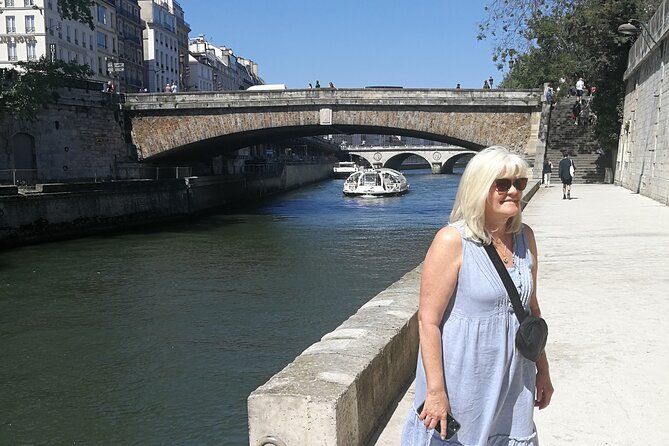
The tour’s first landmark is Place de la Bastille, a square tied to the storming and destruction of the Bastille during the French Revolution (14 July 1789 to 14 July 1790). No physical remnants of the prison remain, so the guide experience matters here: you’re learning how a vanished structure still shaped Parisian memory.
A couple details make this stop more than trivia:
- The July Column commemorates the July Revolution of 1830 and anchors the square visually.
- The area sits across multiple arrondissements (4th, 11th, and 12th), so it’s less of a single “point” and more of a whole district identity people call Bastille.
- You also get nearby references to the Canal Saint Martin section and the Bastille Opera, which helps you connect revolutionary history with how the city developed later.
It’s a smart first stop because it tells you how to look at Paris: many locations are about what happened there and what came next, not just what’s standing.
Marais highlights: Place des Vosges, Hôtel de Sully, and Hôtel de Sens
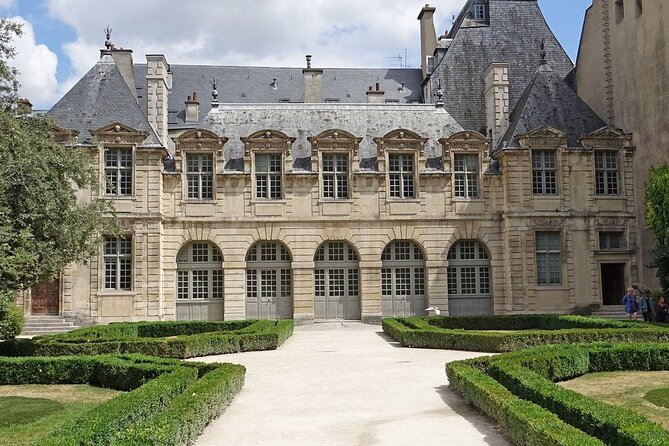
The Marais stretch is one of the most rewarding parts of the day because you get variety: grand squares, noble-townhouse architecture, and protected courtyards.
Place des Vosges is the anchor. It’s the oldest planned square in Paris and historically housed elite residences in the 17th and 18th centuries. Walking it briefly is enough to feel why the Marais gained that chic reputation—symmetry, calm proportions, and that “this place was designed” feel.
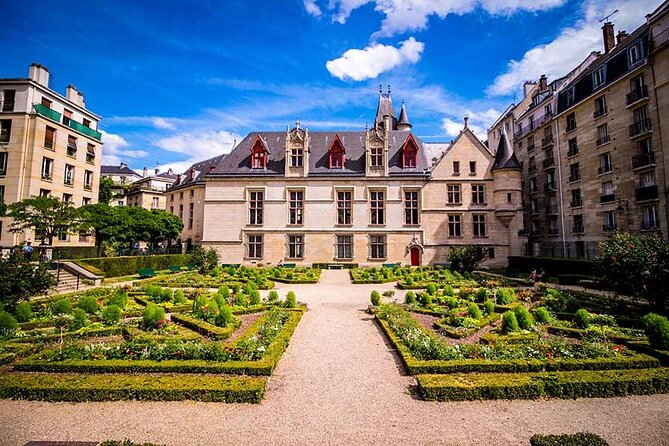
Then you step into Cour et jardin de l’Hôtel de Sully. This is a Louis XIII style private mansion from the early 17th century, and today it’s tied to the Centre des Monuments Nationaux, which manages French heritage sites. Even without long browsing time, the stop gives you a sense of how Parisian history can live behind stone walls rather than only on major avenues.
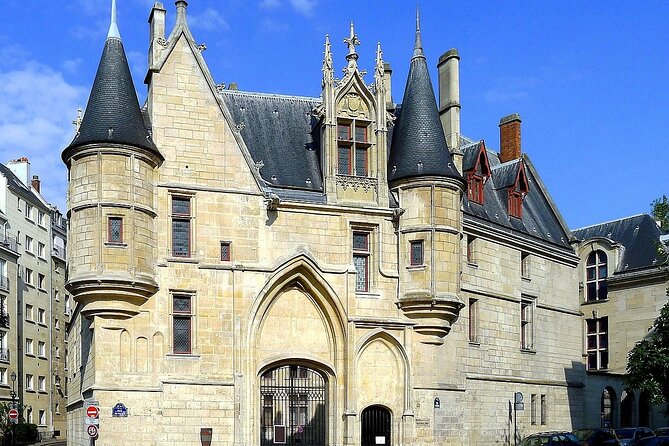
Next is Hôtel de Sens, a 16th-century private mansion in the Marais. Today it houses the Forney art library. The benefit of including these “hôtel particulier” stops on a fast tour is that you get a break from the usual loop of only big-name monuments—and you learn what elite Paris living looked like.
The only possible drawback here: because the stops are brief, you’re mostly getting an exterior orientation and a quick courtyard look. If you love deep architectural reading and long interior time, you’ll want a longer Marais-focused day.





Notre-Dame and Saint-Germain-des-Prés: where Paris gets personal
From the Marais you shift toward the Île de la Cité area and the Left Bank.
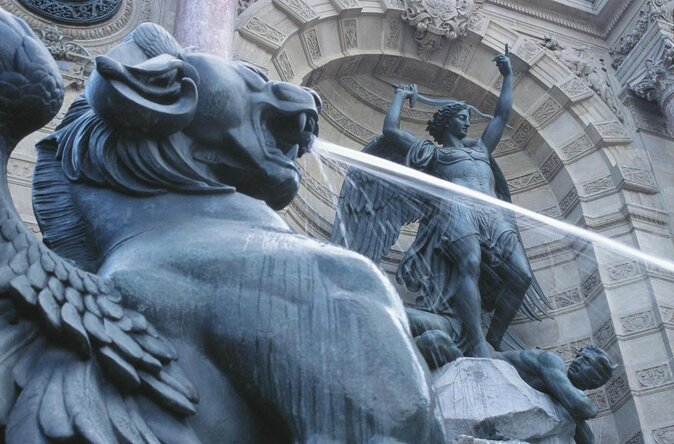
Fontaine Saint-Michel appears as a quick visual waypoint in Place Saint-Michel. Built in the late 1850s by architect Gabriel Davioud, it’s listed as a monument historique. It’s the kind of stop that helps your mental map: you’re not just absorbing buildings, you’re learning the placement of fountains and landmarks that locals use as meeting points.
Then comes Notre-Dame de Paris. This is your Gothic architecture orientation stop. You’ll get a quick explanation of rib vaults and flying buttresses, plus the famous rose windows and sculptural style. Even from outside, the scale and design language are the point: the cathedral is not only religious history, it’s architectural evolution.
After that, you arrive in Saint-Germain-des-Prés, around the former abbey area. This quarter is known to locals by the nickname Germanopratins, and it has a long cultural identity—from cafés to publishing to education. The tour keeps it grounded by focusing on what you can see around the area rather than turning it into a lecture hall.
You also stop at Église Saint-Germain-des-Prés, described as the oldest existing church in Paris. It began as a Benedictine abbey founded in the 6th century, faced Viking destruction, and was rebuilt and renamed in the 8th century. That timeline matters because it shows Paris church history as something that has been rebuilt, not frozen.
Crossing the Seine at Pont des Arts and shifting toward the Louvre axis
One of the smartest moments in the itinerary is Pont des Arts. It’s a pedestrian bridge over the Seine that links the Institut de France area with the Louvre’s central square. Even if you only spend about 15 minutes there, the bridge stop does two things well:
1) It gives you a water-level view corridor for photos and orientation.
2) It acts like a hinge from Left Bank ideas to Right Bank monuments.
Then you step into the Louvre area from the outside. The Louvre itself began as medieval fortress work under Philip II, and later became a royal residence. That historical note helps you see the museum setting as a palace with layers, not just a single big building.
A short companion stop is the Arc de Triomphe du Carrousel, a smaller triumphal arch built between 1806 and 1808 to commemorate Napoleon’s military victories. It also provides contrast: you get the imperial era next to the older palace-and-courtyard feel.
Tuileries and Place de la Concorde: where the walk turns into a stage set
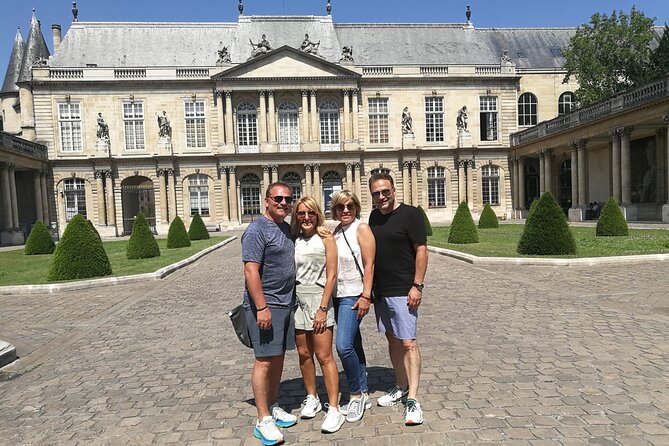
Next you’ll hit Jardin des Tuileries, between the Louvre and Place de la Concorde. It started as the garden of the Tuileries Palace in 1564 and became public park space after the French Revolution. On a day like this, you don’t need to sit for hours. You just need a short stretch to reset your pace and see how green space threads through the center.
From there it’s Place de la Concorde, the largest square in Paris at 7.6 hectares. The key context here is that it has been the site of major public executions during the French Revolution, including Louis XVI and Marie Antoinette. Knowing that changes the way you interpret the size and openness of the square. It’s not only a landmark; it’s a historical stage.
A practical note: because these stops are brief, it helps to treat them like orientation checkpoints. Look up, glance around, then move on with the guide’s story still fresh.
Ending at the Eiffel Tower area: near enough, fast enough
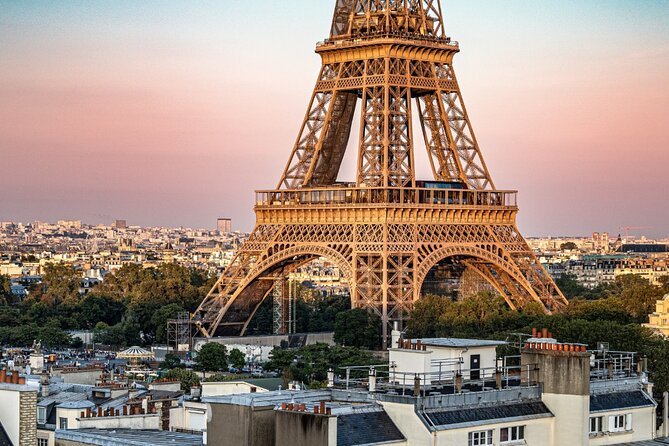
After the central-city walking, the tour finishes at Champ de Mars and the Eiffel Tower area. Champ de Mars is a large green space between the Eiffel Tower and École Militaire. The name nods to the Roman Campus Martius, which ties Paris again to older historical references.
The tour ends at the Eiffel Tower itself in the sense of location: you’ll be close, with good views from the Champs de Mars area. But you won’t go up the tower. That choice keeps the tour on pace and saves you time for later. If you want the summit experience, you can schedule it separately for a different time of day.
If you care about photo timing, do this: when you spot the tower near the end, take your main pictures quickly, then keep walking a bit so you’re not standing in the densest crowd spots.
Price and value: is $153.80 worth four hours?
At $153.80 per person for roughly four hours, this tour stacks value in three ways:
- You get a guided route through major Paris landmarks and neighborhoods, without entering the Louvre or climbing Eiffel.
- You get lunch included, plus the crêpe break is built into the schedule.
- You receive a mobile ticket and English-speaking guidance.
What you’re paying for is not access to everything. It’s smart selection. You’re getting the fast, guided “first map of Paris” that helps your next day go better. If you already know you want to spend time inside one big museum or go up Eiffel later, this tour becomes a high-quality primer—and that’s where the value often lands.
Also, it’s on a schedule that’s popular. It’s commonly booked about 85 days in advance, which usually means the route and timing work for a lot of people.
Who should book this tour, and who should skip it
This tour fits best if you:
- Want a half-day hit list that still feels like a guided story
- Care about history plus food, not just photos
- Like walking and don’t mind some steps—this one has an active pace
- Prefer outside sightseeing and don’t need inside tickets for Louvre on day one
Skip it if you:
- Need long time at only one monument
- Absolutely must go inside the Louvre or up the Eiffel Tower during the same outing
- Are limited on walking endurance and want a slower, shorter route (the plan is designed to cover many stops)
Should you book Paris Landmarks & Crepes?
Yes, if you want to get oriented fast and you like your Paris with context. This is the kind of tour where the guide’s level of preparation really matters, and it shows in how the day flows from landmark to landmark. The crêpes stop is a real highlight, and the route covers a lot of the city’s biggest names without pretending you can do everything in one morning.
If your dream itinerary is Eiffel summit views plus Louvre interior time, book those separately and use this as your planning day. If you want a guided whirlwind with good stops and better pacing, this one is a solid bet.
FAQ
How long is the Paris Landmarks & Crepes tour?
It lasts about 4 hours.
Where does the tour start and end?
It starts near Opera National de Paris at Pl. de la Bastille, 75012 Paris, and ends at the Eiffel Tower on Av. Gustave Eiffel, 75007 Paris, in front of the tower on the Champs de Mars.
Is lunch included?
Yes. Lunch is included.
Are crêpes included?
Yes. The tour includes a crêpe stop at Place Saint Andre des Arts.
Do you enter the Louvre Museum?
No. The tour does not go inside the Louvre Museum; it stays outside.
Do you go up the Eiffel Tower?
No. The tour goes right next to the Eiffel Tower, but you do not go up it.
What language is the tour offered in?
The tour is offered in English.
Is this tour private?
Yes. It’s listed as a private tour/activity, meaning only your group participates.