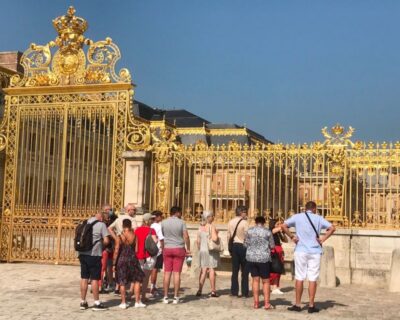
REVIEW · PARIS
Paris Audioguide – TravelMate app for your smartphone
Book on GetYourGuide →Operated by MyWoWo Srl · Bookable on GetYourGuide
Paris doesn’t need a rigid plan. This TravelMate app-style guide gives you an audio “tour guide beside you” with 93 stops across central Paris and beyond, and you control the pace. I especially like that there are no paper tickets to collect and that the audio works online or offline, so you can keep moving without hunting for signal. The content is built to be used repeatedly—once it’s yours, you can replay it as often as you want.
The biggest drawback is also the simplest: this is an app experience. If your phone battery runs low, you’ll feel it, and there’s no human guide to improvise when you get off-script. If you’re good at charging your phone and taking breaks, you’ll love the freedom.
In This Review
- Key things to know before you start
- Paris in your pocket: what TravelMate actually feels like
- Price and value: $3.40 is the easy part
- How the app works: no meeting point, just download and go
- Using 278 minutes of audio without feeling rushed
- Your guided route through Paris: what to expect by area
- Paris introduction, cuisine ideas, and getting oriented
- Arc de Triomphe to Champs-Élysées: monumental Paris with breathing room
- Beaubourg and museums: art-forward walks without overplanning
- Eiffel Tower, Trocadero, and the Grand Palais/Petit Palais pairing
- Invalides, Madeleine, and the feel of official Paris
- Latin Quarter, Seine moments, Sainte-Chapelle, and Notre Dame
- Louvre Palace and Louvre Museum: art and context in one zone
- Luxembourg, Place des Vosges, and Place Vendome: calmer stops
- Montmartre and Rodin Museum: viewpoints plus more than selfies
- Musée Marmottan and Musée Orsay: art variety without extra planning
- Madeleine, Jacquemart André, and Versailles energy (without forcing a full day)
- Trocadero, Eiffel Tower viewpoints, and Villette as a flexible capstone
- Who this is best for (and who might want something else)
- Should you book TravelMate’s Paris Audioguide?
- FAQ
- How many audio tracks are included in the Paris Audioguide?
- Can I listen to the guide offline?
- Do I need paper tickets or a meeting point?
- How long is the guide valid?
- Can I listen as many times as I want?
- What languages are available for the audio?
- Is text available in the app?
- What’s included besides the audio?
- Is the activity wheelchair accessible?
Key things to know before you start

- 93 audio stops totaling 278 minutes, so you can go quick or slow
- Offline listening plus optional text of the audio files in the app
- No meeting point—download and start wherever you want
- Works for 1095 days from first activation, so it doesn’t vanish after your trip
- Quiz section for short questions as you explore
- Professional production with TV/radio professionals interpreting the audio
Paris in your pocket: what TravelMate actually feels like

Using the TravelMate Paris Audioguide is less like joining a group and more like borrowing a well-prepared guide for your own walk. The app is designed around autonomy: you download, enter your access code, and start listening straight away where you are. That matters in Paris, where one wrong turn can turn a planned route into a wandering adventure.
You’ll hear history, points of interest, and curiosities tied to major landmarks—from famous monuments to well-known museums. The audio is described as professionally created by high-level authors and interpreted by people from the television and radio world. Translation: it’s meant to sound natural, not like a robotic narration stitched together from facts.
There’s also a practical add-on that I think many self-guides forget: the app lets you read the text alongside the audio files. When a pronunciation is tricky—or you want to skim while you stand in line—this feature can save your day.
You can also read our reviews of more tours and experiences in Paris



Price and value: $3.40 is the easy part

At $3.40 per person, the price is low enough that you can treat it as a low-risk upgrade to your trip. The real value comes from the 1095-day validity starting from first activation. That’s roughly three years of access, which changes how you think about it: you’re not just buying one day of listening—you’re buying a reusable city reference.
The guide doesn’t have the usual “use it once” vibe. It’s designed so you can replay the audio as many times as you want, and it doesn’t expire after your visit. If you’re the type who likes to return to notes later (or you’re traveling with family and want to listen more than once), that long validity is a big deal.
Also, it’s multilingual. The audio is available in Italian, English, German, Spanish, French, Chinese, and Russian. If you’re traveling as a couple or small group with mixed languages, you can keep one device and still choose what works for everyone.
How the app works: no meeting point, just download and go

This guide is set up for instant start. There’s no meeting point and no paper ticket pickup. You’re told to download the TravelMate app from the Play Store (Android) or the App Store (iOS), using the app name TravelMate / TravelMate TM.
Your activation code comes from your email, or inside the GetYourGuide app if you’re using that platform. The instructions are specific: open activity details, show your tickets, then find the barcode in an orange frame and read the 10-digit number just under it. Once you enter that, you’re ready to listen wherever you are.
From a practical standpoint, this is one of those services that works best when you plan a little lightly. Pick a neighborhood you want to be in, start the audio, and let it guide your next steps. You won’t be waiting on a group schedule, so you can also build in museum time and coffee breaks without feeling like you’re falling behind.
Using 278 minutes of audio without feeling rushed

The guide includes 93 audio tracks totaling 278 minutes. That time budget is important because it helps you decide whether you’re doing a full “listen to most things” day or a lighter “hit the highlights” approach.
A good strategy is to treat each audio stop like a chapter. You can:
- listen to one track while you approach a landmark
- save a track for later when you find a good viewing spot
- switch between nearby stops based on what you actually see on the street
Because the audio works offline, you’re not forced to stay glued to LTE/5G. That’s especially helpful in busy areas where reception can be inconsistent.
Earphones are recommended, and honestly, they make the experience smoother. Even if the app includes a text option, headphones help the audio feel like a personal guide rather than one more thing competing with city noise.
Your guided route through Paris: what to expect by area







Paris introduction, cuisine ideas, and getting oriented
Most first-time mistakes in Paris come from the same issue: you see places but don’t know what you’re looking at yet. The guide starts with Paris Introduction plus a stop devoted to local cuisine. This is useful even if you think you know the basics, because it gives you context before you hit big-name monuments.
When you’re listening early, you’ll get a framework for the rest of the day: what each area is known for, why certain sites matter, and what kinds of details to watch for.
Tip for your own flow: if you’re arriving in Paris and feel jet-lagged, this intro content is a low-effort way to kick off the trip without needing to “do” anything physically right away.
Arc de Triomphe to Champs-Élysées: monumental Paris with breathing room
From Arc de Triomphe you can build a classic big-city route toward Champs Elysees. These are the kinds of spots where context improves everything: it’s not just a photo moment. The audio is set up to talk through history, points of interest, and curiosities, which helps you notice details instead of just looking up.
Then you can add Place de La Concorde if you want a broader “Paris squares” angle. These are open spaces that are great for listening because you can hear the audio clearly and pause when you need to.
And if you want a second look at the same general theme from a different direction, the guide also includes Seine—a perfect connector between grand avenues and the city’s waterways.
Beaubourg and museums: art-forward walks without overplanning
Beaubourg (often spelled this way in guide titles) pairs well with the art-and-culture vibe of central Paris. Next you’re offered Camondo and Cernuschi Museums, plus Conservatoire Arts et Metiers. That mix is good if you like variety: not every stop needs to be a blockbuster museum to be worth your time.
You’ll be hearing curated commentary for each place, which can help you decide what to do on the ground. Without inventing extra details, here’s the practical approach: use the audio track as a checklist. Listen to the track while you walk in or around, then decide if you want to spend more time inside based on what the audio prompts you to look for.
Eiffel Tower, Trocadero, and the Grand Palais/Petit Palais pairing
The guide includes Eiffel Tower and also Trocadero, which is handy because it gives you a chance to see how the viewpoint changes what you notice. Standing in different spots around the Eiffel Tower area can make the structure feel different, and audio context can keep you from getting lost in only the famous silhouette.
Nearby, you can fit in Grand et Petit Palais. This is a smart pairing because it turns your day into more than one icon. Instead of only “big monument, next street,” you get a cluster of landmarks tied together by your listening path.
If you’re trying to keep your energy up, this is also where earphones help most: you’ll likely be on your feet, and headphones make it easier to stay with one track while you walk.
Invalides, Madeleine, and the feel of official Paris
Invalides appears in the guide, as does Madeleine. This combination can help you experience Paris in a “power and place” way: big institutions and monumental architecture, explained through the audio’s history and curiosities.
These locations are also good for slower listening. You can stand, listen, and then move when you’re ready. It’s not the kind of day where you need to sprint from one thing to the next.
When I’m using an audio guide, I like to do this: listen to a track, then immediately take 60–90 seconds to look for what the audio said to notice. It turns listening into understanding, not background noise.
Latin Quarter, Seine moments, Sainte-Chapelle, and Notre Dame
Now you’re in a classic Paris story zone: Latin Quarter, Notre Dame, and Sainte Chapelle are all included. Add Seine and you have natural pauses built into your route. Waterfront areas are some of the best places to use an app guide because you can stop without blocking anyone.
The audio is structured to explain points of interest and curiosities, so you can treat these tracks like mini lessons. You can listen while you approach, then focus your eyes once you’re there.
A practical note: if you’re passing through busy areas, give yourself permission to step aside for better listening. The guide won’t make a soundproof bubble for you—your best experience comes from controlling your listening volume and your position.
Louvre Palace and Louvre Museum: art and context in one zone
The guide lists Louvre Museum and Louvre Palace separately. That’s helpful because it suggests you’re meant to think about both the art experience and the building context. In Paris, that distinction matters: the museum experience and the palace identity are intertwined, but not identical.
When you use a guide like this at the Louvre, I recommend you avoid trying to “cover everything.” Instead, pick a few moments you care about and let the audio help you focus. The 278 minutes total is plenty, but it doesn’t mean you have to use all of it in one museum day.
If you prefer a structured pace, you can also do a “listen first, decide later” method: start a track near an entrance area, then decide where to go based on what you want to see.
Luxembourg, Place des Vosges, and Place Vendome: calmer stops
Not every good Paris moment is a massive crowd. The guide includes Luxembourg, Place des Vosges, and Place Vendome. These are excellent for a lighter listening approach, especially if you want a break from nonstop sightseeing.
This is where the text feature can be useful too. If you find the audio too distracting in a relaxing setting, you can read along quietly and keep the mood of the area instead of turning it into a rush-hour tour.
You can also use these stops as time markers. When you notice you’ve walked a lot, hit one of these areas and take your listening break.
Montmartre and Rodin Museum: viewpoints plus more than selfies
The guide includes Montmartre and Rodin Museum. That pairing is great because it covers both the iconic “uphill Paris” feeling and the quieter museum side of the city.
Montmartre is perfect for audio because you can keep moving while you learn. With Rodin, you can slow down and focus on what the guide cues you to pay attention to.
If you’re planning your day around views, keep in mind this: you’ll probably want more time in the spots where you can see a lot. The audio is only 278 minutes total, but your eyes might want extra time in a few key places. Let the guide set the direction; let the city set the pace.
Musée Marmottan and Musée Orsay: art variety without extra planning
The guide lists both Musee Marmottan and Musee Orsay. Museums like these are best when you treat them as targeted experiences rather than a checklist. Use the audio track to build context, then decide how much time you want for actual galleries.
Because the guide is in multiple languages, it’s easy to match your listening to the audience in your group. If you’re traveling with someone who learns better by reading, the text option helps too.
Madeleine, Jacquemart André, and Versailles energy (without forcing a full day)
Jacquemart Andre’ Museum is included, along with Versailles. That’s a fun combination if you like variety: city museums plus the big “future of your imagination” trip to Versailles.
You can also use the app for partial days. If you don’t have time to do Versailles fully, you can still take the Versailles audio route as a way to understand what you’re seeing and why the place is so famous.
The point is autonomy. Your route doesn’t need to match a perfect itinerary. The audio gives you the story whether you do a short stop or a longer visit.
Trocadero, Eiffel Tower viewpoints, and Villette as a flexible capstone
You end up with more flexibility thanks to the guide including Villette. That can work as a capstone when you want something less “cardboard postcard.” The app helps you connect the dots between what you’ve already seen and what you’re doing next.
If you’re finishing near the Eiffel area again, you can also replay tracks—especially the ones tied to the Eiffel Tower and Trocadero viewpoints. Replay ability is a quiet advantage: if you love a track, you can go back for it on your second pass without buying anything new.
Who this is best for (and who might want something else)
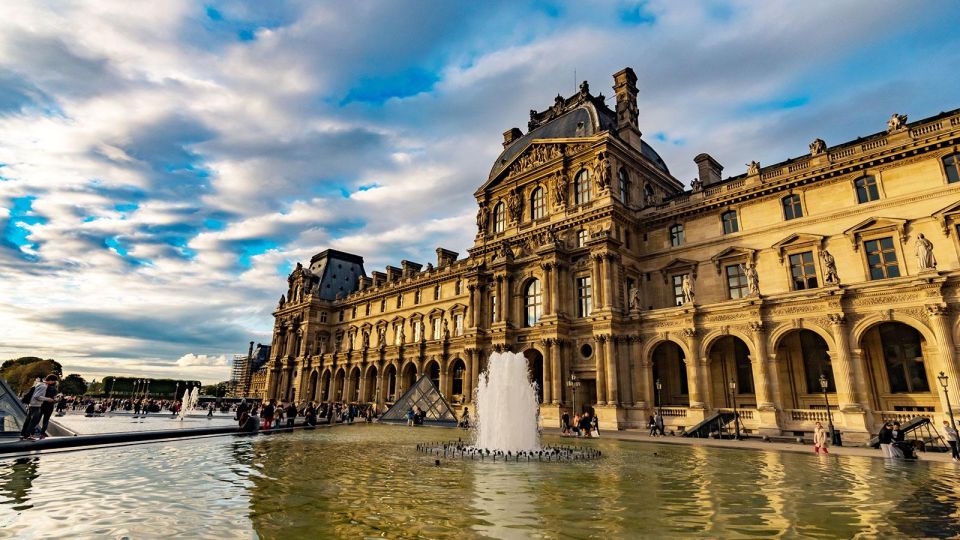
This TravelMate guide is a strong match for you if:
- you want to roam on your own without a group schedule
- you like using your smartphone in a practical way (audio plus readable text)
- you want to reuse the guide across multiple trips over 1095 days
- you’re comfortable managing your phone battery and earphones
It might feel less ideal if you want a live, spontaneous human guide. The audio is great for structure, but it won’t read your mind when weather changes, lines move, or you decide to chase a street you just discovered.
Should you book TravelMate’s Paris Audioguide?

If you’re trying to add value cheaply, this is an easy yes. For $3.40, you’re getting 93 audio chapters totaling 278 minutes, in several languages, with offline listening and text support—plus access for 1095 days from activation. That long validity makes it a useful purchase even if you don’t finish every track in one day.
Book it if you like self-guided walking and you’ll actually use your phone for audio. Skip it if you dislike app-based experiences or you know you often forget to charge your devices. If you’re the type who plans lightly and learns by wandering, this guide fits your style well.
FAQ

How many audio tracks are included in the Paris Audioguide?
The app includes 93 audio content items totaling 278 minutes.
Can I listen to the guide offline?
Yes. The audio guide can be used online or offline.
Do I need paper tickets or a meeting point?
No. There is no meeting point, and you don’t need to collect paper tickets. You download the app and start straight away.
How long is the guide valid?
It is valid for 1095 days from your first activation.
Can I listen as many times as I want?
Yes. You can use the audio guide on your smartphone as many times as you want, and it doesn’t expire.
What languages are available for the audio?
The guide includes audio in Italian, English, German, Spanish, French, Chinese, and Russian.
Is text available in the app?
Yes. You may read the text of the audio files in the app.
What’s included besides the audio?
There is also a quiz section with short questions to play and learn about the city.
Is the activity wheelchair accessible?
Yes, it is listed as wheelchair accessible.