REVIEW · PARIS
Discover the Champagne through its Terroirs in Paris !
Book on Viator →Operated by Dilettantes · Bookable on Viator
A lesson in taste starts with where grapes grow. In just about 1 hour 15 minutes, this Paris tasting pairs a quick walk through classic neighborhoods with an in-depth look at Champagne terroir and how blends change what you smell and sip.
What I like most is the format: three 80 ml glasses that keep things focused, not a blurry buffet of bubbly. The second thing I love is the teaching style, centered on grapes, terroir, and blend, so you leave with a real way to judge Champagne on your next bottle.
One thing to consider: you’ll be in a cave-like cellar, and the organizer asks you to skip perfume, strong flavors, and even lipstick. If smells are a problem for you, or if you have claustrophobia, this may not be your best match.
In This Review
- Key things to know before you go
- Champagne Through Its Terroirs: what you’re really tasting in Paris
- The cellar experience in a 17th-century Paris setting
- How the host teaches terroir: grapes, blend, and what changes in your glass
- What you’ll drink: three 80 ml pours and a smart pairing
- The short Paris walk: why those stops actually help the experience
- Price and value: what $79.29 buys you
- The all-important smell rules (and why they’re stricter than you’d expect)
- Booking and timing: how to avoid a frustrating start
- Who should book this tasting (and who might skip it)
- Should you book Champagne through its Terroirs in Paris?
- FAQ
- How long is the Champagne tasting experience?
- What’s included in the tasting?
- Do I taste three or four Champagnes?
- Where does the experience start and end?
- Is it offered in English?
- Is there a minimum age?
- What should I do about smells before the tasting?
- Is the experience suitable for claustrophobia?
- How many people are in the group?
- What if I cancel or need changes?
Key things to know before you go
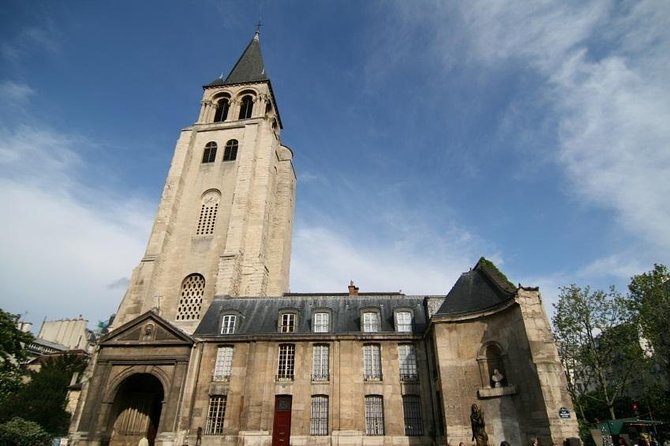
- 17th-century cellar setting with a stepped descent into a cave-like space that changes the whole feel of the tasting
- Three terroir tastings in 3 small pours (80 ml each), designed to show how the same region can taste different
- Aromas matter rules: no perfume, no lipstick, and avoid gum or strong coffee before the session
- Biscuits pairing (sweet or savory) to help you compare flavors without overpowering the Champagne
- Small group size (max 8), which keeps the discussion interactive
- You can buy bottles to take home or arrange delivery, so the tasting can turn into a souvenir
Champagne Through Its Terroirs: what you’re really tasting in Paris
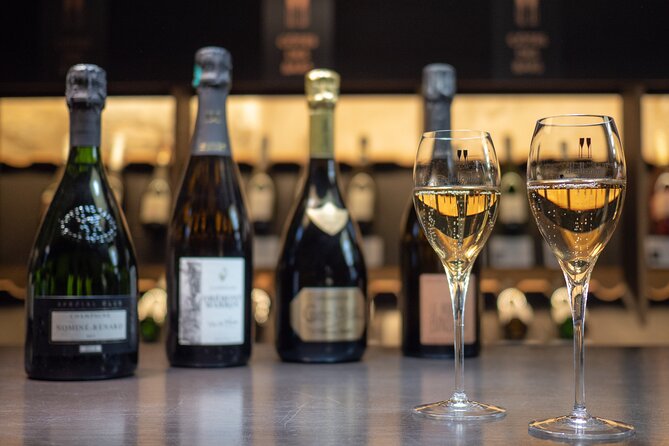
Paris has plenty of Champagne tours. This one is different because it doesn’t treat Champagne like a single product. It treats it like a set of choices: grapes, place, and blending. That matters because Champagne can taste dry, round, mineral, fruity, chalky, or sharp—often from details you’d never guess just by looking at a label.
In this session, you’ll sample a curated selection tied to terroir (the soil, slope, climate, and vineyard conditions where grapes ripen). The goal isn’t to memorize a wine school syllabus. It’s to give your senses a simple framework: if two Champagnes taste different, you can start figuring out why.
You’ll also get a practical, low-pressure structure. You don’t have to keep refilling, chasing flavors, or trying to remember what glass number was what. You get a small set of pours and time to notice aromas, then you build meaning from there.
You can also read our reviews of more wine tours in Paris
The cellar experience in a 17th-century Paris setting
The most memorable part is the setting. You enter from a small retail area, then walk down into a cellar that feels like a real cave—steeped, cool, and dim. That’s not just atmosphere. It helps keep the session focused on smell and flavor, which are the whole point here.
Expect a tighter, more intimate feel because the group is capped at 8 people. With a small group, the host can slow down when you need a moment, and you can ask questions without feeling like you’re interrupting a production line.
There’s also one practical downside. This kind of cellar setup is exactly the sort of place where someone with claustrophobia could feel uncomfortable. If you’re even slightly unsure, consider skipping it or asking the provider ahead of time how the space is laid out. The experience is designed around enclosed cellar time.
How the host teaches terroir: grapes, blend, and what changes in your glass
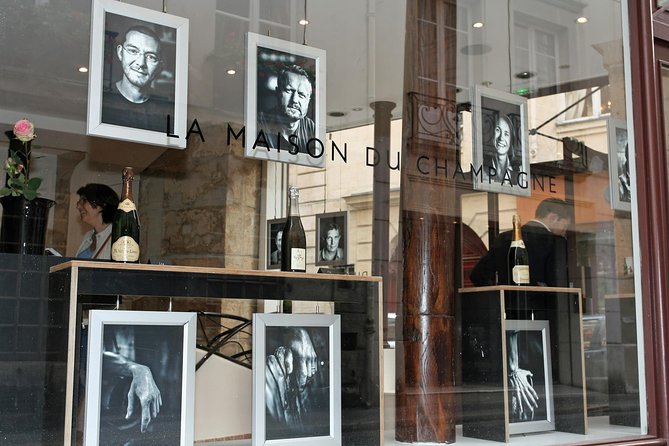
This tasting is an introduction to Champagne through its terroir, and the teaching approach is built around how Champagne tastes. You’ll learn what influences flavor, including:
- Grapes (the variety used)
- Terroir (where the grapes grow and how that shapes character)
- Blend (how the winemaker combines lots and styles)
Here’s the value for you: once you learn that triangle—grape, place, blend—you start tasting like a detective. Instead of saying, This is good, you can start asking, Why is this one showing more acidity? Why is this one more rounded? Why does this feel more mineral or more fruity?
Even if you don’t become a wine expert by the end (no pressure), you’ll leave with a clearer mental checklist. And that checklist pays off fast in Paris, where wine shops and restaurants all compete for your attention.
What you’ll drink: three 80 ml pours and a smart pairing
The included tasting is 3 small glasses of Champagne, each 80 ml. That size is perfect for learning: enough to compare, not enough to overwhelm your palate.
You may hear discussion of terroir across a selection that can include multiple styles (the tasting is framed as looking at three terroirs out of a broader set). The key for you is what you actually get: a set of pours planned to show differences, not just random Champagne choices.
Alongside the Champagne, you’ll have a pairing of sweet or savory biscuits. This is a clever move. Biscuits give you a salty or sweet anchor so you can notice how the Champagne reacts—especially how sweetness perception and acidity shift when your mouth changes flavor mode.
There’s also bread mentioned as a starter option (bread on demand in the provided sample menu). If you’re hungry, it can help you settle in without turning the tasting into a sugar-and-buzz blur.
The short Paris walk: why those stops actually help the experience
This isn’t a long hike. It’s a compact urban route tied to iconic areas, and it works like a warm-up. As you walk, you’re orienting yourself in central Paris while the tasting prepares you for the aromas and flavors that come next.
You’ll pass by:
- Saint Germain des Prés quarter
A classic left-bank vibe. It’s a good area to shake off morning cobwebs and get into a calm Paris rhythm before the cellar.
- Samaritaine Paris Pont-neuf
It’s a recognizable point in the center, handy for people who like to track where they are. Even if you don’t stop for photos, it gives your bearings fast.
- Odeon / Saint-Michel
Another landmark zone that feels like Paris on postcards. It also keeps the walk feeling like sightseeing, not a chore.
- Quais de la Seine
The river helps reset your senses. When you later smell Champagne, you won’t feel like your nose is still overloaded from the street.
- Les Halles
A lively central stop that closes the loop on the city-energy part of the experience.
Real talk: the “value” here is pacing. The walk helps you slow down, and it makes the cellar feel like a deliberate change of world. The only drawback is that if you’re sensitive to crowds or foot traffic, you’ll want to wear comfortable shoes and plan on normal city walking.




Price and value: what $79.29 buys you
At $79.29 per person for about 1 hour 15 minutes, you’re paying for more than the liquid. You’re paying for:
- a small-group format (max 8)
- a guided terroir lesson focused on grapes, terroir, and blend
- access to a 17th-century cellar setting
- three pre-portioned Champagne tastings (80 ml each)
- a food pairing (biscuits) and starter bread option shown in the sample menu
- the option to purchase bottles to go or arrange delivery
Compared with tastings that feel like a trade-off between variety and explanation, this one keeps the attention on learning how to taste. If you’re the type who wants to understand what you’re sipping—and then use it later—this price starts to feel fair.
If you’re mainly in Paris for quick, casual sampling with no interest in the “why,” you might want a cheaper, simpler tasting elsewhere. But if you want your next Champagne bottle to feel easier to choose, this lesson is the point.
The all-important smell rules (and why they’re stricter than you’d expect)
This is the part that can make or break your experience. The tasting relies on aroma, and the provider clearly warns that strong smells can interfere. They even state they can refuse entry if fragrances seem too strong, and there’s no refund in that case.
So do yourself a favor:
- Skip lipstick
- Don’t brush your teeth right before the session (they say you’ll notice acidity and feel uncomfortable)
- Avoid coffee or any other strong-flavored drink beforehand (soft drinks are okay)
- Don’t chew gum
- Avoid perfume or aftershave
Yes, it sounds like overkill. But in a small cellar space, scents bounce around. A strong cologne can overpower the entire tasting group. If you want the terroir lesson to actually land, follow the rules.
Booking and timing: how to avoid a frustrating start
The session asks that you arrive 10 minutes before the start. That’s not just etiquette. You’ll want time to settle in, check in, and get your senses ready. Late arrivals also risk missing the start of the aroma-focused portion.
You’ll receive a mobile ticket, and the experience is offered in English. It’s also marked as near public transportation, which helps if you’re pairing it with other Paris plans.
Who should book this tasting (and who might skip it)
I’d steer you toward this if:
- you want a focused tasting with explanation, not just sampling
- you like hands-on learning about wine choices (grapes, terroir, blend)
- you enjoy small-group experiences rather than big tours
- you want a Champagne souvenir plan (take-home purchases or delivery)
I’d hesitate if:
- you’re prone to anxiety in enclosed spaces (claustrophobia is specifically discouraged)
- you’re unwilling to follow the scent rules (perfume/lipstick/gum/strong coffee)
- you’re looking for a big, party-style Champagne event instead of a lesson
If you’re visiting in a period with changeable weather, note the experience is described as weather-dependent in the booking terms. If poor weather cancels, you’ll get an alternative date or a full refund.
Should you book Champagne through its Terroirs in Paris?
Book it if you want your Paris Champagne experience to teach you something that sticks. The cellar setting plus the structured terroir lesson makes this feel purposeful. Three 80 ml pours are enough to learn without feeling stuffed, and the biscuits pairing helps you compare flavors instead of just tasting sweetness and bubbles.
Skip it if you hate rules about smells or if the idea of a cave-like cellar makes you uneasy. Your comfort matters more than any bottle.
If you fit the sweet spot—curious, comfortable with a small group, and ready to treat aroma like part of the lesson—this is one of the better ways to get beyond I like Champagne into why you like it.
FAQ
How long is the Champagne tasting experience?
It lasts about 1 hour 15 minutes.
What’s included in the tasting?
You get 3 small glasses of Champagne, each 80 ml, plus a pairing with sweet or savory biscuits. Bread on demand is listed in the sample menu.
Do I taste three or four Champagnes?
The tasting includes 3 glasses (80 ml each). The experience is described as being about terroir and may discuss up to four varietals/styles, but you receive three tasting pours.
Where does the experience start and end?
It starts at 22 Rue de Savoie, 75006 Paris, France and ends back at the same meeting point.
Is it offered in English?
Yes, the experience is offered in English.
Is there a minimum age?
Yes, the minimum age is 18.
What should I do about smells before the tasting?
Follow the strong scent guidance: don’t wear perfume/aftershave, skip lipstick, avoid gum, and don’t have coffee or other strong-flavored drinks beforehand.
Is the experience suitable for claustrophobia?
It’s not recommended for people suffering from claustrophobia, since it takes place in a cave-like cellar.
How many people are in the group?
The tour/activity has a maximum of 8 travelers.
What if I cancel or need changes?
It’s described as non-refundable and cannot be changed for any reason. If it’s canceled due to poor weather, you’ll be offered a different date or a full refund.