REVIEW · PARIS
Architectural Bourgeois Paris 19th Century
Book on Viator →Operated by Paris Promenade · Bookable on Viator
Nineteenth-century Paris is full of surprises. This small-group walk through Parc Monceau and Haussmann’s boulevards turns architecture into a story, with historian François bringing the Belle Époque mood to life. I particularly love how he connects what you see to the people who paid for it, and I love the photo-ready set pieces like the park’s colonnade and pyramid. One thing to consider: it’s about 2 hours of steady walking, so comfy shoes matter more than you think.
For a flat $68.65, you get a focused hit of 19th-century Paris landmarks, ending with time inside Galerie Lafayette during opening hours. You’ll also move through classic wide boulevards and grand spaces that are best understood in context, not as isolated postcards. If you want long stops and deep museum-style pacing, this tour may feel a bit like a highlights reel.
In This Review
- Key highlights that make this tour worth your time
- How the Belle Époque comes alive on a short walk
- Price and logistics: is $68.65 a good value?
- Parc Monceau: where bourgeois taste shows up in architecture
- Standing by the Statue d’Haussmann: Paris rewritten
- Saint-Augustin Church (built in 1860) and the Proust option
- Gare Saint-Lazare: rail wealth and the industrial backstory
- Printemps to Galerie Lafayette: department stores as 19th-century theater
- Who this tour suits best (and who should pick something else)
- Should you book this Architectural Bourgeois Paris tour?
- FAQ
- How long is the Architectural Bourgeois Paris 19th Century tour?
- What time does the tour start, and where does it end?
- How many people are in the group?
- Is the ticket mobile?
- What’s included in the price?
- Are drinks like coffee or tea included?
- Is the tour suitable for people with moderate fitness?
- Are service animals allowed?
- What is the cancellation policy?
- What’s the booking timeline recommendation?
Key highlights that make this tour worth your time
- François, the 19th-century historian: He’s friendly and comfortable switching between French and English while keeping the story clear.
- Parc Monceau’s set pieces: Colonnade, bridge, pyramid, and big-tree scenery make it easy to see why Parisians loved “bourgeois” taste.
- Haussmann’s impact in plain sight: The route is built around the transformations that reshaped Paris street by street.
- Saint-Augustin (1860) inside the timeline: You step into a church from the era you’re studying.
- Gare Saint-Lazare from the other side: You look at how rail money and industrial growth fueled local wealth.
- Department-store Paris as the finale: Printemps and the finish at Galerie Lafayette give you a true 19th-century shopping atmosphere.
How the Belle Époque comes alive on a short walk
Paris has plenty of grand sights. What I like about this tour is that it’s not trying to list famous monuments; it’s trying to explain why these neighborhoods looked the way they did in the 19th century. The route is built around bourgeois culture—architecture, art, and nature—so you start noticing details you’d usually walk past.
François, a specialist in 19th-century Paris history, keeps the focus on what you can actually see around you. That means explanations land fast: one stop leads to the next, and you start building a mental map of Haussmann’s Paris and the social world behind it. It also helps that the group is capped at 10 travelers, so the experience feels personal rather than rushed.
The tradeoff is that the tour is short—about 2 hours. You’ll cover multiple areas and see a range of spaces (park, church, station edges, and department stores), but you won’t linger for long photo sessions at every single point.
You can also read our reviews of more tours and experiences in Paris.



Price and logistics: is $68.65 a good value?
At $68.65 per person for about 2 hours, the value comes from two things: smart pacing and included entry/time where it counts. The experience uses a mobile ticket, which is handy on a busy Paris day—no paper wrangling, just show up and go.
Another value point: the tour specifically includes Galerie Lafayette during opening hours, and the schedule also lists admission tickets at multiple stops along the way. That matters because these are exactly the kinds of places where entry time can add up if you’re doing it solo.
As for logistics, you start in the Monceau (17th arrondissement) area and end at 40 Bd Haussmann, 75009 (right by Galerie Lafayette). The tour is near public transportation, which is useful if you’re combining it with other plans before or after.
Parc Monceau: where bourgeois taste shows up in architecture
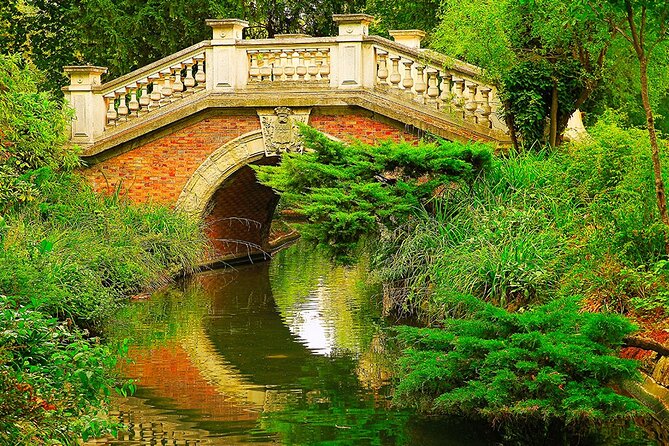
Parc Monceau is a gift if you like designed beauty. You don’t just walk through green space—you move through a sequence of built features that feel like an art lesson in stone and landscaping. Expect to see the park’s ancient colonnade, a bridge, a pyramid, and a standout collection of trees.
What I like most here is how the park gives you a quick lesson in 19th-century “taste.” In one place, you can read the era’s love of variety: classical echoes, staged visual surprises, and a sense that nature could be composed like a painting. It’s easy to understand why someone would call this bourgeois Paris—because the charm is planned, not accidental.
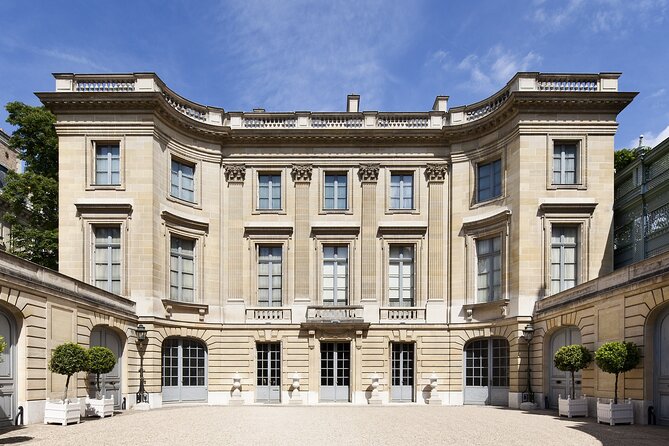
Practical note: Parc Monceau also sets you up for the next parts of the tour. As you pass landmarks linked to wealthy local life—like Hotel Menier, the Pagoda of Mr. Loo, and the hôtel particulier of Camondo—you start connecting streets and structures to social status and money. That context keeps the rest of the day from feeling like random hopping.
A possible drawback: parks can slow you down if you stop too often to photograph. You’ll have time, but keep an eye on the group’s rhythm so you don’t end up sprinting to the next stop.
Standing by the Statue d’Haussmann: Paris rewritten
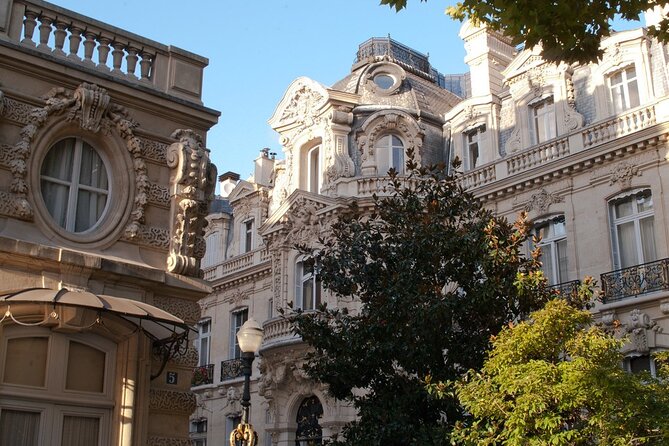
Baron Haussmann is one of those names you hear everywhere, but this tour helps him become real. You pause at the Statue d’Haussmann and then move through the heart of Haussmannian Paris—where the street geometry is doing the talking.
In practical terms, this section helps you see what people meant by transformation. You’ll notice the typical apartment blocks that line the boulevards and the wide street plan that makes Paris feel airy and legible at street level. Instead of treating Haussmann as a textbook chapter, you experience the results as you walk.
This is also a good place to slow your mind down. Ask yourself what changed: where crowds moved, where sunlight hit façades, and how the city’s design supported a new kind of urban life. Even if you’ve seen wide Paris avenues before, Haussmann’s role feels clearer after you’ve been guided through it in context.
Saint-Augustin Church (built in 1860) and the Proust option
Stopping at Saint-Augustin Church brings you directly into the 19th-century timeline. The church was built in the era you’re studying—around 1860—so it works as more than a scenic pause. You get that rare feeling of walking into an atmosphere that matches the story you’ve been hearing all along.
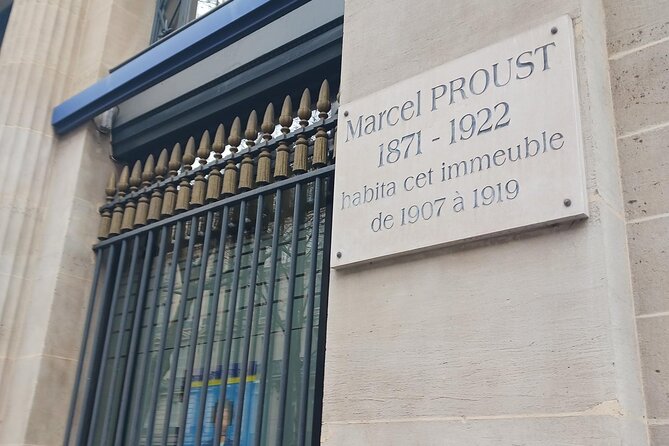
If you like literary connections, there’s an additional detour you can request related to writer Marcel Proust and his link to A la Recherche de Temps Perdu. The tour includes this as a possible side path, which is a nice touch if you’re someone who enjoys cross-connecting art and place.
What to expect in this part: it’s one of the stops where being inside the space can change how you take in the details. Churches tend to reward paying attention to proportion and material, not just speed through the interior.
A consideration: this segment is about 20 minutes. It’s enough time to enter and orient yourself, but it’s not designed for a long, personal reverie. If you want lots of silence, you might want to schedule your own revisit later.






Gare Saint-Lazare: rail wealth and the industrial backstory
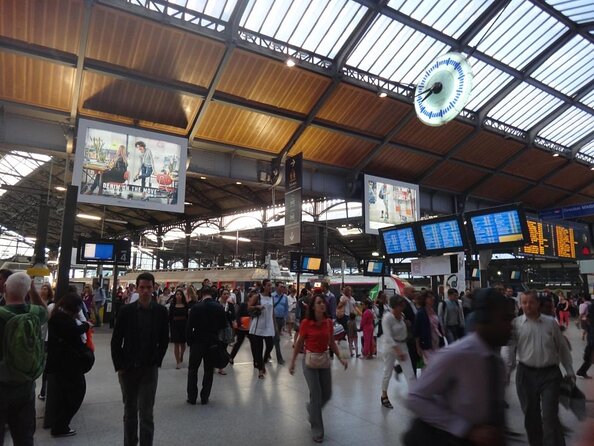
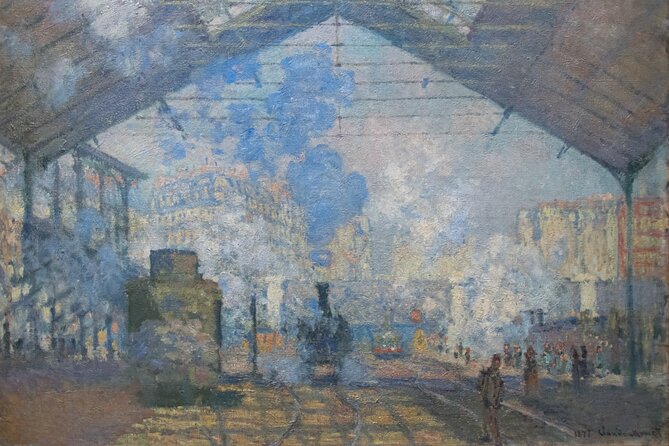
Most people notice Gare Saint-Lazare as a transit point. This tour treats it like a historical engine. You’ll pass the back side of Gare Saint-Lazare, which gives you a different angle than the usual front-facing views.
The key idea here is industrialization—rail lines, entrepreneurs, and the money that flowed into neighborhoods. The guide explains how wealth tied to transportation helped shape who lived nearby and what the area looked like.
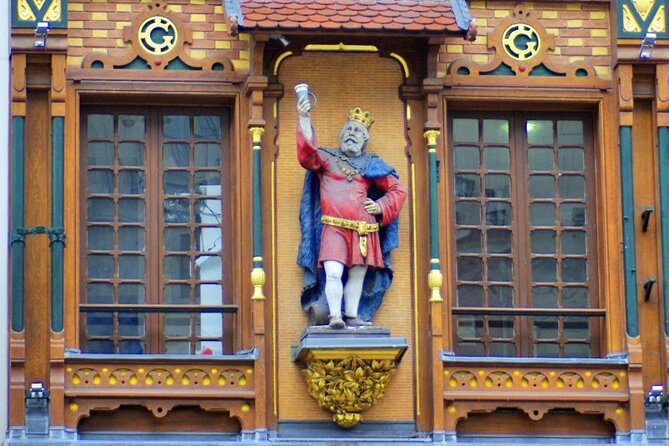
One of the more memorable details is what’s right in front of the station area: the remarkable house connected to Le Roi de la Bière, including a McDonald’s. It’s a very modern sight inside a very old money story, and that contrast helps the whole “industrial Paris” section land.
Practical tip: station areas can feel noisy and visually cluttered. That’s normal. Go with the flow and use the guide’s framing—you’ll start seeing patterns again, like where the wealth influenced nearby building style and street life.
Printemps to Galerie Lafayette: department stores as 19th-century theater
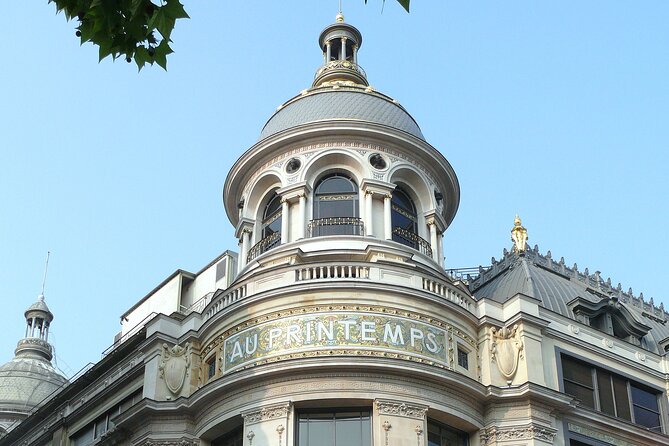
The ending is built for atmosphere. You finish with the department-store era: les Grand Magasins. You pass Printemps, and then the guide invites you into the Galerie Lafayette crescendo.
This is where I think the tour’s design is smart. The earlier stops give you architecture and civic planning. The final stops show you how consumer life became grand and architectural in its own right—almost like indoor city streets, with the same urge for spectacle and display.
Also, it’s not just passing by. Galerie Lafayette is included during opening hours, so you’re not ending on a dead zone or a photo-only exterior. You get actual time inside, which makes the finish feel like a payoff rather than a dash toward your next plan.
If you’re a photographer, this is likely where your camera roll fills up fast. The spaces inside department stores are often visually structured—light, lines, and busy scale—so you’ll get that classic “Paris in style” feeling.
One thing to keep in mind: department stores can be crowded. That’s not the tour’s fault, but it can affect how peaceful your final minutes feel. If you want calmer photos, try to aim for quick shots and then give yourself room to watch the scene.
Who this tour suits best (and who should pick something else)
This experience is ideal for you if you enjoy:
- 19th-century architecture and how buildings reflect social life
- Haussmann-era planning and what “wide boulevards” really mean
- A guided route that connects park + church + rail + shopping into one story
- Small groups and a guide who can explain in clear French and English
It’s also a great choice if you like “learn while walking” tours. You’ll get context as you go, and you won’t need a separate museum day to feel you’ve understood the era.
On the other hand, consider another option if you want:
- Lots of quiet time in one monument
- A slow pace with minimal moving
- Deep, standalone coverage of a single site (this tour spreads attention across several stops)
Should you book this Architectural Bourgeois Paris tour?
I’d book it if you want a practical, story-driven introduction to bourgeois 19th-century Paris without spending a whole day hopping between neighborhoods. The combination of Parc Monceau’s designed surprises, a Haussmann-focused street walk, an 1860 church stop, rail-era context at Gare Saint-Lazare, and a strong finish at Galerie Lafayette makes the route feel cohesive.
Also, François’s style is a big plus: friendly delivery, and comfortable communication in French and English. For many visitors, that’s what turns “I saw buildings” into “I understand why these buildings matter.”
If your schedule is tight and you prefer a curated overview that still leaves room for your own exploration afterward, this tour is a very good fit.
FAQ
How long is the Architectural Bourgeois Paris 19th Century tour?
It runs for about 2 hours (approx.).
What time does the tour start, and where does it end?
The tour starts at 10:30 am. It begins at Monceau, 75017 Paris and ends at 40 Bd Haussmann, 75009 Paris (Galerie Lafayette).
How many people are in the group?
The tour has a maximum of 10 travelers.
Is the ticket mobile?
Yes, it uses a mobile ticket.
What’s included in the price?
The tour includes Galerie Lafayette during opening hours. The schedule also lists admission tickets at the stops along the route.
Are drinks like coffee or tea included?
No. Coffee and/or tea are not included.
Is the tour suitable for people with moderate fitness?
It’s recommended for travelers with moderate physical fitness.
Are service animals allowed?
Yes, service animals are allowed.
What is the cancellation policy?
You can cancel for a full refund if you cancel up to 24 hours before the experience’s start time.
What’s the booking timeline recommendation?
On average, it’s booked about 32 days in advance, so planning ahead is a good idea.