REVIEW · PARIS
Montmartre Sacré Coeur and Moulin Rouge best shops and cafés
Book on Viator →Operated by Visit Paris · Bookable on Viator
One hill. Two icons. Tons of little surprises. This Montmartre walk packs big-feeling sights into about 90 minutes, from Moulin Rouge photo moments to the Sacré-Cœur viewpoint. I especially like that your guide doesn’t just point—she gives context so the streets make sense fast.
What I love most is the hit list quality: you cover the Wall of I Love You in 250 languages, then slide into Picasso-related stops and classic artist-squares without wasting time. The other win is how practical it feels after the tour: you leave with targeted ideas for where to eat and what to shop in this bohemian corner.
One consideration: this is still Montmartre, so you’ll want moderate physical fitness and comfortable shoes. If you’re sensitive to crowds or hills, plan for some tight turns and pauses for photos.
In This Review
- Key highlights you’ll actually feel
- Montmartre in 90 minutes: why it works
- Getting started: meeting on Bd de Clichy
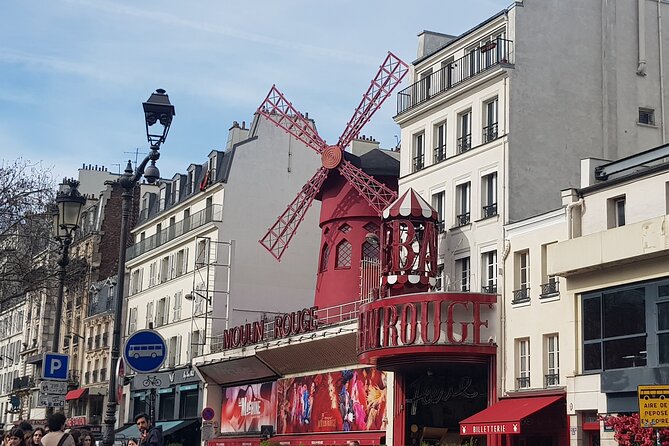
- Moulin Rouge: cabaret history and quick photo time
- The Wall of I Love You in 250 languages
- Le Moulin de la Galette and the shopping-friendly side of Montmartre
- The last active Montmartre vineyard (and where to snack)
- Picasso’s pink house and the food you can plan for
- Place du Tertre: painters, iconic cafés, and Kiki
- Sacré-Cœur Basilica: gargoyles, sculptures, and the view
- Price and logistics: what $29.79 buys you
- Who this tour suits best (and who should choose differently)
- If you want the best experience: my practical pointers
- Should you book this Montmartre Sacré-Cœur and Moulin Rouge tour?
- FAQ
- How long is the tour?
- What language is the tour offered in?
- Is a mobile ticket provided?
- What is the group size?
- Where does the tour start and end?
- Are admissions included?
- Is the tour near public transportation?
- What fitness level is required?
- Is there free cancellation?
Key highlights you’ll actually feel
- Moulin Rouge cabaret history and photo time so you know what you’re photographing
- The Wall of I Love You in 250 languages (try to spot your own)
- Le Moulin de la Galette area + vintage shopping pointers in a more local-feeling stretch
- The last active Montmartre vineyard still producing red and rosé wine
- Picasso’s favorite pink house restaurant spot plus food recommendations for what to try
- Sacré-Cœur outside views with architecture, gargoyles, and sculptures explained
Montmartre in 90 minutes: why it works
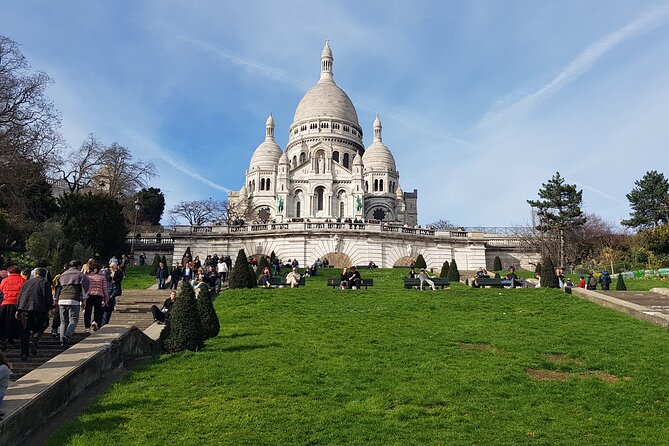
Montmartre can feel like two places at once. There’s the postcard version—windmills, cafés, artists. Then there’s the real neighborhood layer, where history hangs on street corners and people still live their day.
This tour is designed for the in-between. You get just enough stops to build a clear mental map without doing a long haul across the whole city. And because it’s structured around viewpoints and landmarks, you’re not wandering hoping for the best.
At $29.79 per person for about 1 hour 30 minutes, the value is in the guidance. Some admission is included, and you’re also buying the explanations that help you recognize what you’re seeing when the streets start to blur.
You can also read our reviews of more shopping tours in Paris



Getting started: meeting on Bd de Clichy
You meet at 82 Bd de Clichy (75018). That’s a useful anchor point because you’re starting close enough to the broader Paris flow, yet you’re heading into Montmartre’s distinct vibe soon after.
The tour runs in English, uses a mobile ticket, and stays small with a maximum of 25 travelers. That group size matters here. In tight squares and busy viewpoints, you want a guide who can keep you moving without losing everyone.
Also, service animals are allowed and the tour is near public transportation. If you’re coming from elsewhere in Paris, this is the kind of plan that fits even when your day starts late.
Moulin Rouge: cabaret history and quick photo time
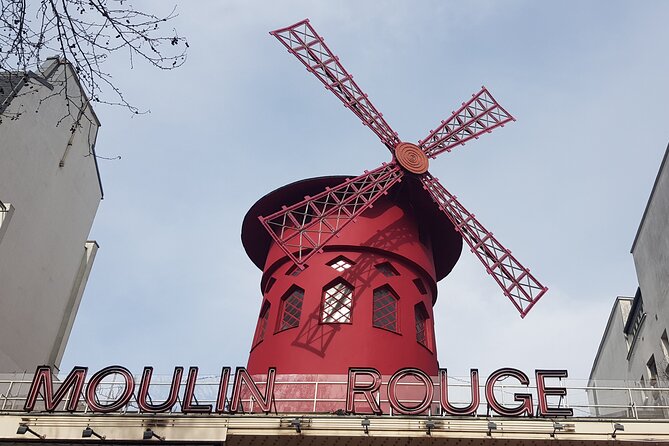
The first stop centers on Moulin Rouge—its cabaret story and why it became what it is. You’re given a moment for photos, which is smart. That area is famous, but it can also be easy to snap and move on. Here, the short lesson helps the photos mean something beyond signage and neon.
Practical note: if you want the cleanest pictures, you’ll benefit from letting people clear out at the edges first. Your guide can help you time that moment so you’re not stuck in the middle of the crowd.
This start also sets expectations for the rest of the tour: you’re not only seeing Montmartre’s faces. You’re learning what makes it theatrical.
The Wall of I Love You in 250 languages
Next comes the Wall of I Love You, with the words written in 250 languages. It’s included with an admission ticket, and that’s part of the value. You’d miss the point if you just walked past it.
Here’s the fun part: you’re encouraged to look for your language. Even if you don’t find it instantly, the hunt makes you slow down and scan. That’s how the tour turns a quick attraction into a mini game you remember later.
If you’re traveling with teens or friends who think “cute wall” is too basic, this is a good one to keep them engaged. It’s simple, but it has scale.
Le Moulin de la Galette and the shopping-friendly side of Montmartre
After that, you move through the area around Le Moulin de la Galette—the guide talks history, plus you pass by a French designer and a vintage shop.
What I like about this stop isn’t just the objects. It’s that the guide is actively steering you toward places for shopping. Montmartre’s markets and boutiques can feel scattered, so having an actual starting set of addresses reduces the “guessing tax” when you’re already walking on a schedule.
You’ll also hear about famous painters tied to the neighborhood—Picasso, Renoir, and Van Gogh—and how their presence shaped what Montmartre became in the public imagination. Even if you’re not an art superfan, it helps you recognize why certain streets look the way they do and why cafés became part of the story.
A small drawback: this part is about movement and context, not long museum time. If you want a slow, seated experience, you may feel the pace here. But if your goal is to get oriented, this is exactly right.





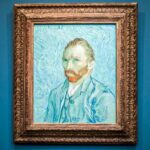
The last active Montmartre vineyard (and where to snack)
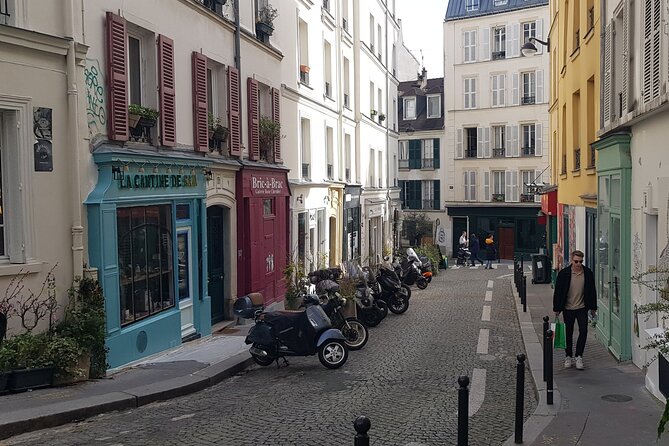
One of the more memorable moments is the look at the last vineyard of Montmartre, still active and producing red and rosé wine today. It’s a reminder that Montmartre isn’t only a stage set. It still has living, working edges.
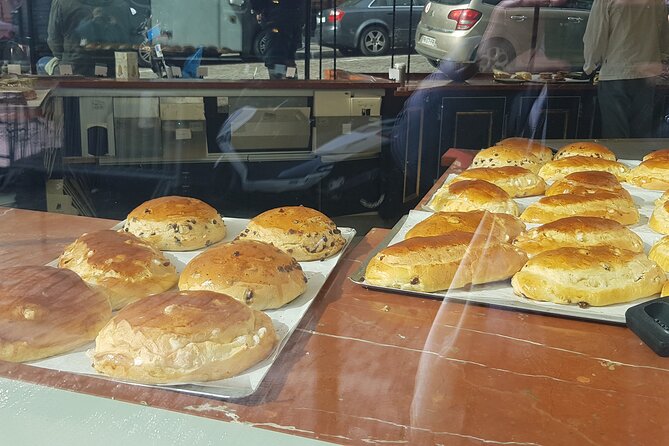
On the way, you’ll get guidance toward bakeries and cafés. That matters more than people expect. The best places are often the ones you’d overlook if you were only chasing famous names. A guide can point you toward practical picks based on what you’re seeing around you.
If you’re planning your own meal afterward, this part helps you avoid two common mistakes:
- picking the nearest option without tasting quality
- waiting too long and ending up with whatever is left
Picasso’s pink house and the food you can plan for
Then you stop at the famous pink house, known as Pablo Picasso’s favorite restaurant. This is where the tour gets very “okay, now I get it.” Picasso shows up in Montmartre stories constantly, but the guide ties it to food choices you can actually make.
You’ll be asked to think like a connoisseur—your guide talks which plate and pastry are must-tries during your stay, then points you toward good places to taste French gastronomy.
I like this approach because it turns art-and-history sightseeing into real, walk-away value. You don’t just learn names; you learn what to order later.
Small caution: food recommendations are still only helpful if you’re flexible. If you’re picky, tell your guide what you do and don’t like, so the suggestions match your style.
Place du Tertre: painters, iconic cafés, and Kiki
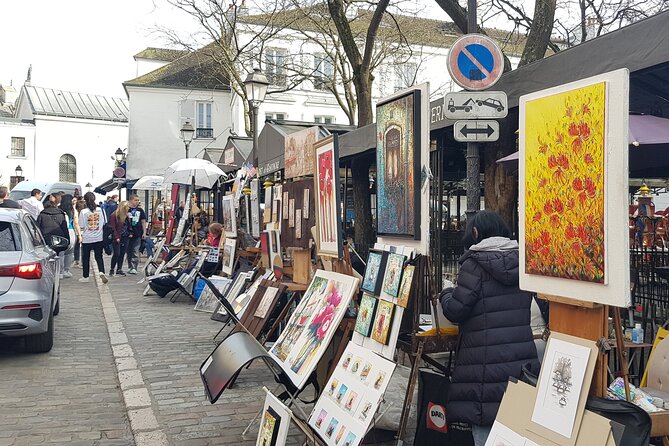
At Place du Tertre, you’re in the classic artist square where painters display their work. This is the kind of place where it’s easy to get distracted by everything at once.
Here, the tour stays grounded. You visit Kiki, one of the painters, and you get a look at the iconic cafés around the square. The guide’s role is key: she helps you separate what looks like a costume from what feels like a continuation of the neighborhood’s creative tradition.
A practical tip: if you want to chat with an artist, do it when things are less crowded—early or right after a pause for photos. Otherwise, you’ll mostly be standing around politely while people try to move through.
This stop is also a good “story checkpoint.” After learning about painters like Picasso, Renoir, and Van Gogh, you can see how the present-day scene keeps the spirit alive in a new form.
Sacré-Cœur Basilica: gargoyles, sculptures, and the view
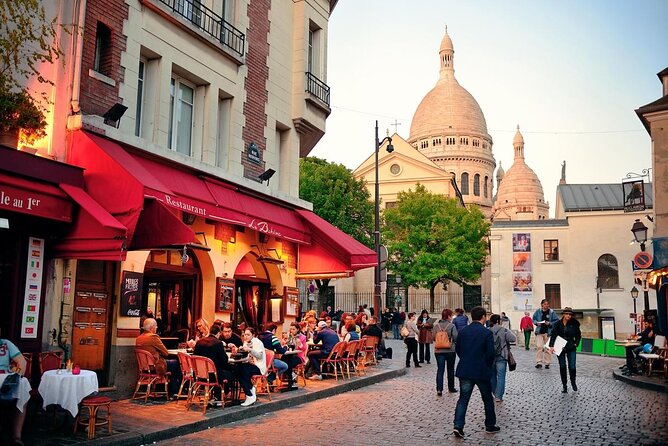
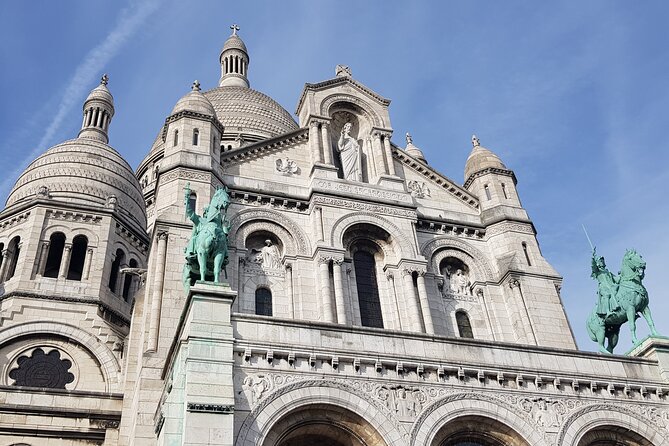
To close, you reach the Basilica of the Sacred Heart of Paris (Sacré-Cœur). It sits on top of the hill, and the views over Montmartre and Paris are the payoff.
The guide explains the basilica’s architecture, including gargoyles and sculptures decorating the outside. You’re not only looking at a big church. You’re learning how the details were built to be seen, up close or from across the city.
Admission here is free on this stop, so you’re not burning your budget for the biggest final reveal. In a short tour, that matters.
One consideration: Sacré-Cœur is popular, and the area can get busy. If you’re hoping for the most peaceful photos, go with the flow and accept that your timing may depend on the crowd.
Price and logistics: what $29.79 buys you
At $29.79 for about 90 minutes, you’re paying for:
- a tight selection of Montmartre landmarks
- guide-led explanations that connect the dots
- inclusion of admission at the Wall of I Love You
- a free entry-style stop at Sacré-Cœur
You’re also getting an easier way to explore if you’re short on time. Montmartre is one of those neighborhoods where a self-guided walk can turn into “where do I go next?” fast. Here, you move with a plan, so you hit the big themes: cabaret, art, food culture, and viewpoints.
This tour is also good value because it’s designed to leave you with tailored tips for the rest of your trip—so the tour doesn’t end when you stop walking.
Who this tour suits best (and who should choose differently)
This tour is a strong fit if:
- you want a quick orientation to Montmartre
- you like your sightseeing with context, not just photos
- you care about food and shopping ideas that are grounded in the neighborhood
It may be less ideal if:
- you want a long, sit-down pace
- you struggle with uneven terrain and a hill setting
- you prefer independent exploration with no structured stops
That moderate fitness requirement is the big signal. Nothing extreme is stated, but the hill and walking rhythm mean you should come prepared.
If you want the best experience: my practical pointers
Bring a camera, obviously. But also bring patience for the photo moments. Montmartre’s iconic spots tend to be “everyone wants the same angle” places.
If you want to enjoy the Wall of I Love You more, spend an extra 20 seconds scanning for your language. It turns the stop into a personal souvenir.
For the food part, be ready to ask questions. Your guide will steer you toward what plate and pastry to try at Picasso’s pink house–linked restaurant area. If you have dietary limits, mention them early so your suggestions stay useful.
And for Sacré-Cœur: look up. The sculptures and gargoyles are part of the story. It’s easy to focus only on the skyline when you’re at the top of the hill.
Should you book this Montmartre Sacré-Cœur and Moulin Rouge tour?
Book it if you want the most efficient way to get your bearings in Montmartre while still learning why the neighborhood matters. The format works: Moulin Rouge context, the playful I Love You Wall, painter-and-vintage pointers around Le Moulin de la Galette, a rare stop at the last active vineyard, then food and art at Picasso’s pink house and Place du Tertre, finishing with Sacré-Cœur views.
Skip it (or choose another option) if you’re trying to squeeze in Montmartre without any walking or if you’re looking for a deep, slow museum-type experience. This is a highlights tour with smart guidance, not a long academic outing.
One more reason to feel good about it: in the guide department, Jeanette has a reputation for being energetic and fun, with history that actually clicks. If you get her, you’ll likely leave with that rare combo—memories and practical next steps.
FAQ
How long is the tour?
The tour lasts about 1 hour 30 minutes.
What language is the tour offered in?
The tour is offered in English.
Is a mobile ticket provided?
Yes, the tour uses a mobile ticket.
What is the group size?
The tour has a maximum of 25 travelers.
Where does the tour start and end?
It starts at 82 Bd de Clichy, 75018 Paris, and ends at the Sacré-Cœur Basilica at 35 Rue du Chevalier de la Barre, 75018 Paris.
Are admissions included?
Admission ticket inclusion is listed for the Wall of I Love You stop, and the Sacré-Cœur Basilica stop is free.
Is the tour near public transportation?
Yes, it’s near public transportation.
What fitness level is required?
It calls for a moderate physical fitness level.
Is there free cancellation?
Yes. Free cancellation is available if you cancel up to 24 hours in advance for a full refund.