REVIEW · PARIS
Montmartre Highlights – Bohemian Streets & Sacré-Coeur Basilica
Book on Viator →Operated by My Super Tour · Bookable on Viator
Montmartre climbs, but stories make it worth it. This 2-hour, small-group walk turns the hilltop grandeur of Sacré-Cœur into a real neighborhood route with live commentary and artist-era context. I love the max 15 people setup (easy to hear the guide and ask questions), and I also like how the route links big landmarks to the lived-in Montmartre vibe. The main catch: expect steep uphill walking and lots of steps, so bring comfortable shoes and pace yourself.
You can start in the morning, afternoon, or evening, depending on your schedule, and the tour runs in English with a guide using a loudspeaker for crowd control. After the basilica stop and panoramic hilltop views, the walk flows toward Moulin Rouge, then down through Pigalle’s famous streets, and finally settles at Place du Tertre for a gentler, old-Paris-feeling finish.
In This Review
- Why This Montmartre Walk Works So Well
- The Sacré-Cœur Stop: Fresco Wall and the Hilltop Panorama
- Moulin Rouge From Outside: The Red Windmill Story
- Montmartre’s Artist Streets: Steps Where Icons Walked
- Pigalle in Daylight: Red Light District With Context
- Place du Tertre: A Quiet Ending With Vineyards and Bocce Feel
- Group Size, Loudspeakers, and the Real Montmartre Walking Pace
- Price and Value: How $47.79 Adds Up
- Timing Tips: Morning, Afternoon, or Evening Starts
- Who This Tour Suits Best
- Should You Book This Montmartre Highlights Tour?
- FAQ
- How long is the Montmartre highlights walking tour?
- What does the tour cost?
- When can I start the tour?
- What’s included in the price?
- Is Sacré-Cœur admission included, and do I need a ticket for Moulin Rouge?
- How big is the group?
- What if the weather is bad or I need to cancel?
Why This Montmartre Walk Works So Well
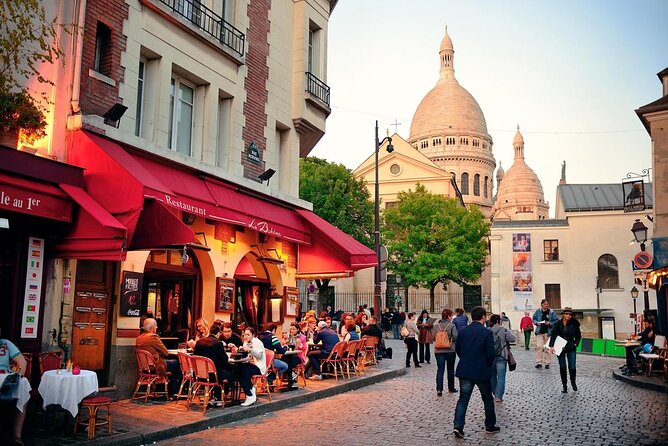
Montmartre is one of those Paris neighborhoods where it’s easy to look around and still miss the point. This tour helps you connect the places to the people and ideas that made Montmartre matter. You get a guided route that’s compact in time but broad in feel: church and skyline, cabaret symbolism, painter streets, and the real-world edge of Pigalle—all within a couple of hours.
I especially like the format. A maximum of 15 people means the group doesn’t balloon, and that keeps the experience personal. Plus, live commentary throughout the walk helps you understand what you’re seeing before the street scene moves on.
You’ll also like the practical rhythm: you’re not forced into a long day of museum fatigue. This is more like a guided stroll with frequent “look here” moments and quick stop-and-scan time, which works well if you’re trying to fit Montmartre into a busy itinerary.
The Sacré-Cœur Stop: Fresco Wall and the Hilltop Panorama
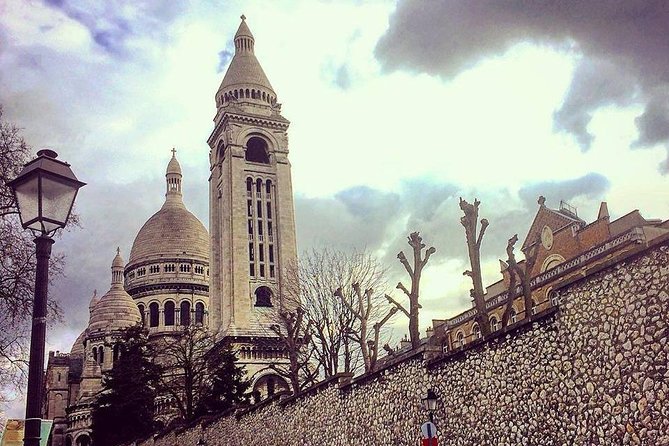
The tour starts with Basilique du Sacré-Cœur de Montmartre. This is one of the largest churches in Paris, and the guide points out two standout visual features: a massive fresco on the walls (480 m²) and the basilica’s impressive cupola.
What makes this stop valuable for your trip is the pairing of art and payoff. You get the church visit first, then you’re headed up for the view from the top of the Montmartre hill. That view matters because it gives you a mental map of Paris. Once you see the skyline from here, Montmartre stops feeling like an isolated hill and starts feeling like a key vantage point over the city.
Good news: the church admission ticket is listed as free for this stop. So you’re not wasting time figuring out ticket logistics right when you arrive.
The practical note: you’ll be climbing. Even if you’re traveling in good shape, plan for steps and uneven terrain around Montmartre.
You can also read our reviews of more tours and experiences in Paris.



Moulin Rouge From Outside: The Red Windmill Story

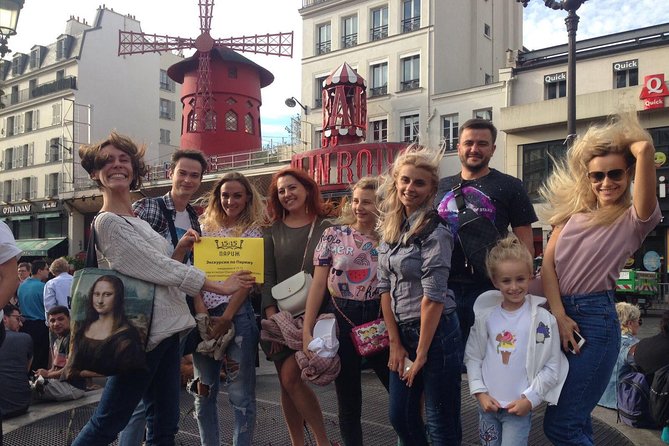
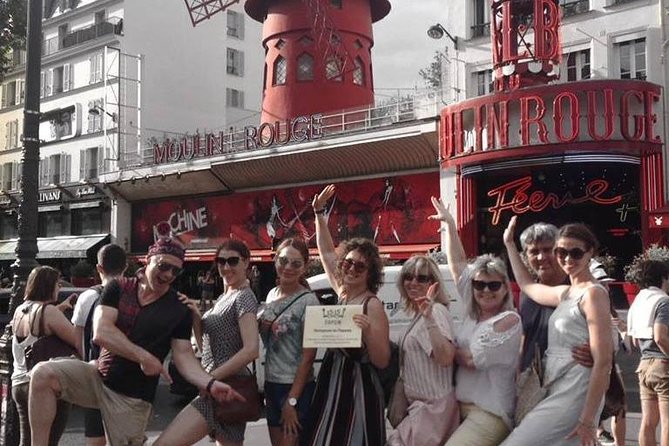
After Sacré-Cœur, you’ll head to Moulin Rouge for an outside look. This stop is short (about 15 minutes), and you won’t go inside, so keep your expectations aligned: you’re there for symbolism and context, not for an indoor attraction.
The guide explains the history behind the emblem—the red windmill—and connects it to the cabaret world that helped introduce the French can-can to Paris audiences. Seeing it from the street helps you understand how the area’s identity is built on strong visuals and big stage energy.
One thing to know: the Moulin Rouge admission ticket is not included. Since the tour is outside-focused here, you’re not being asked to buy entry just to participate—but if you want more, this is your cue that you can make a second trip later on your own time.
Montmartre’s Artist Streets: Steps Where Icons Walked
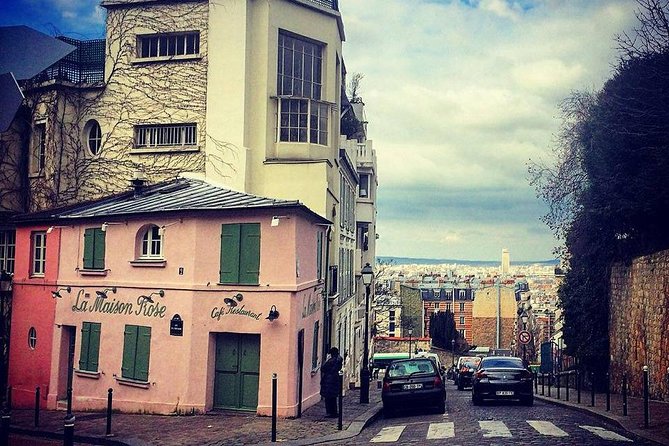
The heart of Montmartre is the feeling that art wasn’t made in isolation—it was made in cafés, studios, and alleyways. This is where the tour leans hardest into storytelling.
You walk on the steps of the great artists, painters, and writers tied to Montmartre at the end of the 19th century and the beginning of the 20th century. The tour connects the neighborhood to names you’ll recognize: Monet, Manet, Van Gogh, Pisarro, Rodin, Picasso, and Zola, among others.
In real terms, that means you’re not just seeing pretty lanes. You’re learning how the neighborhood developed its reputation and why artists were drawn to this particular hillside atmosphere. It helps you read the streets with more confidence—like you’re interpreting a living timeline, not just taking photos.
This stop is about 30 minutes, with free admission. Short, yes—but for Montmartre, short can be smart. The streets are crowded at peak times, and the tour’s small-group structure helps you keep moving without getting stuck in tourist traffic.
If you want to get the most from this part, stay mentally switched on. These are the stops where your brain starts connecting place details to the bigger artistic story.
Pigalle in Daylight: Red Light District With Context
Pigalle can feel like a blur if you only glance at storefronts. This tour gives it shape. You’ll see the most famous red light district in Paris, including cafés, cabarets, and sex shops, and you’ll also hear the angle that Pigalle wasn’t only about nightlife—it was also home to painters and writers with their own creative lives.
That contrast is what makes this stop interesting. It’s the same neighborhood seen through two different lenses: the show-business edge, and the artistic presence that existed before everything became purely commercial.
The stop runs about 30 minutes and the admission is free. You’ll get enough time to orient yourself and understand what you’re looking at without the tour turning into shock-value sightseeing.
Practical tip from the overall tour vibe: the guide may share safety advice for the area, especially around busy tourist spots near the hill. Keep your phone and bags secure when crowds thicken, and don’t let the charm make you careless.
Place du Tertre: A Quiet Ending With Vineyards and Bocce Feel
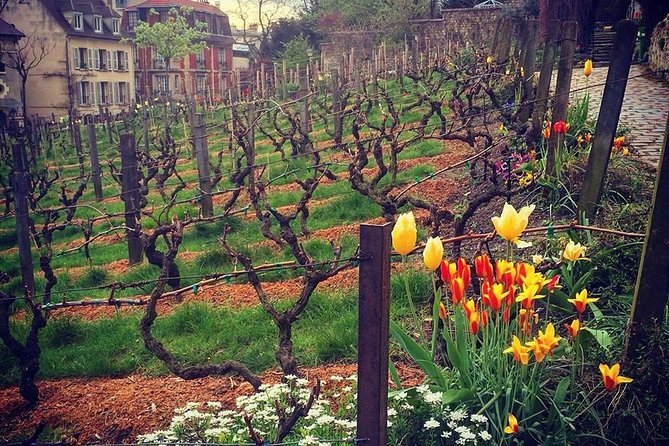
The final stop is Place du Tertre, and it’s a nice tonal shift. Right after the more neon-leaning atmosphere of Pigalle, this square feels like a small village tucked into Paris—bucolic charm close to nightlife.
The tour describes the area as calm, with vineyards, bocce-fields, and hidden parks nearby. Even if you don’t go searching for every tucked-away corner, just knowing that this space has that village-like identity helps you understand why artists and caricaturists have long been part of the Montmartre draw.
You’ll also end at Place du Tertre, where you can keep the experience going with restaurants and cafés. That matters because you’re not stuck trying to figure out where to go next while still sweaty from the hill. You finish in an easy-to-use hub.






Group Size, Loudspeakers, and the Real Montmartre Walking Pace
This tour is built for a maximum of 15 travelers, and that size shows up in how the walk feels. It’s much easier to hear a guide when the group isn’t packed shoulder to shoulder.
The guide also uses a loudspeaker to help with distance and crowd management. That means the tour doesn’t rely on everyone standing perfectly still for sound. It’s designed to keep the group moving through busy pedestrian areas.
Still, don’t treat the duration (about 2 hours) as a low-effort promise. The experience is geared to people with moderate physical fitness. You’ll be going up and down steep hills and stairs. One of the most consistent practical notes from guides and past participants is that the walking is the main variable.
My advice:
- Wear grippy shoes. Montmartre streets can be uneven.
- Bring a little water if it’s warm.
- If you’re sensitive to hills, pick a morning start to keep the pace manageable and lighting good for photos.
Price and Value: How $47.79 Adds Up
At $47.79 per person, this is priced like a focused walking tour: professional guide time, guided stops, and live commentary are included. There’s no meal included, but the tour ends right in the restaurant-and-café zone at Place du Tertre, so you can plan food right after.
Here’s why the value feels fair:
- You get a guided route that covers multiple Montmartre identities in one run (church views, Moulin Rouge symbolism, artist street stories, Pigalle context, village-like Place du Tertre).
- Sacré-Cœur admission is free for the stop, which reduces surprise costs at the start of the walk.
- Group size stays small, so your guide attention isn’t diluted.
The one potential cost curve is personal add-ons. If you decide to go inside attractions on your own, or if you want more than the outside-view Moulin Rouge stop, that’s on you. But the tour itself stays clear about what’s included versus not included.
Also worth noting: this type of tour often gets booked ahead. With an average booking lead time of 55 days, I’d plan ahead rather than assume you can stroll in last-minute.
Timing Tips: Morning, Afternoon, or Evening Starts
The tour offers morning, afternoon, or evening start times. Your choice mainly affects crowds and light.
- Morning: best if you want cooler legs and daylight clarity for the steep streets and the Sacré-Cœur hill view.
- Afternoon: good if you want to blend this with other sightseeing later in the day.
- Evening: helpful if you prefer a softer atmosphere in the streets, but keep in mind you’ll still be walking hills and steps.
Whatever you pick, don’t forget that Montmartre can be busy. That’s exactly when a small-group approach with a loudspeaker guide becomes more than a comfort—it becomes the difference between organized movement and getting swallowed.
Who This Tour Suits Best
This tour is a great fit if you:
- Want a guided Montmartre overview without doing a long museum day.
- Like art and culture stories tied directly to street-level places.
- Prefer a small group (max 15) and clear, live commentary.
- Are comfortable with hills and steps at a moderate level.
It’s less ideal if you’re expecting flat walking. The steepness is part of the experience. But if you’re willing to pace yourself, the payoff is the view and the way the neighborhood feels connected rather than random.
You’ll also enjoy this if you like finishing with immediate options for food and lingering in the atmosphere, since the tour ends at Place du Tertre.
Should You Book This Montmartre Highlights Tour?
If your goal is to understand Montmartre quickly and correctly—church landmark, cabaret symbol, artist-era streets, Pigalle context, and a calm end at Place du Tertre—this is a strong booking choice. The small group size, live guide commentary, and the fact that it covers multiple distinct Montmartre moods in about 2 hours make it a smart value.
The decision hinge is walking comfort. If hills and steps are a challenge, choose your start time wisely and wear proper shoes. If you’re good with that, you’ll come away with a much better sense of how Montmartre became Montmartre—one story at a time.
FAQ
How long is the Montmartre highlights walking tour?
It runs for about 2 hours.
What does the tour cost?
The price is $47.79 per person.
When can I start the tour?
You can choose a morning, afternoon, or evening start time.
What’s included in the price?
You get a professional guide and a walking tour.
Is Sacré-Cœur admission included, and do I need a ticket for Moulin Rouge?
Sacré-Cœur entrance is free for this stop. Moulin Rouge is viewed from outside, and Moulin Rouge admission is not included.
How big is the group?
The tour has a maximum of 15 travelers.
What if the weather is bad or I need to cancel?
You can cancel for a full refund up to 24 hours before the experience starts. The tour requires good weather; if canceled due to poor weather, you’ll be offered a different date or a full refund. It can also be canceled if a minimum number of travelers isn’t met, with a different date/experience or a full refund offered instead.