REVIEW · PARIS
Montmartre and the Sacré-Coeur with the best guides in Paris
Book on Viator →Operated by Odyscover · Bookable on Viator
One of Paris’s most cinematic hills in 90 minutes. This Montmartre and Sacré-Cœur tour helps you get oriented fast and still feel the neighborhood’s creative soul. I especially like pairing the Sacré-Cœur viewpoints with art-world stories that connect you to Montmartre’s past.
I’m also a big fan of how the stop at Place du Tertre puts you right where local artists work live, not just where postcards get printed. You’ll hear about painters and movements tied to Montmartre, plus time for classic sights like the Moulin Rouge area and the basilica hill.
The main thing to consider is the uphill walking. Some people will be happier using the funicular for parts of the ascent, and rain can make the hill feel longer.
In This Review
- Key things to know before you go
- Why Montmartre plus Sacré-Cœur fits neatly into 90 minutes
- Starting at Au Petit Montmartre: where the walk makes sense
- Moulin Rouge stop: Belle Époque energy with Toulouse-Lautrec context
- Place du Tertre: live artists, portraits, and the square’s long memory
- Clos Montmartre and the “vineyard in Paris” fact you can’t un-know
- Sacré-Cœur de Montmartre: white facade, stained glass, and panoramic payoff
- The guide factor: what makes Denise, Katie, Sylvia, and Kati matter
- Included and priced right for what you’re actually doing
- Who should book this tour, and who should think twice
- Should you book this Montmartre and Sacré-Cœur tour?
- FAQ
- How long is the Montmartre and Sacré-Cœur tour?
- What language is the tour offered in?
- Where does the tour start, and when does it begin?
- What stops are included?
- What’s included in the price?
- How do you get up to Sacré-Cœur?
- If plans change, can I cancel for a refund?
Key things to know before you go
- Moulin Rouge context: You’ll hear Belle Époque stories and Toulouse-Lautrec references right where it all started.
- Place du Tertre at work: Live easels and street art culture up close, with time to slow down.
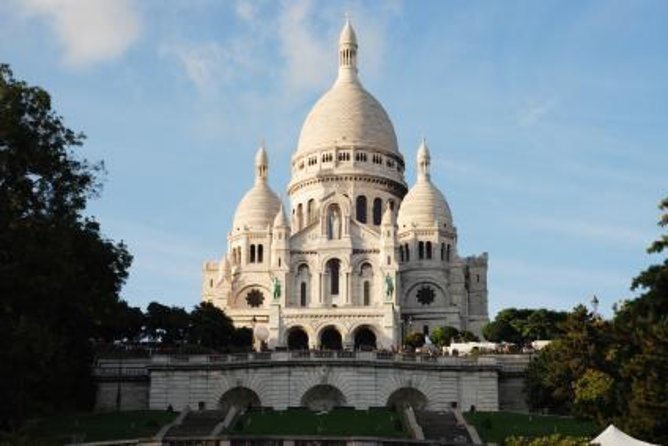
- Sacré-Cœur views: White neo-Gothic/Romano-Byzantine basilica plus panoramic city sightlines.
- Funicular option: You can choose stairs or the funicular when heading up to Sacré-Cœur.
- Guide-driven experience: Names like Denise, Katie, Sylvia, and Kati come up in feedback for pacing and storytelling.
- Watch for reliability: A small number of reviews mention guide no-shows or last-minute cancellations, so keep an eye on messages.
Why Montmartre plus Sacré-Cœur fits neatly into 90 minutes
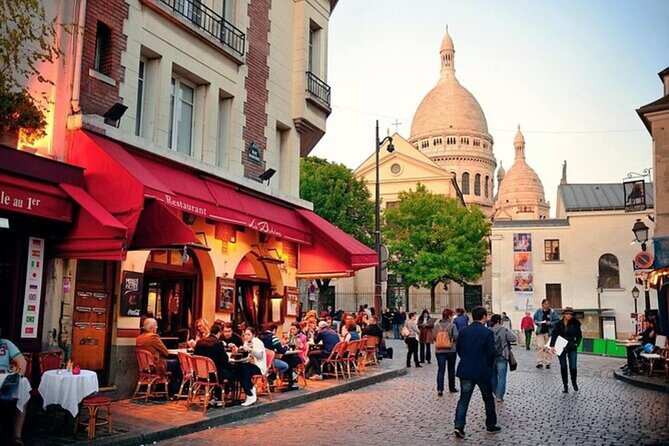
Montmartre is the kind of place where it’s easy to wander for hours, then realize you missed the best angles. This tour keeps things tight—about 1 hour 30 minutes—so you cover the core sights without burning your afternoon. It’s also in English, which matters here because the hill is steep and you’ll want clear, focused explanations.
The best part is that the route isn’t only scenic. You’re guided through the “why” behind what you’re seeing: the artist culture, the famous places everyone photographs, and the calmer spots that help you understand how the neighborhood actually functions. You get structure—and that’s what turns Montmartre from a maze into a satisfying walk.
The clock is also a clue. If you like slow, long strolling with lots of stops for coffee, this may feel a bit fast. But if you want the big hits plus smart context, this is a solid fit.
You can also read our reviews of more tours and experiences in Paris.



Starting at Au Petit Montmartre: where the walk makes sense
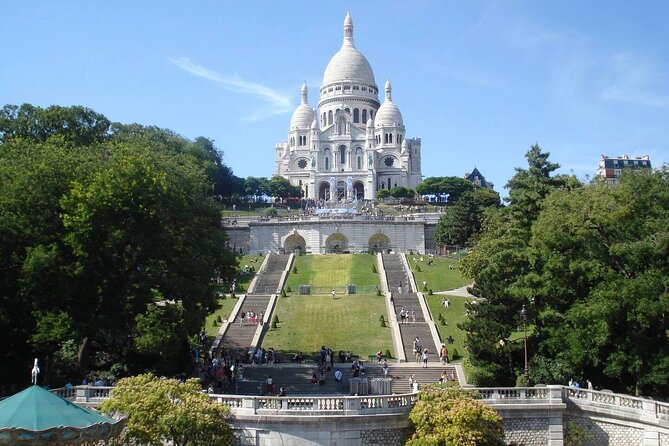
You meet at Au Petit Montmartre, 16 Pl. des Abbesses (75018 Paris), with the tour starting at 2:30 pm and ending back near the meeting point. That location is handy because it’s tied to the Abbesses area—very “Montmartre,” and useful for starting the day where the streets already feel like they’re stepping into another era.
Coming in at the right time is important here. The hill layout means you can accidentally waste energy if you’re constantly rerouting. A guide keeps your direction clear, and that matters more in Montmartre than in flatter neighborhoods.
Since the tour uses a mobile ticket, you’ll want your phone charged. It’s a small thing, but carrying a full battery makes day-of check-in smoother.
Moulin Rouge stop: Belle Époque energy with Toulouse-Lautrec context
Even if you’ve seen the Moulin Rouge sign in photos a hundred times, there’s something different about standing in the area. This stop brings you straight to the cabaret’s legendary presence in the bohemian Montmartre district. You also get cultural context for why artists and audiences were drawn to this vibe during the Belle Époque.
A highlight here is the reference to Toulouse-Lautrec, especially his connection to nightlife and the way he captured the atmosphere of the period. If you like art history that feels connected to real streets (not a lecture hall), this is a good start. It gives you a mental movie of what this corner of Paris used to feel like.
One drawback to keep in mind: depending on the group’s pace and the time you arrive, this kind of stop is usually more about learning and orientation than lingering for a performance. If your dream is a full cabaret show, you’d still plan that separately. Think of this stop as the story doorway.
Place du Tertre: live artists, portraits, and the square’s long memory
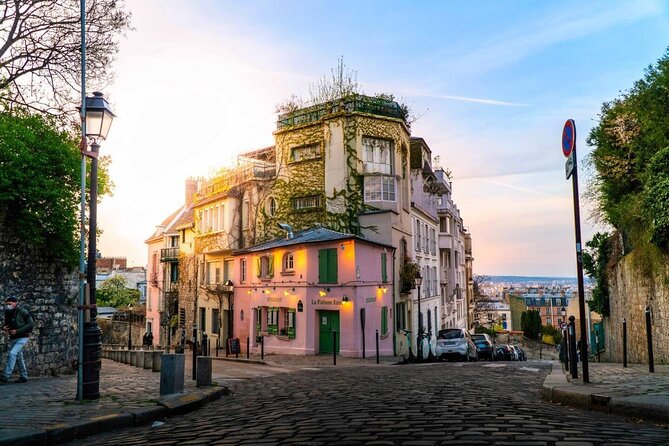
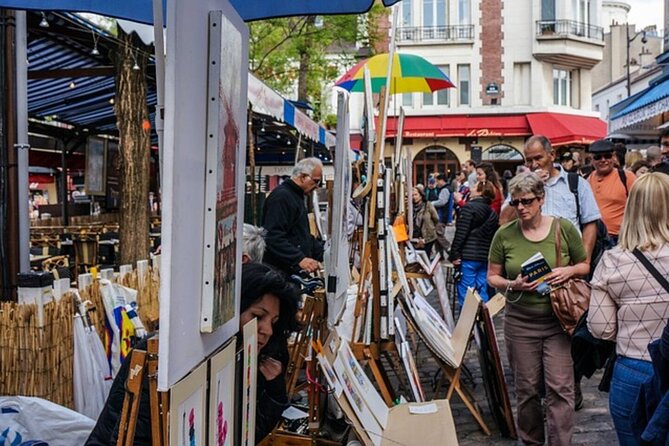
Next you spend time in Montmartre’s Place du Tertre, a spot that lives up to its reputation because artists work there in view of everyone walking through. The square is known for portrait painting, sketches, and original works—so you’re not just looking at art, you’re watching the craft happen.
This is where I like guided tours the most. Without guidance, Place du Tertre can become just a loop of cafés, shops, and “photo, photo, photo.” With a good guide, the square turns into an explanation of how the neighborhood expresses itself: why it attracts artists, how it creates a stage for creativity, and how it’s connected to Montmartre’s long artistic identity.
This tour also points you toward nearby classics like Café des Deux Moulins, made famous through the film association with Amélie Poulain. You may not be stopping for a full meal here (food isn’t included), but it’s a meaningful stop for understanding why Montmartre became a magnet for pop culture and imagination.
The practical note: Place du Tertre can feel crowded and a bit noisy. If you want calmer viewing, lean on your guide’s pacing and take short pauses when the group shifts position.
Clos Montmartre and the “vineyard in Paris” fact you can’t un-know
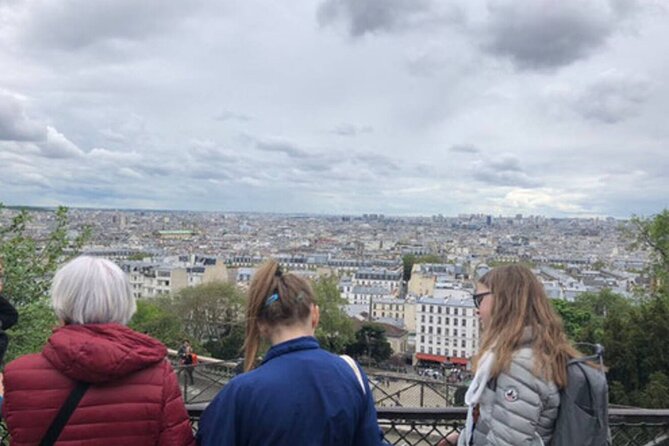
What I found most compelling is that this tour doesn’t keep you trapped in only postcard Montmartre. It includes a route through the area around Clos Montmartre, often described as the only vineyard in Paris. That single detail changes how you see the neighborhood, because it adds time depth: Montmartre isn’t only about artists and churches—it also has a living agricultural thread.
From there, the walk continues toward viewpoints linked with the neighborhood’s elevation. You’ll get guidance toward terraces and vantage spots, including time tied to the Montmartre Museum terrace viewpoint. Even when the streets look chaotic below, the heights help you see how the city layers over itself—roofs, streets, spires, and major landmarks in one visual stack.
The drawback? If you’re not used to hills, this is where the day tests you. The route has steep sections, and the tour is short enough that you’ll feel the slope. Bring comfortable shoes and expect you’ll slow down briefly on climbs.






Sacré-Cœur de Montmartre: white facade, stained glass, and panoramic payoff
At the top, Sacré-Cœur is the moment that turns all the uphill effort into a reward. This basilica sits on the hill like a finishing chapter, with a dazzling white facade in a neo-Gothic and Romano-Byzantine mix. Inside, stained glass creates an atmosphere built for quiet reflection and softer light.
The tour highlights two key things here. First, it’s not only a pretty exterior. You’re guided through what you’re seeing—styles, meaning, and the spiritual symbolism tied to peace and hope. Second, you get access to the payoff: the city view. From Sacré-Cœur’s vantage, you can see the city spread out, with landmarks such as the Eiffel Tower visible in the distance on clear days, plus the distinctive rooftops and skyline grid.
Getting up is flexible. The tour mentions ascent by stairs or the funicular, which is a big deal for comfort. Some guides (Denise comes up in feedback) are praised for helping groups avoid the worst of the stairs where possible. If your legs are not thrilled by steep climbs, ask your guide how they’re handling the ascent and choose what feels right.
Inside Sacré-Cœur, keep your expectations realistic. This is a guided visit, so you’ll likely be moving as a group. If you want a long, slow spiritual sit-down, consider pairing this with extra time on your own right after the tour ends.
The guide factor: what makes Denise, Katie, Sylvia, and Kati matter
In Montmartre, a great guide isn’t optional—it’s the difference between a walk that feels random and one that feels meaningful. The strongest praise is consistent: guides are friendly, tell fun stories, and keep explanations connected to the places you stand on.
Names that appear in strong feedback include Denise, Katie, Sylvia, and Kati. The common thread is style: witty storytelling, clear art-history links, and a pacing that works for families as well as adults. Some feedback also mentions that guides can handle weather well, keeping the experience moving even when conditions aren’t ideal.
I also pay attention to the “how” comments. There are a few negative notes about tours that had guide no-shows, excessive talking, or difficulty hearing the guide clearly. That doesn’t mean your tour will be like that—but it does mean you should do your part:
- Arrive a little early at Pl. des Abbesses
- Keep your confirmation accessible
- Stay alert for any day-of changes in your message feed
A good guide can turn this 90 minutes into something you remember for weeks. A mediocre moment can make the hill feel like a slog. The guide is the swing factor.
Included and priced right for what you’re actually doing
The price is $30.04 per person for about 1 hour 30 minutes, offered in English. That’s not “cheap,” but it’s also not trying to sell you a full-day experience. For Montmartre, paying for guided structure is often worth it because you’re paying for direction, context, and time saved.
You get:
- Guided Tour
- Visit to pie
Food and drinks aren’t included, and tips aren’t included. Transfers aren’t included either. That means you should budget for whatever you want to drink on the walk, especially if you’re going between sun and shade on hills.
The “pie” inclusion is a small detail, but it helps. Montmartre is full of café stops, and a tour that includes one planned bite can keep you from losing time hunting. Still, since food isn’t guaranteed beyond that, come prepared to buy water or a snack if you need it.
Value check in plain terms: if you want the main sights (Moulin Rouge area, Place du Tertre, Sacré-Cœur) plus explanations that connect art, nightlife, and the hill’s layout, this price makes sense. If your goal is purely sightseeing and you already know the story beats, you could do it on your own. But you’d be walking uphill without a map of what matters most.
Who should book this tour, and who should think twice
This tour fits best if you want:
- A quick, structured Montmartre overview
- Art and neighborhood context tied to specific sites
- City views at Sacré-Cœur without figuring out every turn
- A group walk that can work for mixed ages (positive feedback mentions families and teens)
It may be less ideal if:
- You hate uphill walking and want minimal steps (funicular options exist, but hills are still part of the area)
- You’re picky about hearing every word and can’t tolerate noise-crowd conditions
- You want long free time at each stop rather than a guided tempo
Also, because there are a few reports of last-minute guide issues, I recommend making this a plan you can still enjoy if the pace shifts. Keep other backup activities nearby that don’t depend on this tour going perfectly.
Should you book this Montmartre and Sacré-Cœur tour?
I’d book it if you want Montmartre with direction and stories—especially the combination of Place du Tertre art culture and the Sacré-Cœur viewpoint payoff. The price is reasonable for a guided 90-minute route, and the fact that you can use stairs or the funicular helps a lot.
I’d think twice if you’re counting on exact timing and hate uncertainty. A small set of experiences mention guide no-shows and cancellations, so you’ll want to stay sharp with day-of communication. If you’re flexible and ready for steep streets, this is one of the more practical ways to hit Montmartre’s top landmarks without wasting your afternoon wandering.
FAQ
How long is the Montmartre and Sacré-Cœur tour?
The tour runs about 1 hour 30 minutes.
What language is the tour offered in?
The tour is offered in English.
Where does the tour start, and when does it begin?
It starts at Au Petit Montmartre, 16 Pl. des Abbesses, 75018 Paris, France, at 2:30 pm.
What stops are included?
The tour includes Moulin Rouge, Montmartre (including Place du Tertre), and the Sacré-Cœur de Montmartre area.
What’s included in the price?
It includes a guided tour and a visit to pie. Tips, food and drinks, and transfers are not included.
How do you get up to Sacré-Cœur?
You can ascend by stairs or by the funicular.
If plans change, can I cancel for a refund?
Yes. You can cancel for a full refund if you cancel up to 24 hours in advance. If you cancel within 24 hours, the amount paid is not refunded.