REVIEW · PARIS
Louvre and Musée d’Orsay with Reserved Entry Ticket
Book on GetYourGuide →Operated by Babylon Tours LLC · Bookable on GetYourGuide
Two museums, one clear art timeline. The reserved entry plus a chronological guide storyline turns the Louvre and Musée d’Orsay into a readable journey, not a blur of rooms. I especially love how the tour moves from Ancient Greek mythology to the famous Da Vinci highlights like the Mona Lisa. I also like the shift to 19th-century French art inside the former Gare d’Orsay building. The main drawback is simple: it’s a lot of walking in a fairly tight 5.5-hour window.
You get a professional live guide and a small-group feel (up to 6 per guide for the most intimate option). Lunch break is included, and you’ll have time to enjoy both museums without playing entry-ticket roulette.
One more practical note: the museums are about a 10-minute walk apart, and the tour stays together. That means you’ll spend your energy on galleries—not on getting oriented.
In This Review
- Key highlights you’ll feel right away
- A 5.5-hour plan for two top Paris museums
- Reserved entry: the real time-saver at the Louvre
- Louvre story mode: Greek myth to the Mona Lisa
- Louvre’s palace shell: architecture you can read
- Lunch break and the short hop to Orsay
- Orsay after lunch: why the station building fits 19th-century art
- Impressionists and rebels: Manet through Van Gogh
- How the guide pacing works (and what you should do)
- Price, value, and who benefits most from this format
- Practical tips: tickets, bags, and walking comfort
- Should you book the Louvre + Orsay Reserved Entry tour?
- FAQ
- How long is the Louvre and Musée d’Orsay tour?
- Is entry reserved for both museums?
- Will I have lunch during the tour?
- What languages are the live guides?
- Where do I meet the guide, and where does the tour end?
- What do I need to bring?
- Is the tour suitable for wheelchair users or limited mobility?
Key highlights you’ll feel right away
- Reserved entry at both museums for faster access and more time looking
- Chronological art tour from Ancient Greece to French Impressionism and beyond
- Da Vinci moments at the Louvre, including the Mona Lisa spotlight
- Beaux-Arts Orsay building in the old Gare d’Orsay station space
- Art rebels theme that explains how Impressionism gained momentum
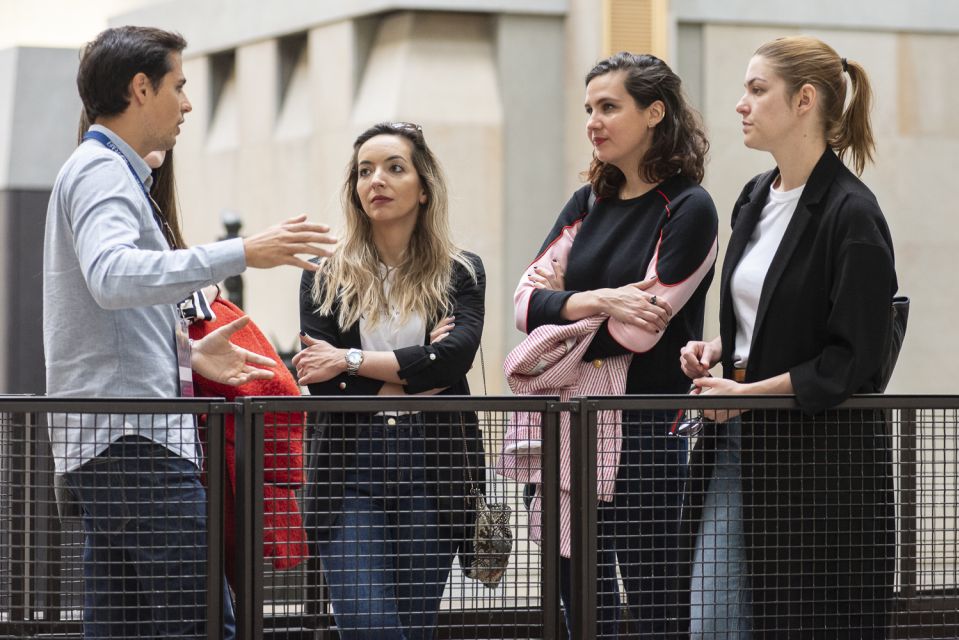
- Small-group pacing (max 6 per guide) with a guide who tells the story
A 5.5-hour plan for two top Paris museums
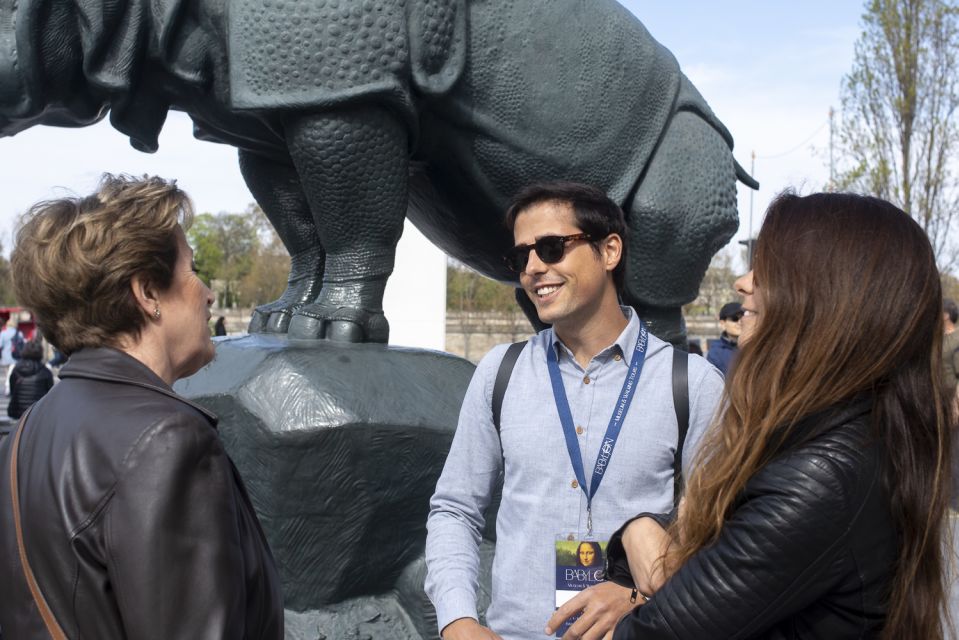
Paris can be brutal with its most famous sights. Lines. Crowds. Endless halls. This tour tackles that problem with a smart combo: the Louvre first, then Musée d’Orsay after lunch, all tied together by one art-history thread.
The timing works because you’re not trying to “do everything.” Instead, you’re choosing the moments that matter most for understanding how Western art changed. The guide builds a sequence: early mythology and antiquity at the Louvre, then 19th-century French painting at Orsay. That makes both museums feel less like separate visits and more like one continuous lesson.
And yes, you still get famous works. The Mona Lisa is part of the Louvre experience here, but the value is that it sits inside a larger story rather than as a 30-second photo stop.
You can also read our reviews of more tours and experiences in Paris



Reserved entry: the real time-saver at the Louvre
Here’s what “reserved entry” means for you in plain terms: you spend less time waiting outside and more time actually in galleries. The Louvre alone covers a huge amount of space (over 650,000 square feet), with more than 35,000 works and artifacts on view. Even with a map, it’s easy to wander until you feel like you’ve seen nothing.
With the reserved access, you can start with confidence and follow the guide’s path. Instead of choosing from thousands of objects, you’re guided to major pieces and turning points. That’s especially helpful if you only have one day—or even just half a day—to hit both museums.
There’s also a nice practical bonus: the tour lets you stay on after the guided portion ends. That’s good if you want one last loop through a room you liked instead of being dragged onward on schedule.
Louvre story mode: Greek myth to the Mona Lisa
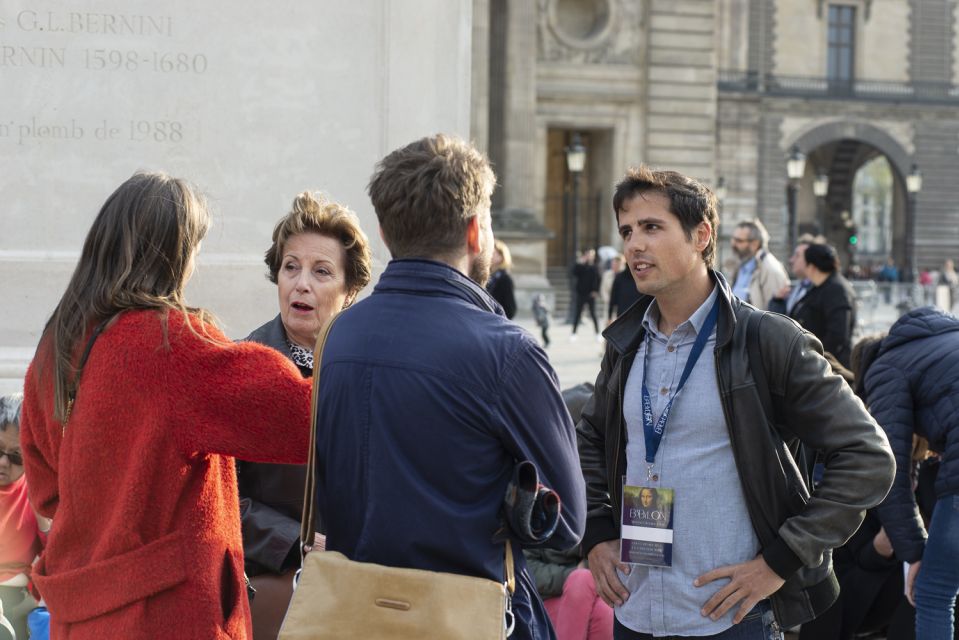
The Louvre visit is built as a chronological art tour, starting with Ancient Greek mythology. That opener matters because it gives you context for later styles and symbols. Without that, you can easily see sculptures and paintings as isolated “cool objects.” With it, they start to read like chapters.
A strong guide here (the kind you want for the Louvre) does two jobs at once:
- Picks the pieces that show how art thinking changed.
- Explains why those pieces mattered, not just what they look like.
You’re led toward some of the best-known highlights, including the Mona Lisa. The point isn’t only that it’s famous. It’s that the guide connects it to bigger shifts in technique, subject matter, and artistic goals over time.
Louvre pacing can still feel intense even on a guided tour, so your goal is to slow down when the guide pauses. Listen for what they’re pointing out. Then take a few minutes to really look. At the Louvre, standing still for just 60 seconds can be more rewarding than sprinting for the next room.
Louvre’s palace shell: architecture you can read
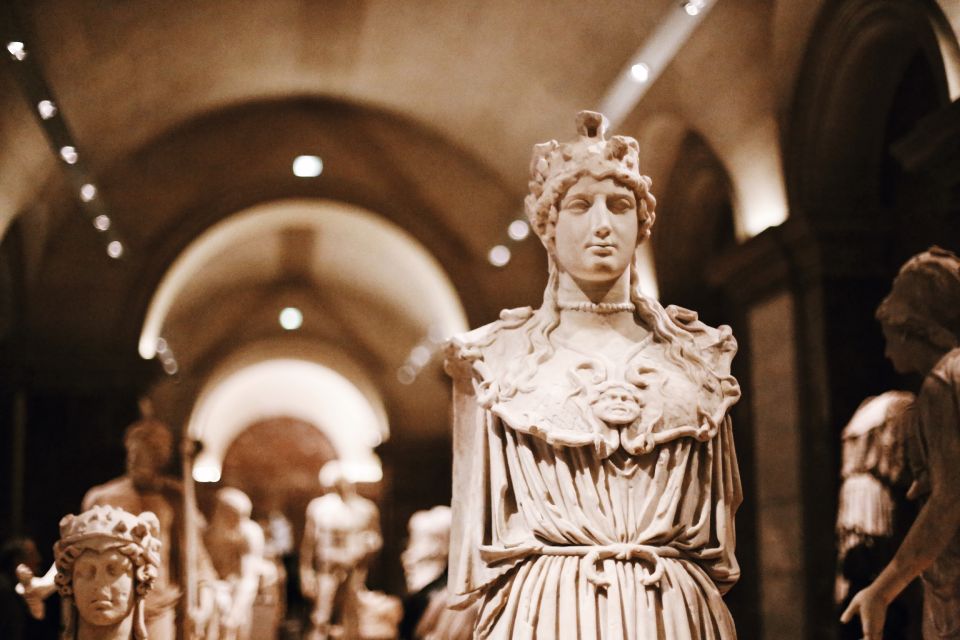
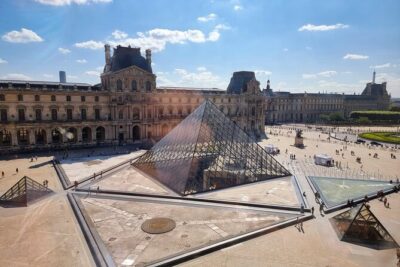
Even if you’re not an architecture person, the Louvre building is part of the experience. This tour doesn’t treat the museum as just a box of art. It also helps you “read” the Louvre’s setting—its architecture and how it evolved over time.
That matters because the Louvre has its own identity beyond being a museum. The building’s history as a palace shapes how spaces feel and how exhibits are arranged. Once you notice that, you start seeing why certain wings or galleries feel grander, more formal, or more ceremonial.
I like tours that teach you how to look at the museum itself as an artifact. Here, the architectural angle helps you understand the environment you’re standing in while you’re chasing masterpieces.
Lunch break and the short hop to Orsay
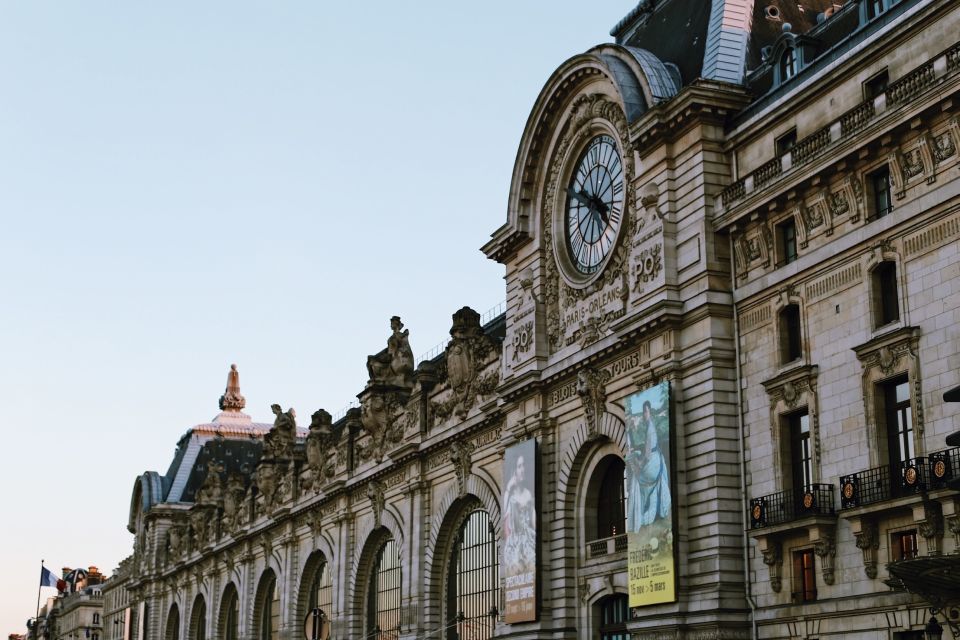
After the Louvre portion, you get a lunch break included in the tour time. Food and drinks aren’t included, so you’ll want to grab something nearby and keep moving. The good news is that you won’t be stuck traveling across Paris between museums.
The move from the Louvre to Musée d’Orsay is a quick walk—about 10 minutes—and the guide stays with you. That keeps the schedule tight and reduces the stress of figuring out transport mid-day.
One small mindset shift helps here: treat lunch as a reset, not a long detour. If you want an Orsay morning and a strong Orsay afternoon, keep lunch simple and return on time.



Orsay after lunch: why the station building fits 19th-century art
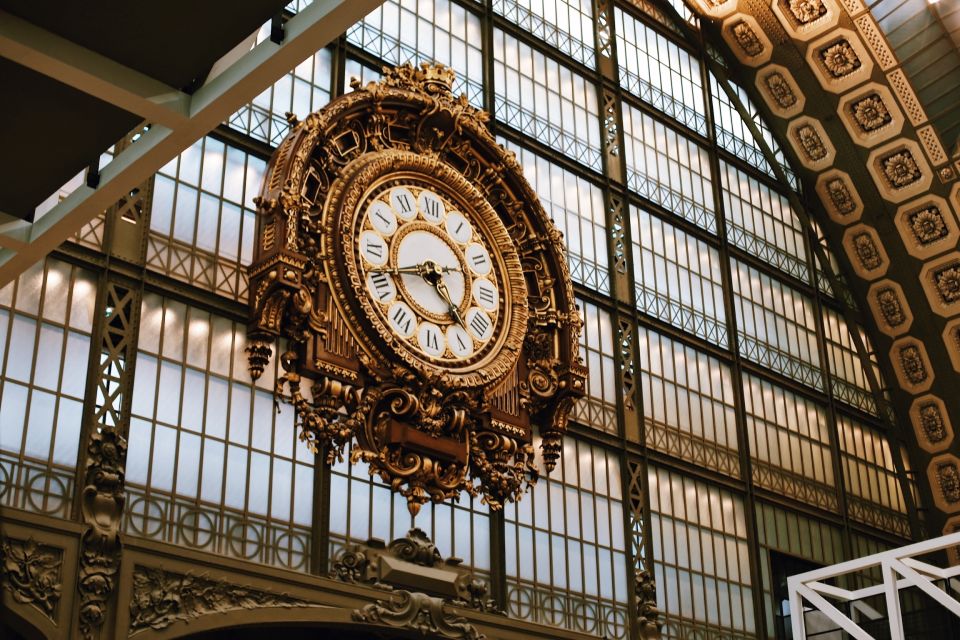
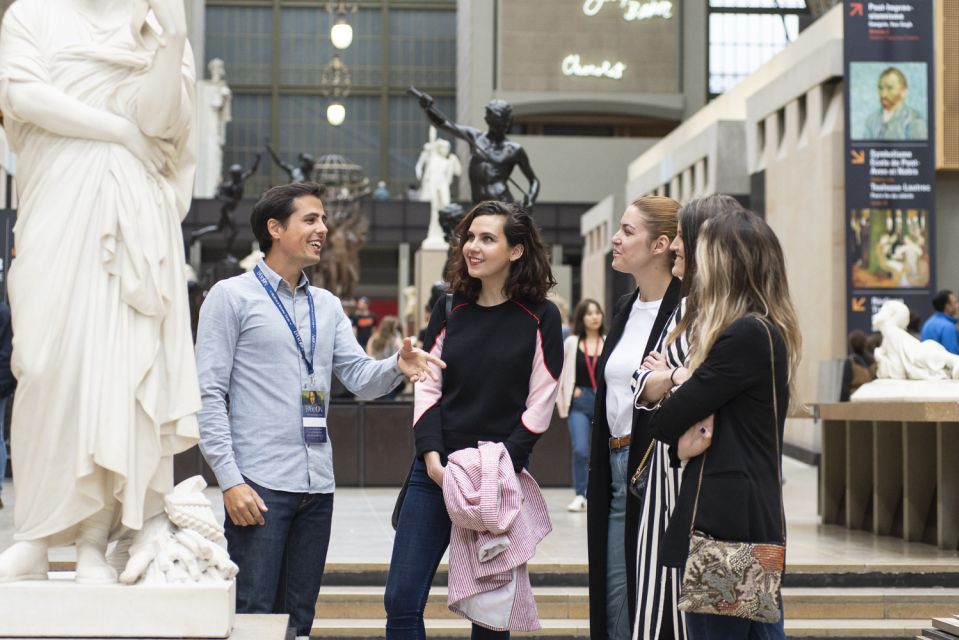
Musée d’Orsay is one of those Paris museums that feels like it was built for its collection. The museum focuses on 19th-century French art, and it sits inside a beautiful Beaux-Arts building that used to be the Gare d’Orsay railway station.
That former station setting changes how the museum feels. You get tall, open spaces and a sense of light and movement. It’s a natural match for artists who pushed style forward and broke older rules.
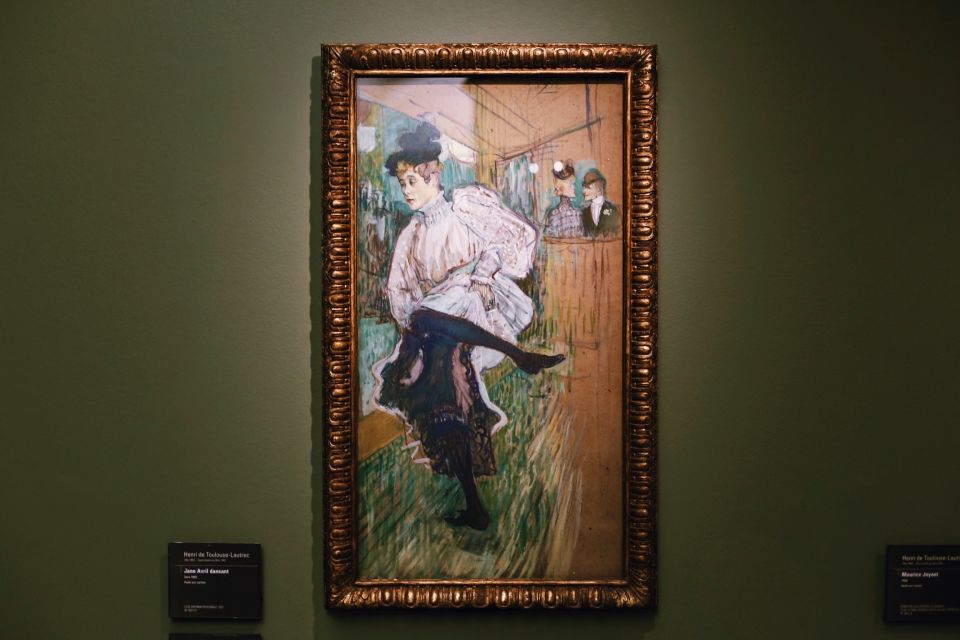
The tour’s structure helps too. You don’t just jump into Impressionism without explanation. You’re guided through individual styles associated with artists like Manet, Renoir, Cézanne, and Gauguin. Then you connect the dots to how art rebels helped pave the way for Impressionism.
If you like your art with context, this is where the tour starts paying off. The Orsay collection is huge in impact, and a guided narrative makes it easier to separate what’s technique, what’s mood, and what’s an artistic argument.
Impressionists and rebels: Manet through Van Gogh
At Orsay, the tour’s big idea is style evolution. You see how painting changed as artists experimented with brushwork, light, and subject matter. Instead of treating each painter as a standalone name, you get a sense of how they influenced one another.
You’ll encounter themes tied to Impressionism and post-Impressionism, with examples including Renoir and Van Gogh (as part of the tour’s journey from Impressionism onward). The guide also helps you notice details that are easy to miss when you’re rushing: how an artist builds a scene, how color behaves, and what the artist is trying to communicate beyond realism.
This is also a museum where “looking longer” pays off. If you find one painting that clicks, let it win you over for a few minutes. The format is timed, but it’s not designed to stop you from doing a little extra looking when the story gives you a moment to breathe.
How the guide pacing works (and what you should do)

A tour like this lives or dies on pacing and selection. The good news is the operator keeps group size small—max 6 per guide for the intimate option. That matters in museums like these, where you need the guide to steer you toward the right rooms and keep the story cohesive.
Some guides in this operator’s orbit—like Dunya, Alex, and Daniel—are praised for balancing both museums and weaving connections across time. Alex is noted for strong English and for understanding how to connect French art to visitors from the U.S. Daniel is recognized for deep art knowledge, and Dunya for passion and a good rhythm across the two stops.
You can help your guide succeed too:
- Wear comfortable shoes you can walk in for a good stretch of time.
- Keep your phone charged enough for reference photos after you look.
- When the guide points something out, pause. That’s when your “aha” moments happen.
Also, keep in mind that some rooms inside the museums have rules that require quiet or restrict speaking. If you tend to chat, switch into museum mode quickly.
Price, value, and who benefits most from this format
$258 per person is not a budget price, so you want to feel the value. Here’s where the math works in your favor:
- Reserved entry to both museums saves time that’s hard to recover in the Louvre.
- A professional guide turns two massive collections into a guided narrative with fewer dead ends.
- Lunch break included reduces what you need to plan during your day.
- Small-group size makes it easier to keep the tour coherent.
Is it worth it if you love museums and plan to wander independently? Maybe not. If you want zero structure and endless browsing, you could build your own route and skip the guide cost.
But if you want a single-day plan that teaches you how art changed—without spending your day lost—this is a smart spend. You’re basically buying someone’s ability to translate two museums into an order you can actually remember.
This tour is best for:
- First-time visitors who want the core masterpieces and key movements
- People who like chronological storytelling
- Travelers who don’t want to spend hours studying museum maps before walking in
It may be less ideal if:
- You hate walking and need frequent rests
- You want a full, slow, room-by-room deep museum experience rather than a curated arc
Practical tips: tickets, bags, and walking comfort
A few practical things can make or break your comfort level on a day like this.
Bring ID. You’ll need a passport or ID card.
Bag rules are real. Luggage or large bags aren’t allowed. Oversize luggage is not permitted, and anything bigger than 55x35x20 cm can’t go in.
Expect a lot of walking. The tour notes high walking demands. The semi-private option isn’t available for those with walking disabilities, and the tour is not suitable for wheelchair users. Wheelchair tours are listed as available only on request, so if accessibility is a concern, ask directly before booking.
Museums can close sometimes. Occasional closures can happen without warning from museum management. If opening is delayed by more than an hour, you’ll get an appropriate alternative, but refunds or discounts aren’t provided in those cases by the platform.
Finally, set expectations for photography and attention. Some rooms are subject to quiet or restricted speaking rules. That’s normal museum behavior, and it makes the viewing experience better for everyone.
Should you book the Louvre + Orsay Reserved Entry tour?
I’d book this tour if you want a guided, chronological art day that connects Ancient Greece to French Impressionism and post-Impressionism without spending your time wrestling with the Louvre’s scale.
It’s a strong choice when you value:
- Reserved entry
- Story-driven viewing
- Covering two major museums efficiently
- A small-group feel that keeps the tour understandable
I wouldn’t book it if you:
- Need lots of mobility accommodations
- Want a slow, unstructured museum day
- Prefer to choose every room yourself rather than follow a curated path
If you’re on the fence, here’s the simple check: do you want art context and time-saving access? If yes, this tour makes a lot of sense. If your priority is total freedom and maximum time in one museum, consider treating the Louvre and Orsay as separate solo missions.
FAQ
How long is the Louvre and Musée d’Orsay tour?
The tour lasts about 5.5 hours. You can check available start times.
Is entry reserved for both museums?
Yes. You get reserved entry ticket access to both the Louvre Museum and Musée d’Orsay.
Will I have lunch during the tour?
A lunch break is included. Food and drinks are not included.
What languages are the live guides?
Live guides are available in Spanish, English, German, Italian, French, and Russian.
Where do I meet the guide, and where does the tour end?
The meeting point can vary depending on the option booked, and the tour ends back at the meeting point.
What do I need to bring?
You should bring a passport or ID card.
Is the tour suitable for wheelchair users or limited mobility?
The tour is not suitable for wheelchair users. Wheelchair tours are listed as available on request only, and the semi-private option is not available for those with walking disabilities.