REVIEW · PARIS
Le Marais Paris Private Transfers
Book on Viator →Operated by Tour Passion · Bookable on Viator
Le Marais gets easier with no-fuss logistics. I like that you can start with hotel pickup in an air-conditioned vehicle and end with the same door-to-door drop-off. That means you spend your time on cobblestones, not street-hunting.
The other big win is the guided metro hop to Gare du Nord, with the ticket handled for you. On the ride, your guide pushes smart habits like keeping your phone and camera put away, since attention matters in busy stations.
Do note this is a short, walking-focused day, and several stops are primarily viewed from the outside. It’s also a fixed-menu vegetarian lunch, so you’ll want to be fine with limited choices for that meal.
In This Review
- Key highlights at a glance
- Le Marais in 3 hours: what this day is really good at
- Pickup and drop-off: stress-free starts in the real Paris
- Place des Vosges: the perfect opening scene
- Cour et jardin de l’Hôtel de Sully: architecture you can feel
- Rue des Rosiers: food streets, faith communities, and gay Paris
- Saint-Paul-Saint-Louis Church: baroque without the usual wait
- Shoah Memorial from outside: a stop that requires respect
- Hôtel de Ville: Paris City Hall as a visual anchor
- Gare du Nord and the metro ride: how the guide makes it doable
- Vegetarian Indian lunch near Gare du Nord: where the day cools off
- Pace, timing, and what to wear (so you enjoy it, not endure it)
- Price and value: what $203.62 gets you (and what it doesn’t)
- Who should book Le Marais Private Transfers?
- Should you book this tour?
- FAQ
- FAQ
- How long is the Le Marais Paris transfer and walking experience?
- What is the price per person?
- Do they pick me up from my hotel?
- Is this a private tour?
- What parts of the itinerary are included on the walking route?
- Is lunch included, and what type is it?
- Who handles metro tickets?
- Are there admission tickets included for the stops?
- What is the cancellation policy?
Key highlights at a glance

- Air-conditioned pickup and drop-off so you’re not juggling taxis or buses in the middle of your sightseeing
- Metro handled end-to-end (your guide buys tickets and guides the flow)
- Le Marais classics in a tight route from Place des Vosges to iconic church façades
- Rue des Rosiers stops that connect food + culture including falafel territory like L’as du Falafel
- A built-in vegetarian Indian lunch near Gare du Nord, with drinks on you
- Real-world guide tips show up in the experience, including phone/camera advice in the metro
Le Marais in 3 hours: what this day is really good at
Le Marais is the kind of neighborhood where you can wander for hours, then suddenly realize your day has turned into “Where are we again?” This tour is designed to prevent that. You get a structured walk through some of the most recognizable parts of the Marais, plus guided transit when it’s time to move on.
The timing also matters. Three hours is long enough to get a feel for the area’s layers—old squares, courtyards, synagogues-and-shops streets—without exhausting yourself before dinner. If you’re only in Paris for a tight schedule, this kind of half-day plan can be a lifesaver.
The tradeoff is depth. You’re not settling in for long museum time. You’re seeing sights, moving between them smoothly, and getting one sit-down meal built into the plan.
You can also read our reviews of more private tours in Paris



Pickup and drop-off: stress-free starts in the real Paris
One thing I genuinely appreciate: you’re not left figuring it out at the curb. You can arrange pickup from your hotel at your preferred time, then return there after your sightseeing. That’s a big deal in central Paris, where walking sounds easy in theory—until you’ve got luggage, heat, rain, or jet lag.
The vehicle is air-conditioned. That helps more than people expect, especially if you arrive during warmer months or if you’ve been traveling all morning. You go from “trying to be efficient” to “just be sightseeing” fast.
Practical tip: plan to be ready slightly early. With hotel pickup, being prepared means you’re not rushed, and your guide can keep the schedule moving for the whole group.
Place des Vosges: the perfect opening scene
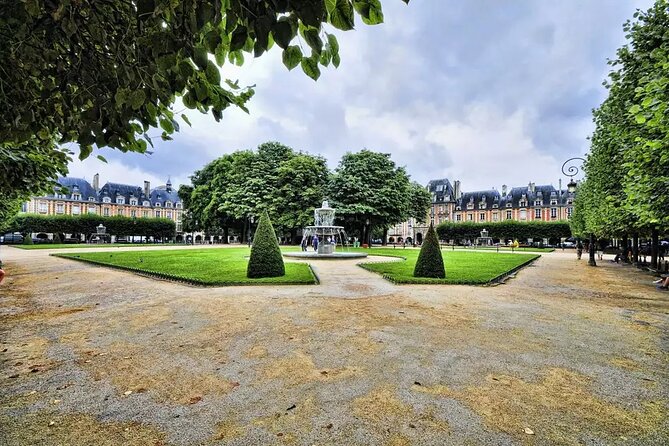
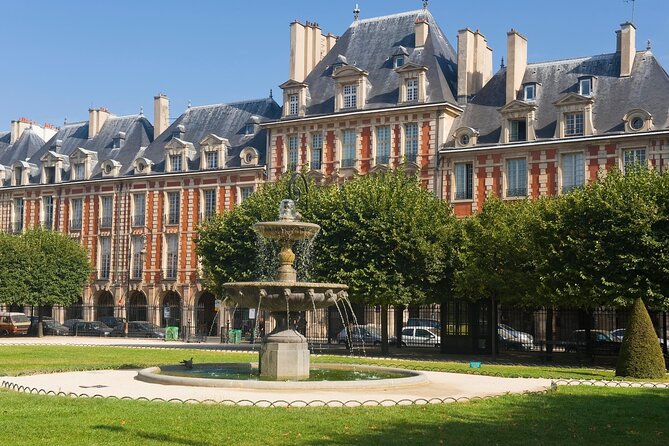
You start by walking to Place des Vosges, one of Paris’s oldest and prettiest squares. Think red-brick façades, arches that make great photo framing, and a central garden that gives the whole place a calm geometry.
What I like about beginning here is how it sets the tone. Place des Vosges isn’t a random stop—it’s a visual reset. You immediately understand the Marais vibe: historic buildings, elegant symmetry, and street life that doesn’t feel like chaos.
Good to know: shops can be open on Sundays, so the square often has more motion than you’d expect from a “just a pretty square” location. Also, a lot of the surrounding mansions from the 17th and 18th centuries have been transformed into museums, so even if you don’t go inside today, you’re walking through the neighborhood that supports major cultural visits.
Cour et jardin de l’Hôtel de Sully: architecture you can feel
Next up is the courtyard and garden area of the Hôtel de Sully (also known as the Hôtel de Béthune-Sully). This is the kind of stop that rewards slow looking. You’re not just passing a façade—you’re getting a sense of how a private mansion complex was designed.
A few details make this place more interesting than it might sound:
- It began as a private residence in the 1600s.
- It was overseen under King Henry IV, connected to Maximilien de Béthune, Duke of Sully (1559–1641).
- The Duke bought the residence in 1634, and the Sully family owned it until the mid-18th century.
- Historical figures like Madame de Sévigné and Voltaire stayed there.
Why it’s valuable on a short day: it gives you a “how Paris worked” snapshot. Courtyards and gardens weren’t decoration; they were part of status, privacy, and daily life. You see that logic in the building layout, even if you don’t spend hours inside.
Rue des Rosiers: food streets, faith communities, and gay Paris
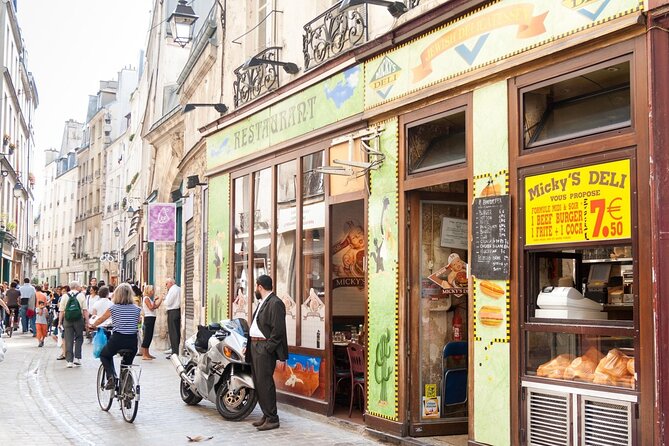
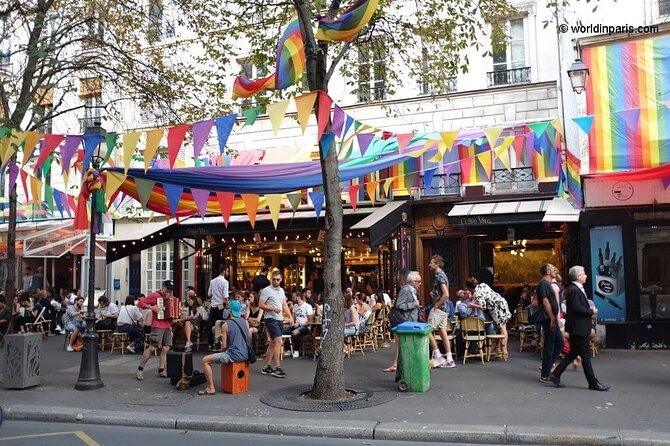
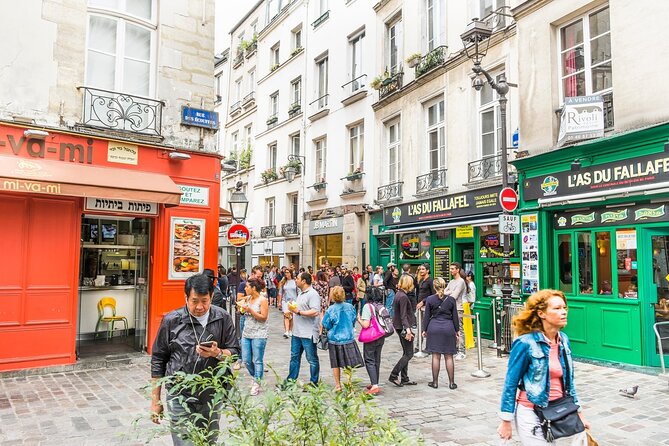
Then you move into Rue des Rosiers, a street name that literally points to rosebushes. But the real story here is community. This is a central corridor for the Jewish community in the 4th arrondissement, and it’s also part of the Marais street network that connects to one of France’s biggest LGBTQ areas.
What to look for:
- The shops and restaurant energy that makes the street feel like a destination, not just a passage.
- Food landmarks you’ll hear about back home—falafel shops in this area include places like L’as du Falafel.
This stop is especially good for people who like mixing sightseeing with the “what do locals actually do” side of city life. Even if you don’t eat during the walk, you get the atmosphere that leads to your lunch later.
Small consideration: this area can be busy. If you’re photographing, keep your camera ready but follow your guide’s cues about staying aware around crowds.






Saint-Paul-Saint-Louis Church: baroque without the usual wait
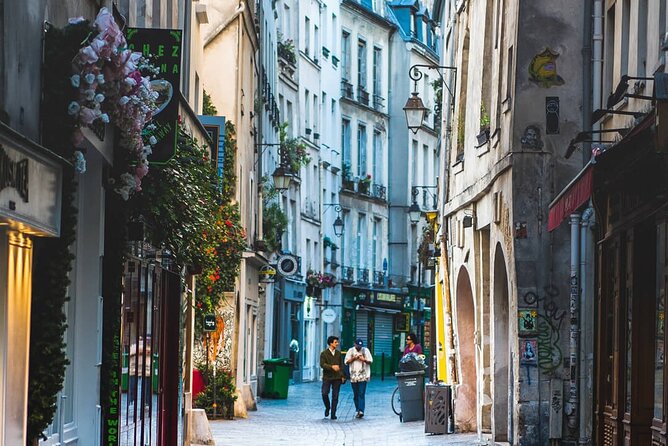
In the middle of old Marais streets, you’ll see Saint-Paul-Saint-Louis Church. This is one of those stops where the story helps you appreciate the design.
The church was constructed between 1627 and 1641, originally Jesuit, and it’s noted for being the first in Paris to abandon the gothic style and adopt baroque. Later, after the Jesuits were forbidden and banished in 1762, the church was entrusted to local clergy.
It also went through heavy use and disruption during the French Revolution, including periods when it was used as a storehouse. After renovations completed in 2012, it regained much of its former splendour.
On a tour like this, you’re not trying to do everything. You’re getting the right “why this building matters” context in a short time, which is often what turns a quick façade glance into something memorable.
Shoah Memorial from outside: a stop that requires respect
The route also includes the Shoah Memorial, and you’ll see it from the outside. This part isn’t about landmarks for selfies. It’s about recognizing what happened here and keeping that context in mind while walking one of Paris’s most historic neighborhoods.
Here’s the weight of what’s explained on-site through its wall of names:
- 76,000 Jews are engraved on the wall, including 11,000 children.
- Names include people deported from France with the Vichy government’s collaboration as part of the Nazi plan to destroy Europe’s Jews.
- Deportations took place mainly between 1942 and 1944, and many were sent to camps including Auschwitz-Birkenau, Sobibor, Lublin, Majdanek, and Kaunas/Reval.
- About 2,500 survived.
On a walking tour, seeing a memorial from outside still matters—especially if you walk through the day already “understanding” the surrounding streets as places where ordinary life once existed before being shattered.
If you get emotional here, that’s normal. Don’t rush past the moment just because the tour has a schedule.
Hôtel de Ville: Paris City Hall as a visual anchor
Next, you’ll reach the Hôtel de Ville de Paris, seat of the city council since 1357. What you see today is neo-renaissance style, built by architects Théodore Ballu and Edouard Deperthes on the site of an earlier Hôtel de Ville that burned during the Paris Commune in 1871.
Even if you don’t go inside during your tour, the building works as a strong “anchor” stop. It helps you orient yourself: you’re no longer only in the romantic-feeling Marais. You’re at the civic center, where Paris’s official story meets the daily street story.
You might also see that major exhibitions are organized here, and guided tours can be possible by reservation. On a short tour, though, expect mainly exterior viewing and quick orientation rather than a long interior program.
Gare du Nord and the metro ride: how the guide makes it doable
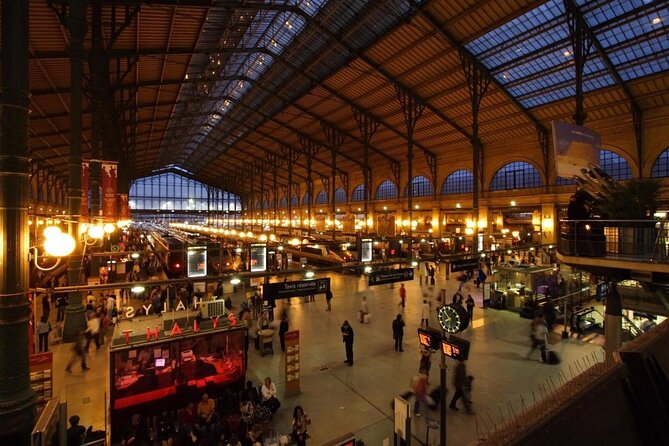
One of the most practical parts of this experience is what happens after Hôtel de Ville. You take the metro to Gare du Nord. Your guide buys your metro ticket, and the plan includes a short walk after you arrive.
This is where the real-world value shows up. Paris metro can be confusing: crowded platforms, signage in French, trains arriving fast, and a general “good luck” vibe if you’re traveling alone. Here, you’re not just told where to go—you’re guided through it, including timing and attention cues.
A detail that stands out from real experience: your guide may advise you not to use your camera or phone on the metro. The reasoning is simple—attention matters in busy areas, and distractions make you an easier target.
Then you walk about ten minutes to an Indian restaurant where your lunch is booked with a fixed menu.
Vegetarian Indian lunch near Gare du Nord: where the day cools off
Lunch is included as a fixed-menu vegetarian Indian lunch near Gare du Nord. This is a smart break in the itinerary. You’ve spent time walking and concentrating on streets and architecture; now you get a sit-down meal that’s a change of pace from French pastry-and-cheese mode.
A couple points to set expectations:
- Drinks aren’t included, so bring cash/card comfort for water or soda if you want it.
- The menu is fixed, so it’s not the best choice if you’re picky or need specific dietary swaps beyond vegetarian.
One thing I like about the placement: you’re not eating “far from everything.” Gare du Nord is still a major transit hub, so your logistics stay manageable for the rest of your day.
After lunch, the guide accompanies you until you’re settled and then says goodbye, so you’re free to continue on your own plan.
Pace, timing, and what to wear (so you enjoy it, not endure it)
This tour is about movement: walking plus one metro transfer, plus lunch. For you, that means comfort matters more than fashion.
Wear:
- Comfortable shoes with grip for cobblestones and station floors.
- Layers if weather shifts, since you spend time outdoors between stops.
Bring:
- A small day bag for water and essentials.
- Your patience for crowds, especially around major transit points.
The route is also structured around short viewing windows. If you’re the type who wants long museum time, plan a separate museum day. For this one, your job is to look up, read façades, and let the neighborhood come to you.
Price and value: what $203.62 gets you (and what it doesn’t)
At $203.62 per person, you’re paying for more than “just a walk.” You’re buying logistics: hotel pickup and drop-off by air-conditioned vehicle, guided sightseeing, a metro transfer where your ticket is handled, and a booked vegetarian lunch near Gare du Nord.
That’s the value equation:
- If you were doing this on your own, you’d still spend time figuring out transit, losing momentum between stops, and paying for a meal.
- Here, those decisions are taken off your plate, which is especially worth it if you have limited time in Paris or you want a plan that avoids decision fatigue.
What it doesn’t give you:
- Deep, long museum entry time.
- Full flexibility in lunch choices (fixed menu).
- A slow, custom pace.
So this is value for travelers who want a guided “great hits” Marais day with one built-in meal and easier transit.
Who should book Le Marais Private Transfers?
This works well if you:
- Want a guided introduction to the Marais without spending your day navigating.
- Appreciate both old Paris (squares, mansions, churches) and neighborhood culture (Rue des Rosiers).
- Like having one clear meal planned so you’re not hunting for food when you’re tired.
- Prefer practical guidance for the metro, especially if language or crowds feel intimidating.
It might not be ideal if you’re chasing:
- Long museum immersion.
- A strictly museum-and-indoor day.
- Total control over meal options.
Should you book this tour?
I think you should book it if your goal is a smart, time-efficient Le Marais experience with real Paris logistics taken care of. The door-to-door pickup and drop-off, plus the guided metro segment, are the difference between seeing “the map points” and actually enjoying the day.
Skip it if you’re the type who wants to linger for hours in one place or you’d rather build your own route. This plan is short on purpose, and it rewards people who enjoy moving, looking, and learning just enough to keep the story intact as you go.
FAQ
FAQ
How long is the Le Marais Paris transfer and walking experience?
It runs for about 3 hours.
What is the price per person?
The price is $203.62 per person.
Do they pick me up from my hotel?
Yes. Pickup from your hotel for Le Marais is offered in an air-conditioned vehicle, and you also get a drop-off back to your hotel after.
Is this a private tour?
It’s a private tour/activity, meaning only your group participates.
What parts of the itinerary are included on the walking route?
You’ll walk through and see Place des Vosges, Cour et jardin de l’Hôtel de Sully, Rue des Rosiers, Saint-Paul-Saint-Louis Church, the Shoah Memorial from outside, and Hôtel de Ville de Paris.
Is lunch included, and what type is it?
Yes. You go to an Indian restaurant for a fixed-menu vegetarian Indian lunch. Drinks are not included.
Who handles metro tickets?
Your guide buys the metro ticket for the ride from Hôtel de Ville to Gare du Nord.
Are there admission tickets included for the stops?
Some stops are listed with free admission tickets (including Place des Vosges, Cour et jardin de l’Hôtel de Sully, and Rue des Rosiers).
What is the cancellation policy?
You can cancel for free. If you cancel at least 24 hours in advance, you receive a full refund. If you cancel less than 24 hours before, the amount paid is not refunded. The policy also allows a different date or a full refund if the tour is canceled due to poor weather.