REVIEW · PARIS
Investigation game – Montmarte
Book on Viator →Operated by Quiveutpister · Bookable on Viator
Street-smart puzzles in Montmartre? This urban investigation turns a normal walk into a clue hunt that keeps you moving, with a mix of big-name sights and quieter streets. It’s run in English and designed for groups.
I love that the route starts at Basilique du Sacré-Cœur de Montmartre and still gives you stop-by-stop moments for solving, not just photographing. I also like that you get the game materials on site, so you can focus on the thinking part instead of rummaging for tools.
One possible drawback: the game adds a time pressure element (the infernal chrono), so if you’re hoping for a slow, sightseeing-only stroll, you may feel a little rushed at the end.
In This Review
- Key points to know before you play
- Why a Montmartre investigation game feels better than a regular stroll
- Where you start (Place Marcel Aymé) and how the game actually runs
- Stop 1: Basilique du Sacré-Cœur de Montmartre as your clue launchpad
- Stop 2: Vigne du Clos Montmartre and the slowdown effect
- Stop 3: Rue de l’Abreuvoir—where the route gets more local
- Stop 4: Place des Abbesses—solving and regrouping before the finish
- Timed competition, team strategies, and why finishing times can vary
- Price and value: what you’re really paying for at $60.21
- Who this Montmartre game fits best (and who should skip it)
- Animators and how the experience lands in real life
- Should you book this Montmartre investigation game?
- FAQ
- What language is the game offered in?
- How long does the Montmartre investigation game take?
- Where do we meet, and where does the activity end?
- Is this a private experience or a shared competition?
- What’s included in the price?
- What should I bring?
- Do I need a printed ticket?
- Is free cancellation available?
Key points to know before you play

- A timed clue hunt on foot: You solve an investigation while following a route through Montmartre.
- Two ways to play: A public competitive session, or a privatized version where your group is alone.
- Famous stops plus lesser-visited streets: The game uses recognizable anchors and also quieter corners.
- English-led experience: Clear for non-French speakers, with guidance built into the activity.
- Good for teams of friends or family: Works well for group fun, not just hardcore puzzle people.
- Equipment provided: You don’t show up needing extra gear beyond your shoes and attention.
Why a Montmartre investigation game feels better than a regular stroll
Montmartre can be all angles and impressions. This kind of activity gives you a job to do, so the neighborhood becomes more than a backdrop. You’re following clues, solving small problems, and moving through the hill at a steady pace, which tends to make the whole area easier to remember.
The best part is the balance. It’s part escape-game energy, part treasure hunt, and part neighborhood walk. You get movement plus structure, but you’re not stuck in a classroom-style worksheet. Instead, you’re reading the streets around you, which is a big reason people finish the route feeling like they saw Montmartre in a more personal way.
You’ll also see why the “investigation” concept works in this area: Montmartre has famous landmarks, but it also has side streets and local texture. A clue-based route forces you off the autopilot of taking the quickest photo at the most famous spot.
You can also read our reviews of more tours and experiences in Paris.



Where you start (Place Marcel Aymé) and how the game actually runs
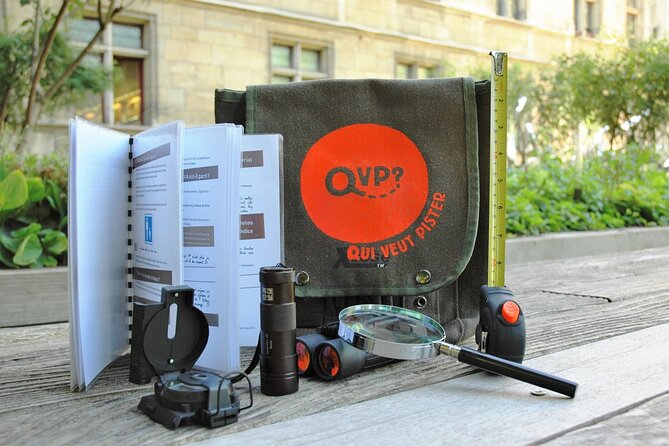
You meet at Place Marcel Aymé in the 18th arrondissement. The activity ends back at the same meeting point, so you’re not left wondering how to get home when your brain is done.
You’ll use a mobile ticket, and the organizer provides the equipment you need for the game right at the start location. That matters because the friction is low: you can show up, get handed what you need, and start focusing on the route and puzzles.
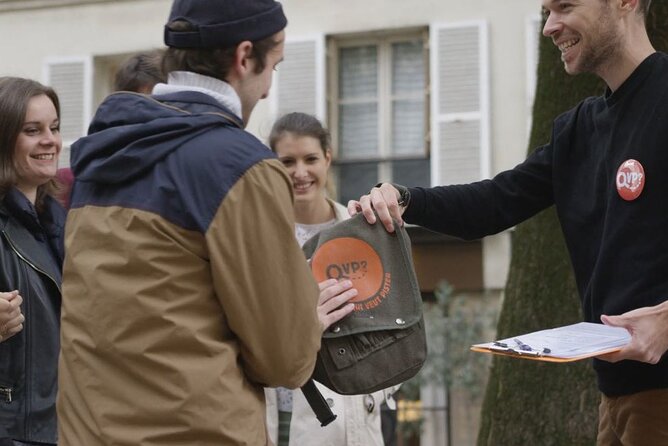
The game is team-based. You’ll work together to find clues, solve an investigation, and follow a path to “known and unknown” places. There’s also a time element—the infernal chrono—so you’ll feel urgency, not just curiosity.
There are two formats:
- In a public session, you’re competing against other teams outside your group.
- In a privatized treasure hunt, your group is alone on the game.
If you’re the type who likes friendly rivalry, public sessions can add extra energy. If you want the whole thing to feel like a shared family mission, privatized sessions are calmer and more controllable.
Stop 1: Basilique du Sacré-Cœur de Montmartre as your clue launchpad
You begin at Basilique du Sacré-Cœur de Montmartre, which is a smart way to start. Big landmarks act like mental anchors. When you’re doing a puzzle route, having a clear first landmark helps you orient faster and trust that you’re on the right track.
At this stage, your focus is on getting “in game mode”: you’ll be looking for clues, solving the early pieces, and learning how the investigation flows. This matters more than it sounds. If you’re comfortable in the first segment, the rest of the route feels smoother.
What to watch for at the start: Montmartre areas tend to be busy at popular times, so arriving a few minutes early helps. Also, since the activity is designed for moderate physical fitness, you’ll want to be ready for walking as soon as you start, not after you’ve found your bearings.
Stop 2: Vigne du Clos Montmartre and the slowdown effect

The next stop is Vigne du Clos Montmartre. A vineyard stop is a nice reset in the middle of a puzzle walk. It gives you a different visual setting than the typical stone-and-steps street scene, and it can make the clue-solving feel less repetitive.
In practice, vineyard-themed stops often do something valuable for this kind of activity: they encourage you to look around instead of speed-scanning. If your team likes taking time with clues, this stop tends to reward that approach. If your team is more competitive, it still works because the game structure keeps you moving.
The clue challenge here is part discovery, part logic. You’re not just reading signs—you’re using what you find to answer the investigation questions. That’s what turns a quick photo spot into a meaningful moment.
Stop 3: Rue de l’Abreuvoir—where the route gets more local
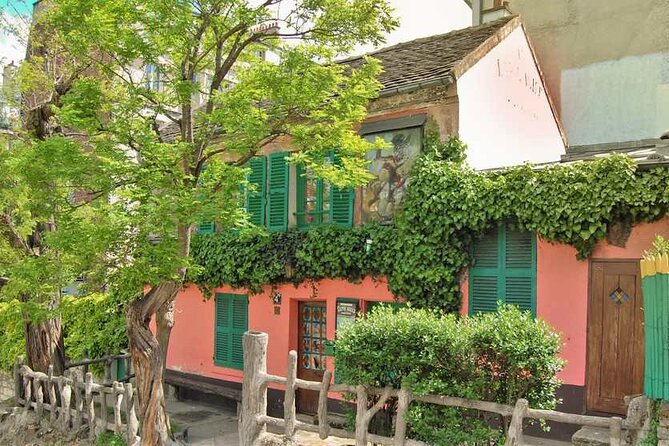
Rue de l’Abreuvoir is one of the stops built for problem-solving rather than sightseeing shopping. Streets like this are perfect for a game because they feel more “lived-in” than the headline viewpoints. The clue trail uses the street fabric as part of the puzzle.
This is also where your team’s dynamic shows. If everyone takes responsibility—one person watches for clues while another tracks the question steps—you’ll move faster and waste less time. If you have one person who likes to read details closely, this is where they shine.
A small practical note: Montmartre walking can add up. Wear something that won’t make your feet pay later. Walking shoes aren’t included, and the activity is designed as a route, not a sit-down show.






Stop 4: Place des Abbesses—solving and regrouping before the finish
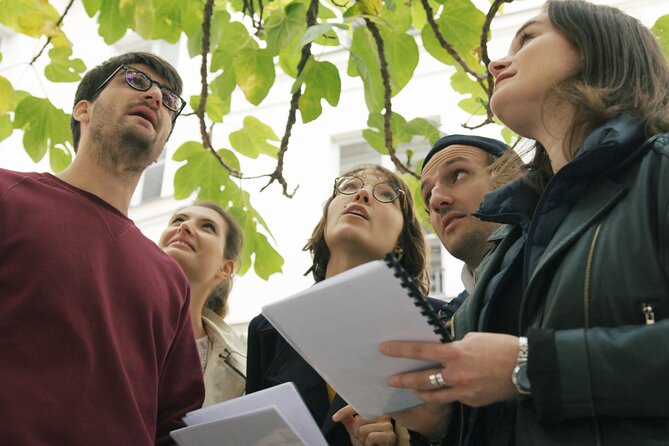
The next big anchor is Place des Abbesses. By the time you reach it, you’ve usually worked through enough of the investigation to understand the game rhythm. That makes the last stretch feel like the payoff phase: you’re solving with purpose, not guessing randomly.
This stop is also a natural regroup point. Teams that stay organized early often find it easier to share the final clue interpretations together. Teams that are behind often need to shift gears fast, especially because of the chrono.
At the end of the investigation, you and your team finish the route back at Place Marcel Aymé. If you’re playing in a public competitive session, the experience includes a reward element for top investigators—so your motivation can spike at the end.
If you’re playing privatized, the vibe is usually less stressful. You’re still racing the clock, but the pressure is internal: your team’s pace, not other teams’ speed.
Timed competition, team strategies, and why finishing times can vary
The concept includes the infernal chrono, and the format changes the intensity.
In the public session (Saturdays at 2:30 p.m.), you’re competing against other groups outside your team. That can mean you’ll hear more excitement around you and feel the pace rise near the end.
In the privatized option, your group is alone on the game. You’re still solving, still timed, but you get a quieter experience. That’s often better for families, mixed-age groups, or anyone who wants the walk part to feel more relaxed.
One more timing reality to plan for: the official duration is about 2 hours 30 minutes, but the way you play (competition mode, team speed, puzzle comfort) can make the route feel shorter or longer. I’d treat the listed time as a safe planning window, then assume your team could finish earlier if everything clicks.
A strategy that usually helps in games like this:
- Split clue duty (one searches, one reads prompts).
- Save 30–60 seconds before an answer moment to align.
- Don’t get stuck for too long on one unclear step; shift and come back.
It’s not about being the smartest person in the group. It’s about moving as a team.
Price and value: what you’re really paying for at $60.21
At $60.21 per person, this isn’t a throwaway “walk and photo” activity. You’re paying for structure: the game flow, equipment, and staff coordination to turn streets into puzzles.
Here’s the value equation I like:
- You get all the equipment needed for the game included.
- Fees and taxes are included in the price.
- There’s a group discount offered (so the more people you bring, the better the deal can feel per person).
What’s not included is simple: walking shoes. That’s a classic “small add-on” reality for Montmartre. If you show up in worn sandals or slippery shoes, you’ll feel it.
Also keep in mind what this costs compared to doing Montmartre the standard way. If you’re already planning to walk the neighborhood anyway, this adds a mission that makes your time feel more “earned.” If you hate competitive games or puzzles, the value drops fast. But if you enjoy problem-solving in a real setting, $60-ish can feel fair because you’re not just buying access—you’re buying an experience with momentum.
Who this Montmartre game fits best (and who should skip it)
This is a good match if you’re traveling with:
- Friends who like challenges
- Families looking for an activity that isn’t only sitting
- Bachelor party groups or team outings that want shared fun with a light competitive edge
The game is offered in English, so it works well when language isn’t a given. It also has a maximum of 40 travelers, which helps keep it from feeling like a stampede.
It’s designed for moderate physical fitness. You don’t need to be an athlete, but you should expect a real walking route over a couple of hours.
If you’re someone who only wants calm, slow sightseeing with no time pressure, the infernal chrono may grate. In that case, consider the privatized format or choose a day when you want energy.
Animators and how the experience lands in real life
The experience depends a lot on clarity. In these games, instructions make or break momentum.
The guides you might get include people like Clément and Manon, and they’re praised for clear explanations and humor. Another host name that came up is Marcus. The common thread: the game is designed so you’re not left guessing how to play.
A detail I appreciate: the game isn’t only about winning. There’s also talk of a small gift tied to classification. That’s a nice finishing touch that turns the last minutes into a goal, not just a timer beep.
And yes, it can work with younger participants, since the game level is described as good even with kids. That doesn’t mean it’s only for children—it’s more that the puzzles aren’t cartoonishly impossible.
Should you book this Montmartre investigation game?
Book it if you want Montmartre with a purpose. You’ll get a walking route that feeds curiosity, you’ll solve clues as you go, and the team format keeps energy high. The English offering and provided equipment make it easy to jump in.
Skip it if your ideal Paris day is quiet and slow, with no competition vibe. The time pressure is part of the design, and that will steer the experience whether your team likes it or not.
If you’re on the fence, my practical advice is to choose the format that matches your group: public competition if you want extra buzz, privatized if your priority is a shared mystery without outside teams.
FAQ
What language is the game offered in?
It’s offered in English.
How long does the Montmartre investigation game take?
Plan for about 2 hours 30 minutes.
Where do we meet, and where does the activity end?
You meet at Place Marcel Aymé (75018 Paris). The game ends back at the same meeting point.
Is this a private experience or a shared competition?
You can choose between a public session (competing against other participants outside your group) or a privatized treasure hunt (your group is alone).
What’s included in the price?
The price includes all fees and taxes and all the equipment necessary for the game, provided at the place of departure.
What should I bring?
Bring walking shoes. They are not included, and the activity involves walking.
Do I need a printed ticket?
No. It uses a mobile ticket.
Is free cancellation available?
Yes. You can cancel for a full refund up to 24 hours in advance of the experience start time.