REVIEW · PARIS
Freemasons, myths and revelations about a secret society
Book on Viator →Operated by Cultival · Bookable on Viator
Masonic symbols hide in plain sight. This 1h45 walk tracks Freemasonry myths and real origins as you move from Saint-Germain-des-Prés toward the Bourbon Palace area and onward to Place de la Concorde. You’re not stuck in a room—you’re out in the neighborhoods, learning how to read what’s on façades and in the street-level details.
I especially liked two things: the guide-led talk stays focused on Freemasonry history (Great Britain, 1717, plus organization and main figures), and the experience encourages real conversation and Q&A as you go. I also liked the low-friction format: a walk through Paris streets where you can stop, look closely, and compare what you think you see with what the guide explains.
One possible drawback: the tour is light on major “wow” monuments. A few participants felt they didn’t get enough building time and that the walk sometimes leaned more toward a guided talk than lots of architectural stops, so you should go with the right expectations—this is more symbol spotting than site-hopping.
In This Review
- Key Highlights You’ll Want to Know First
- Starting at Saint-Germain-des-Prés: Why This Neighborhood Works
- The Walk Through Saint-Germain and the Bourbon Palace Area
- What Freemasonry Myths Get Right and Wrong
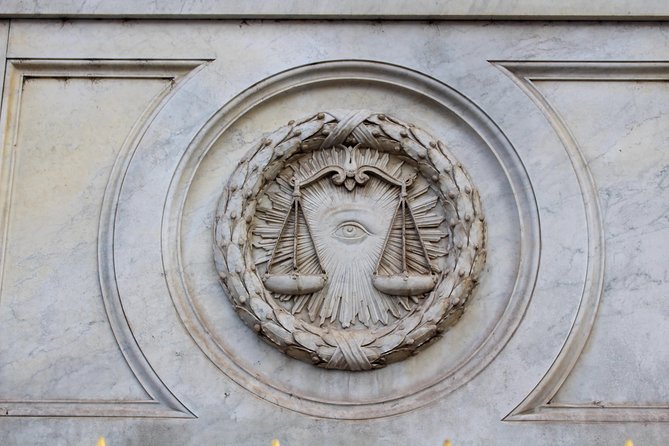
- Reading Symbols on Facades: The Real Core of the Experience
- How the Guide’s Style Can Make or Break It
- Price and Timing: Getting Value From a $17.09 Walk
- Who Should Book This Freemasonry Symbol Walk
- Should You Book Freemasons, Myths and Revelations in Paris?
- FAQ
- How long is the Freemasons walk?
- Where does the tour start?
- Where does the tour end?
- How much does it cost?
- What’s included in the ticket price?
- Do I get a mobile ticket?
- How large is the group?
- Is weather required for the tour?
Key Highlights You’ll Want to Know First
- Street-level symbol spotting: you’ll look for visible and hidden traces tied to Freemasonry.
- Myth vs. truth framing: the walk is built around separating fantasies and misconceptions from historical roots.
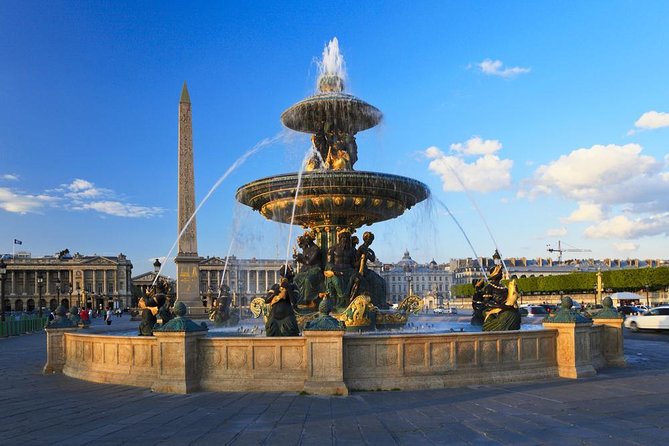
- Saint-Germain-to-Concorde route: you cover classic Paris streets and landmarks across different vibes, not just one small block.
- A Q&A-friendly guide format: many guests praised the guide’s ability to answer questions and explain clearly.
- A small group cap (25 max): enough people to feel social, not enough to turn it into a herd.
Starting at Saint-Germain-des-Prés: Why This Neighborhood Works
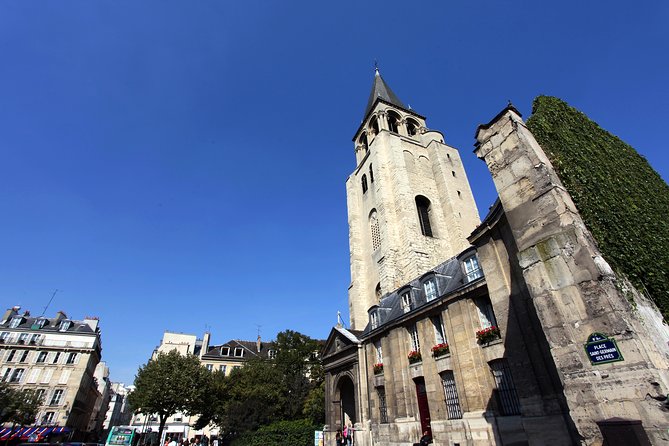
The tour kicks off at the Church of Saint-Germain-des-Prés, one of those places that instantly makes you feel like you’re in old Paris. Even if you don’t know much about the church itself, the area gives you the right atmosphere for a story about secrets—because Saint-Germain has long been a magnet for ideas, ink-stained conversations, and the kind of Parisian curiosity that loves a mystery.
From the first moments, the guiding idea is simple: Freemasonry didn’t just live in books or lodges. It left marks—some obvious, some subtle—around the city. As you start walking, you’re trained to notice small things: not only what’s carved or painted, but what context might make it meaningful. This matters because Freemasonry is an organization that has always attracted misconceptions, so you’re learning a method, not just facts.
One practical benefit here is pacing. You’re moving during the explanation, which keeps your attention sharp. You’re not trying to memorize names while sitting. Instead, the guide points, you look, you connect it to the bigger story about origin, rites, and the role of secrecy in recruitment and identity.
Also, the starting area is easy to get your bearings. If you’ve never been here, you’ll still find it straightforward to orient yourself because Saint-Germain-des-Prés is a recognizable starting point and a natural gateway into the surrounding streets.
You can also read our reviews of more tours and experiences in Paris.



The Walk Through Saint-Germain and the Bourbon Palace Area
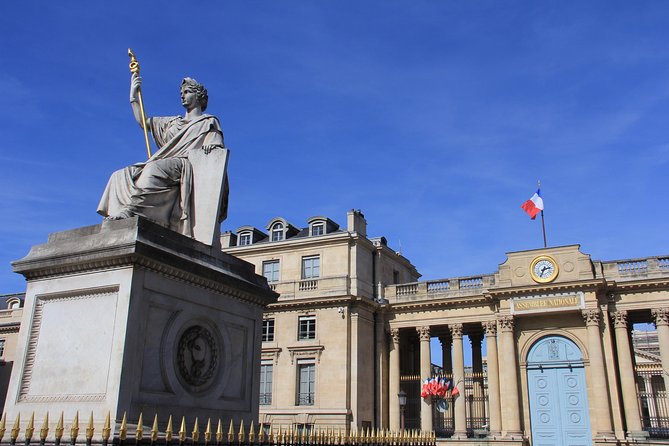
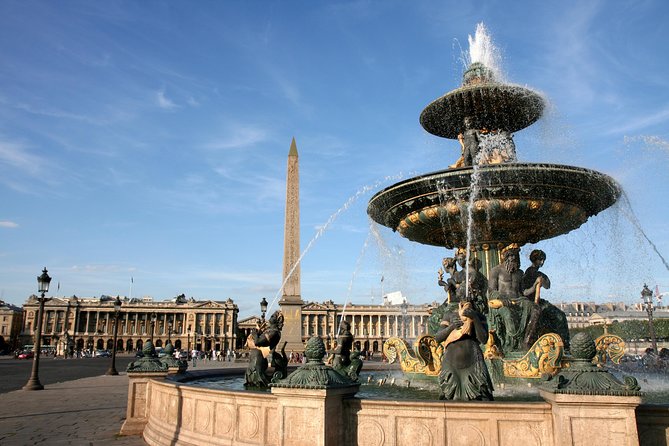
This route is designed to connect two things: the street feeling of Paris and the symbolic trail linked to Freemasonry. You’re guided through neighborhoods associated with Saint-Germain and toward the Bourbon Palace area, with the walk continuing past major central landmarks until you finish at Place de la Concorde.
What makes this routing useful is how it matches the theme. Freemasonry-related symbols in Paris aren’t concentrated on a single, branded site. They’re scattered. So the tour makes you cover ground where you can plausibly encounter references on buildings and in public-facing spaces.
As you walk, the guide uses what you see to anchor the conversation. There’s a lot of emphasis on the initiation rite and the idea of secrecy: new members are introduced through cooptation, and they’re expected not to reveal other members’ identities. That theme is more than trivia—it helps you understand why symbols and myths grew. When something is officially private, stories start filling the gaps.
The walk also aims to explain how Freemasonry formed as an organization and how it spread ideas through society. One of the most helpful parts of this approach is that it gives you a timeline for what you’re seeing. Instead of randomly finding emblems and wondering what they mean, you’re given a framework for why certain designs and references became associated with the brotherhood.
A small heads-up for expectations: the experience is more about reading the city than touring big interiors. So if you’re expecting lots of stops with dramatic architecture and long pauses inside famous sites, you might feel a bit short-changed. But if you like walking + learning how to notice details, the route makes sense.
What Freemasonry Myths Get Right and Wrong
A key promise of this tour is to separate the sensational stories from the historical origin. You start with the order’s English roots in 1717 (Great Britain), then work outward into how Freemasonry is organized and who the main figures are.
Here’s where the walk can be especially satisfying: the guide doesn’t just list claims. The whole experience is built around teaching you how to distinguish signs and decode the truth from the false. That means you’re not only learning what Freemasonry is supposed to be—you’re learning why people made it bigger, stranger, and more powerful than it likely was.
That matters, because Freemasonry has been used in popular culture for centuries as a shortcut to explain everything from politics to conspiracies. This tour gives you a practical way to think about it. You’ll start noticing that many myths don’t come from Paris stonework at all—they come from the human habit of turning secrecy into a blank canvas.
Also, learning the basics of the initiation process helps you understand the logic behind the myth-making. If identities are meant to stay hidden during rites, outside observers naturally fill in the missing details with imagination. Once you grasp that, the tour’s focus on secrecy stops feeling like spooky storytelling and starts feeling like social history.
Even better, the guides often keep the pace conversational. Several participants specifically praised the guide’s explanations and ability to answer questions. If you’re the type who asks why something is symbolic, or how an idea spread, you’ll probably get good value out of that interaction.
Reading Symbols on Facades: The Real Core of the Experience
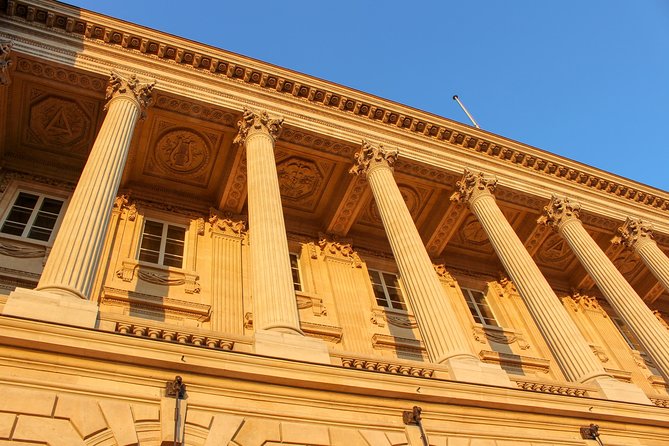
Let’s talk about what you’ll actually be doing during those 1 hour 45 minutes. The heart of the tour is symbol spotting—visible traces and also references that might not be obvious at first glance.
One thing I took from how this experience is described is that you’re shown Freemasonry-related signs and then guided to match them to what you see on the street. Some guests noted that the guide had a binder with signs, then used that as a reference while pointing out details on building facades. That’s a helpful teaching tool because it reduces guesswork. Instead of you standing there hoping you can interpret a carving, you’re given a comparison point.
You’ll also notice that the tour can involve fewer heavy “architecture moments.” Some people said there weren’t many buildings discussed and that, at times, the route focused on just a couple of statues or a small number of notable stops. That’s not necessarily a flaw—it’s often the tradeoff of this kind of walking tour. Symbols can be subtle, and the tour may linger only where the guide can directly connect what you’re seeing to the Freemasonry story.
So here’s the best way to get value: slow down mentally. When the guide points, take a full second or two to look. Don’t just glance and move on. This tour works best when you treat the city like a text. If you’re rushing, the meaning slips away.
Also, the walk through side streets can help with this. Some participants highlighted discovering small streets and older inscriptions. That kind of detail supports the theme because it feels less like a curated museum path and more like you’re actually uncovering references where ordinary visitors might not look twice.
In short: if you like learning to see, this is a solid use of time. If you only want famous buildings and big monuments, you’ll likely want a different kind of tour.
How the Guide’s Style Can Make or Break It
With a tour like this, your guide really matters. The subject is niche, and the format is part walking, part explanation. If the guide can keep things clear and interactive, the walk turns into a fun puzzle.
The positive feedback in the provided experience notes points to guides who are passionate, punctual, and well documented. People also praised guides for being friendly and for answering questions, with explanations described as clear and instructive. One guide name that came up in the discussion was Rita, described as engaging, lively, and able to handle questions with confidence.
But there’s also a caution flag. Some guests felt the guide wasn’t approachable, that the explanations weren’t well structured, or that they learned very little. Others said they felt the visit was limited in terms of unusual places to discover and that a lecture might have suited the topic better than a walk.
How do you protect yourself from that risk? Go in ready to participate. Ask questions when something looks confusing. If you’re the kind of person who likes to dig into how symbols connect to history, your enthusiasm helps the guide meet you halfway. If you’re hoping for a totally neutral, lecture-style delivery from start to finish, you may not get what you want.
And yes—arriving on time matters. One note emphasized that you should be punctual or the group can move without you. For this kind of walking tour, late arrivals can miss the first context and the explanation rhythm that helps you decode what comes next.





Price and Timing: Getting Value From a $17.09 Walk
At $17.09 per person for about 1 hour 45 minutes, this is positioned as a budget-friendly, high-attention experience. You’re paying mainly for interpretation: a guide to point, explain, and help you connect street-level symbols to the broader Freemasonry narrative.
Here’s how I’d judge the value for you. If you want a guided way to understand why Freemasonry symbols show up in certain places (and what the myths are doing to the story), then the price feels fair. You’re not just paying for the walking distance. You’re paying for someone to give you a framework so the city makes more sense.
On the other hand, the value drops if you need lots of physical stops—multiple big monuments, major interior access, or a heavy schedule of landmarks. A few participants criticized limited use of buildings and not enough stops that felt unique. If you’re the type who measures tours by how many famous sites you’ll photograph, this may feel thin.
Timing-wise, plan to fit it into a day when you can stay curious afterward. Even the best symbol spotting leaves you with follow-up questions. If you’ve got time for a walk afterward through nearby streets, you’ll likely get more out of what you learned.
One more smart planning tip: dress for the weather. The experience explicitly requires good weather. If the sky doesn’t cooperate, don’t assume it will run—plan flexibility so you don’t lose that learning window.
Who Should Book This Freemasonry Symbol Walk
This tour is a strong match if you enjoy:
- History that you can see: learning through streets, façades, and small references.
- Symbol literacy: you like decoding and connecting visual details to a bigger story.
- Myth-busting with context: separating the sensational version of Freemasonry from historical origin and structure.
It’s not ideal if you want:
- A classic sightseeing checklist with lots of major landmarks.
- A deep academic lecture with citations and long uninterrupted storytelling.
- A tour that feels packed with dramatic architectural stops.
It also works well for people who want a small-group atmosphere. With a maximum of 25 travelers, you’re more likely to have the kind of back-and-forth that makes this subject easier to understand. If you’re traveling with friends or family and someone loves puzzles, this can become a shared game—spot, guess, check, and learn.
And if you’re thinking about this as a single activity in Paris, it’s a good choice because it adds a layer most first-time visits miss. Paris is full of secrets—this one just gives you tools to read them.
Should You Book Freemasons, Myths and Revelations in Paris?
If your idea of a great Paris day is walking with a guide who helps you read the city, then yes, I’d book it. The combination of Freemasonry origins from 1717, the secrecy theme tied to initiation rites, and the practical symbol-spotting approach gives you something different from the usual museum and monument routine. The price is low enough that the risk feels manageable.
But if what you want is a heavy schedule of iconic stops and lots of building time, book something else. This experience can feel more like a guided interpretation walk than a landmark tour, and a few comments point out that the city coverage can be lighter than expected.
My best advice: if you come curious, ask questions, and pay attention when the guide points out details, you’ll likely leave seeing Paris differently—and that’s the whole point.
FAQ
How long is the Freemasons walk?
It lasts about 1 hour 45 minutes.
Where does the tour start?
It starts at Church of Saint-Germain-des-Prés, 3 Pl. Saint-Germain des Prés, 75006 Paris.
Where does the tour end?
The tour ends at Place de la Concorde, 75008 Paris.
How much does it cost?
The price is $17.09 per person.
What’s included in the ticket price?
The ticket includes a guide.
Do I get a mobile ticket?
Yes, the experience includes a mobile ticket.
How large is the group?
There is a maximum of 25 travelers.
Is weather required for the tour?
Yes, it requires good weather. If it’s canceled due to poor weather, you’ll be offered a different date or a full refund.