REVIEW · PARIS
Discovery of Montmartre in a 2CV – 45 min
Book on Viator →Operated by Parisi Tour · Bookable on Viator
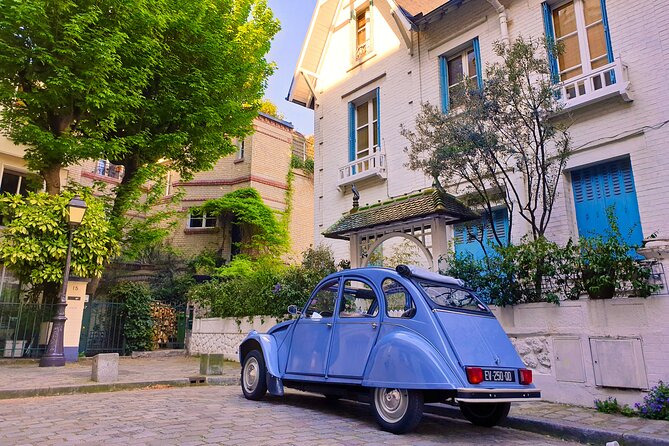
Hopping in a 2CV makes Montmartre feel easy. This private 2CV intro is a great way to see the district’s big-name spots fast while a guide tells you what’s behind the art, films, and landmarks. I especially liked the time-friendly route that keeps you moving through steep streets without a long slog, and the way you get key stops like Sacré-Cœur area sights, Dalida, and Le Lapin Agile without wasting hours. One thing to consider: 45 minutes is short, so if you want to linger for long (or you hate turning your camera into a full-time job), you’ll have to pick your moments.
You ride in a classic vintage car with your small group (up to 3), and you don’t share the experience with strangers. The mobile ticket makes it simple to show up, and the meeting spot is near public transportation at Place Jean Marais, 8 Rue du Mont-Cenis, 75018 Paris.
This is also a smart choice if you’re visiting during peak crowds. The route aims to cover the Montmartre essentials in a single loop, hitting the sacred heart area, Place du Tertre and its artists, the Dalida and Picasso links, Pigalle and the Moulin Rouge area, the famous Je t’aime wall, and the Red Mill zone.
In This Review
- Key things to know before you ride
- Why a 2CV is the smart way to start Montmartre
- Where you meet and how the timing works
- The route begins: Sacré-Cœur area, Place du Tertre, and the artists’ streets
- The practical value of this first segment
- Picture time at the little pink house, then Le Lapin Agile
- Dalida’s place in Montmartre and why the guide keeps repeating key names
- The Je t’aime wall: a photo stop with real variety
- Place des Artistes and portraits: when Montmartre becomes personal
- The Red Mill area and tickets with champagne
- The big 1925 monument stop: views and the “wow” moment
- Price and value: what $118.63 per group really means
- Who this tour suits best (and who should pick another plan)
- The small details that make or break it
- Should you book this 2CV Montmartre discovery?
- FAQ
- How long is the Montmartre Discovery in a 2CV?
- What does it cost and how many people are in the group?
- Is the tour offered in English?
- Where does the tour start?
- Can I cancel for free?
- Is the tour suitable for people with limited mobility or service animals?
Key things to know before you ride
- A 45-minute Montmartre starter loop that’s built for getting bearings fast
- Private transport by a classic 2CV for up to 3 people
- English guide stories tied to artists, films, and local history
- Photo stops including time in front of the little pink house
- Le Lapin Agile and the Je t’aime wall to anchor the memories
- Red Mill show options with tickets available and champagne included
Why a 2CV is the smart way to start Montmartre
Montmartre is famous for views, artists, and the kind of streets that can make your legs question your life choices. A 2CV tour turns that problem into the fun part. You’re carried through the neighborhood instead of climbing every hill step by step.
This setup also helps your brain. When you get dropped near the right corners, you stop thinking in random directions and start understanding how the district is laid out. In less than an hour, you can walk later with a sense of place.
And yes, the car grabs attention. It’s part of the experience. You’ll see people looking as you pass, and you’ll get those quick, classic “we’re really here” photos that feel more like a memory than a snapshot.
You can also read our reviews of more tours and experiences in Paris.



Where you meet and how the timing works
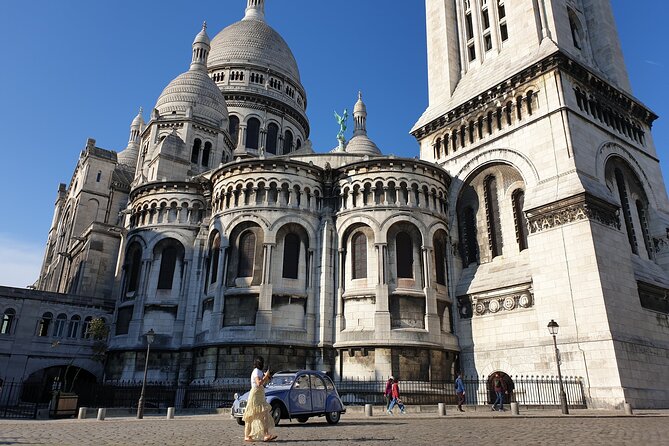
The tour starts at Place Jean Marais, 8 Rue du Mont-Cenis, 75018 Paris and ends back at the meeting point. It runs about 45 minutes, so plan your other plans around a quick but focused hit of Montmartre.
Because it’s private and your group is small, you’re not stuck behind a slow-moving crowd. The schedule is tight by design. You’ll get a sequence of sights plus short stops where the guide helps you aim your camera and your questions.
I also like that you receive confirmation at booking and use a mobile ticket. Less fumbling when you arrive. Less worry about paper in your bag.
The route begins: Sacré-Cœur area, Place du Tertre, and the artists’ streets
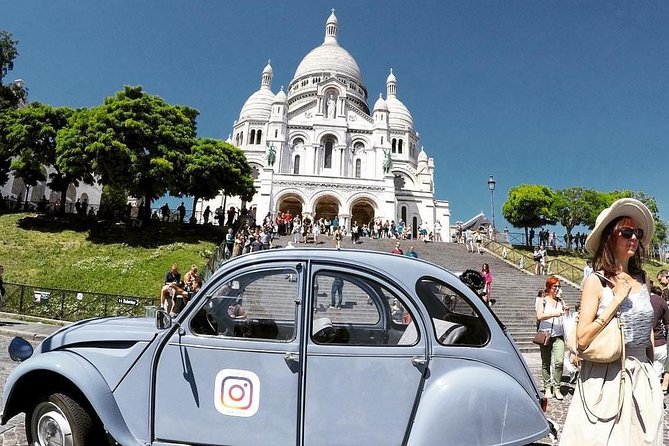
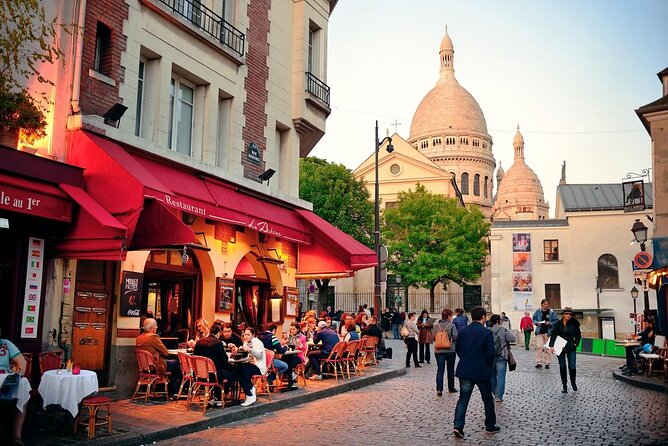
Your first stretch sets the tone. The guide takes you through the Montmartre district with the sacred heart area as a major reference point. This is where the neighborhood’s identity becomes clear: art, lookout views, and that sense that Montmartre has been a stage for decades.
You’ll also pass by Place du Tertre, the artists’ square people picture when they think Montmartre. The idea isn’t just to see the square. It’s to understand why it exists, how the artists fit into the neighborhood’s story, and how the place became a magnet for painters.
Then come the “spotlight” names that make Montmartre feel more connected to pop culture. You’ll hear about Dalida, including the house connected to her, plus the Picasso apartment link you’ll recognize even if you don’t know the exact door number.
As you move along, you’ll also get the Montmartre-to-Pigalle shift. The tour route references Pigalle and the Moulin Rouge area, so you get the contrast between postcard Sacré-Cœur energy and the nightlife edge nearby.
The practical value of this first segment
If you only have one morning or one late afternoon, this part helps you decide what to revisit on foot later. You’ll leave knowing which corners you want to zoom in on with more time.
And since the route is built around the hills, you avoid the common mistake of doing Montmartre walking-only and then spending your second hour regretting it.
Picture time at the little pink house, then Le Lapin Agile
At some point, you’ll get a small break for photos in front of the little pink house. That stop is brief, but it matters because it gives you a landmark your friends will actually recognize in your photos. More importantly, it lets you slow down while the guide keeps your bearings sharp.
Next up is Le Lapin Agile, described as the oldest cabaret in Paris. This is the kind of place that can look like a set from the outside, but the guide’s job is to translate what that cabaret meant for artists and for the creative scene that formed around Montmartre.
Cabaret houses like this aren’t just entertainment. They’re meeting places, story engines, and inspiration sources. Having the tour narrative connected to the real corners helps you understand why Montmartre still feels like a character, not a museum.






Dalida’s place in Montmartre and why the guide keeps repeating key names
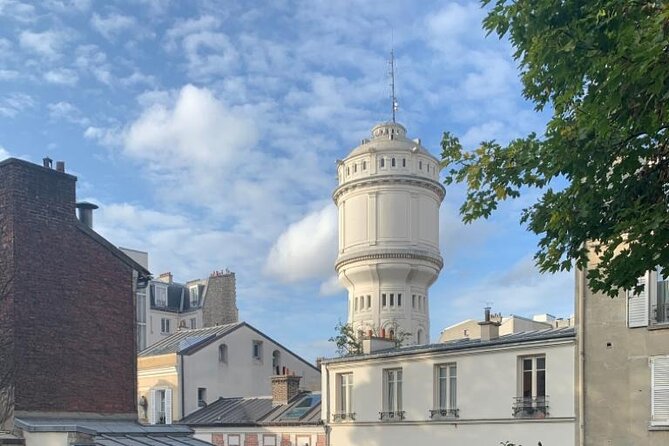
Dalida comes up more than once during the route, including a stop at the magnificent house of the star. That repetition isn’t a gimmick. It helps you stick the name to a specific location, so when you look back at your photos you remember why that spot mattered.
This is where the tour feels most “smart.” Instead of listing landmarks like a checklist, the guide ties the people to places. You start seeing Montmartre as a network of creative points rather than a string of stops.
You also get the feeling that Montmartre has layers. People think it’s all painters and postcards. But the links to major performers and the creative scene add a different kind of depth.
The Je t’aime wall: a photo stop with real variety
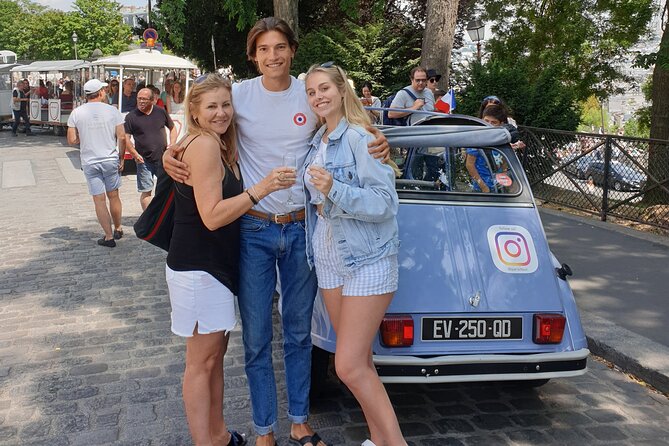
Then you reach one of the most famous photo magnets in Paris: the Je t’aime wall. You’re told it contains 300 ways to write I love you, in different languages.
It’s an easy stop to love because it’s playful. You get to take photos that look like art, and you don’t need a guide to tell you what to do. But you still benefit from hearing the background, because it turns a wall into a statement about how the district expresses emotion through language, art, and street-level creativity.
Tip: wear something you feel good in for photos. This is the stop where people usually ask the guide to help pick an angle, and the wall has a way of making everyone look like they planned the shot.
Place des Artistes and portraits: when Montmartre becomes personal
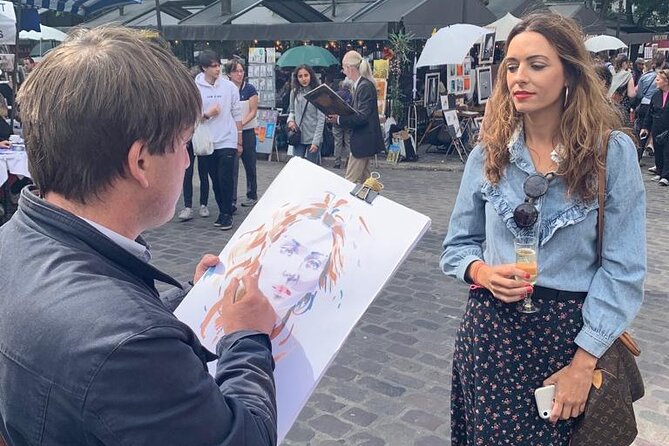
Part of the tour includes time to experience the famous place of artists. The idea here isn’t just to look. You get an opportunity to paint yourself a portrait.
Not everyone will do it, but it’s one of the few things that turns the neighborhood into something you carry home. A portrait also forces you to slow down for a moment. Montmartre is famous for moving energy, and this gives you a small pause inside it.
If you do choose to sit, think of it as buying a souvenir made by the local scene rather than a print made somewhere else. Even if the result isn’t perfect, it’s still “you,” and that makes it special.
The Red Mill area and tickets with champagne
As the route continues, you reach the Red Mill area. This is tied to the show culture of Montmartre, and the tour notes that you can get tickets to the show with champagne.
That’s a helpful offer because timing can be tricky with popular venues. If you’re already in Montmartre and you want an evening plan, having a way to connect it to the tour makes life easier.
Important practical note: this is about getting access to the show plan, not turning the 45 minutes into a full performance evening. You’re still doing a fast tour. The benefit is that you leave with a logical next step.
The big 1925 monument stop: views and the “wow” moment
The itinerary includes a stop at a breathtakingly grand monument built in 1925. In Montmartre, this kind of stop usually comes with the payoff views over Paris and the feeling that you’re at the top of the story.
This is also a nice place to reset your energy. You’ve been hopping between streets, names, and photo points. Then you get one of those moments where you can just look out and let Paris feel enormous.
Even if you don’t know the building details, you’ll get the emotional effect: it’s a strong visual anchor for the whole district.
Price and value: what $118.63 per group really means
The price is $118.63 per group for up to 3 people. If you fill the group, your effective cost per person drops a lot, and suddenly this looks less like a luxury and more like a smart time purchase.
The real value isn’t just the car. It’s the combination of:
- Private time with a guide
- Tight 45-minute efficiency
- High-recognition stops like Moulin Rouge area references, Le Lapin Agile, the Je t’aime wall, and Dalida
You’re basically paying to compress Montmartre into a manageable arc. If you were to try to “DIY” all of these points quickly, you’d spend extra energy and still might not connect the dots between art, film, and place.
One caution: if you’re the kind of person who wants to sit in cafés, browse shops, and linger at every square, you may find 45 minutes a bit too short. This is built for the “see it all without exhausting yourself” traveler.
Who this tour suits best (and who should pick another plan)
I think this is ideal for:
- First-timers who want a Montmartre orientation without doing a long walk
- Couples or small families who want privacy and photos
- Visitors who want a classic French car experience tied to real stops
- People who still want to enjoy Montmartre even with limited time or tiring legs
I also like it for mixed-age groups. The route is designed to work for most visitors, and it’s a practical way to enjoy the district without turning your day into a steep-stairs endurance test.
If you already know Montmartre well and you want museums and slow wandering, you might treat this as a primer and then go deeper on your own. Use it to choose where to spend your next hour.
The small details that make or break it
This kind of tour succeeds or fails on driving and comfort. Montmartre streets can be tight, and traffic can be unpredictable. The ride is meant to keep things moving, and the car itself makes it feel like you’re in a film rather than stuck in a gridlock.
Also, you’ll likely attract attention as you roll through the neighborhood. That’s fun for many people because it turns the ride into part of the story, not just transportation.
One possible consideration from the experience format: because it’s a classic car and a short ride with frequent stops, you may hear mechanical sounds more than you would in a modern vehicle. If you’re very sensitive to noise, keep that in mind.
Should you book this 2CV Montmartre discovery?
If you’re trying to fit Montmartre into a busy Paris schedule, I’d book it. The 45 minutes are the point: you get the essentials, the landmarks with names, and the story threads that make the district make sense.
You should also book if you want photos that are genuinely tied to place. The pink house stop, the Je t’aime wall, the cabaret stop at Le Lapin Agile, and the Red Mill area give you recognizable images plus context.
Skip it only if your idea of a good day is slow browsing and long museum time. This tour is a fast, friendly overview with enough stops to steer your next steps.
If you do book, show up on time, bring your camera, and keep your questions ready. A small private group means your guide can answer what you care about, whether that’s art, performers like Dalida, or how Pigalle ties into the broader Montmartre story.
FAQ
How long is the Montmartre Discovery in a 2CV?
The tour lasts about 45 minutes.
What does it cost and how many people are in the group?
It costs $118.63 per group, with up to 3 people per group.
Is the tour offered in English?
Yes, it’s offered in English.
Where does the tour start?
You meet at Place Jean Marais, 8 Rue du Mont-Cenis, 75018 Paris, France. The tour also ends back at the same meeting point.
Can I cancel for free?
Yes. You can cancel for a full refund if you cancel at least 24 hours before the experience starts, and cancellation is free.
Is the tour suitable for people with limited mobility or service animals?
The info says most travelers can participate and that service animals are allowed.