REVIEW · PARIS
Champagne & Terroir Treasures: Viator’s Terroir Gourmet Delight
Book on Viator →Operated by Dilettantes · Bookable on Viator
Three pours, one cellar, lots of France. This Champagne & Terroir Treasures tasting turns a simple drink-stop into a focused lesson, right in a 17th-century Paris cellar. You sample three distinct champagnes while guided by the flavors, not just the labels.
I also like the food pairing: matured comté and ham (including pata negra style charcuterie) is small, well chosen, and helps you notice what changes from one glass to the next. The main drawback to keep in mind is that the amount of champagne education can feel limited, and in at least one session the host’s English communication was a bit shaky.
In This Review
- Key highlights worth your attention
- Entering a 17th-century Paris champagne cellar
- What you actually get: three champagnes plus a proper snack plate
- The smell rules in Paris are not fussy, they’re essential
- How the flight works in a real 1h30 tasting session
- Pairing comté and ham so you can read the Champagne
- Terroir, grapes, and blend: turning label talk into real taste clues
- Small groups in the St Germain area: good for questions, easier on your schedule
- Price and value: $86.82 for tasting, pairing, and a cellar setting
- Buying champagne to take home, without the guesswork
- Should you book Champagne & Terroir Treasures?
- FAQ
- FAQ
- How long is the Champagne tasting?
- What’s included in the price?
- Where does the tour start and end?
- Are there any age limits?
- How many people are in the group?
- Are there rules about what to do before arriving?
Key highlights worth your attention
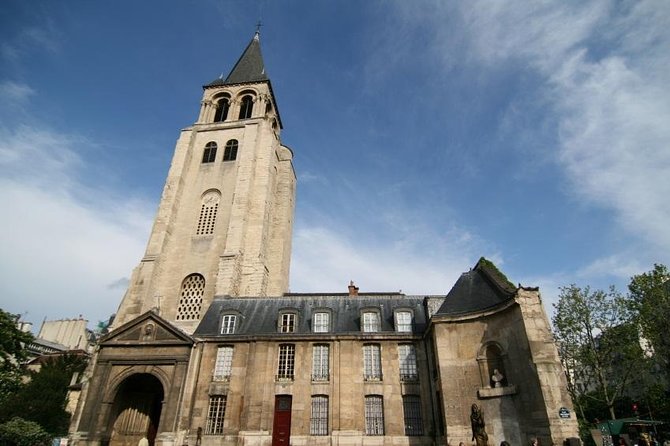
- 17th-century cellar setting: a real stone room that makes the tasting feel special, not staged.
- Three small glasses (80 ml each): enough variety to compare, without turning the hour and a half into a party.
- Terroir, grapes, blend talk while you taste: you’re guided to connect taste to the Champagne-making basics.
- Food pairing that teaches by contrast: comté and ham help you read acidity, richness, and texture.
- Smell rules before you arrive: lipstick, gum, strong coffee, perfume, and even a too-fresh teeth rinse can mess with the tasting.
- Buy bottles after the session: you can take champagne home, or arrange delivery.
Entering a 17th-century Paris champagne cellar
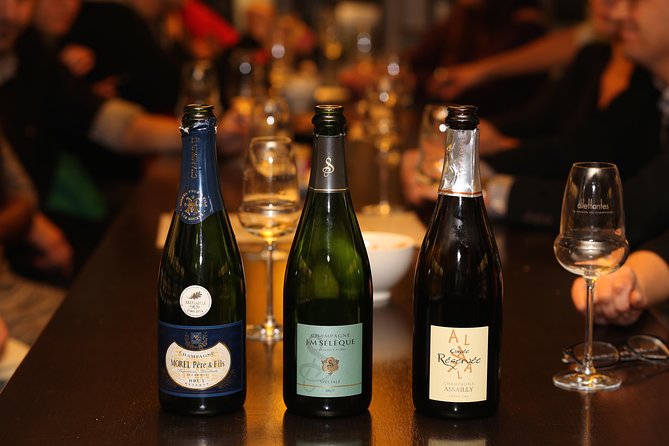
Paris has a lot of champagne moments, but this one starts with the room. You’re taken into a boutique cellar tied to the city’s Champagne culture, tucked in the St Germain area. The setting matters because Champagne is subtle. A quiet, cool stone space makes you slow down and focus.
The tasting lasts about 1 hour 30 minutes, and the pacing is designed for comparison. You’ll move through three different champagnes rather than doing a long pour of one style. For most people, that’s the fastest way to build real understanding: you taste, you notice, then you taste again with a new benchmark.
One practical note: you’ll want to arrive 10 minutes early at the meeting point, 22 Rue de Savoie, 75006 Paris. That buffer helps you settle in, use the bathroom if you need it, and get your senses ready before the first glass.
You can also read our reviews of more wine tours in Paris


What you actually get: three champagnes plus a proper snack plate
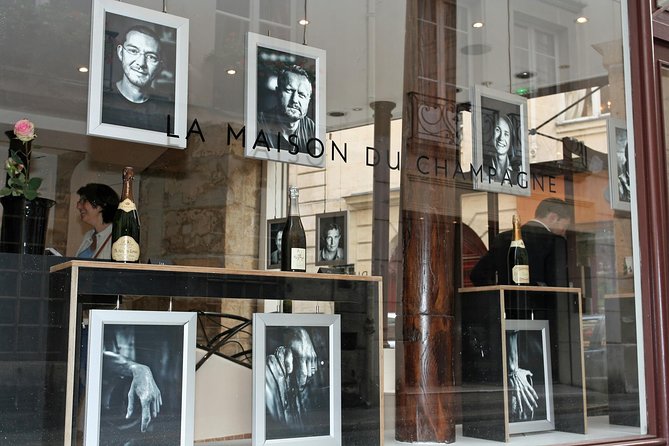
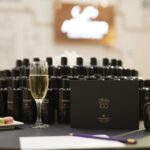
This experience is built around a simple idea: tasting is better when your palate has something to work with. You receive a plate of comté cheese and ham, plus three small glasses of Champagne (80 ml each). You’re not just being fed; the food supports the flight so you can tell what each Champagne is doing.
The plate is described as matured comté and ham, and one highlight also calls out pata negra alongside the tasting. Either way, the point is the same. Matured comté brings nuttiness and salt. The ham adds savory depth. That contrast helps you feel how the Champagne’s acidity cuts through fat and how its bubbles change texture in your mouth.
Because the glasses are small, you keep control of the session. You can compare without feeling dragged into a fog. And if you plan a later dinner, this format is friendly—you’re tasting, not going to sleep on a canal boat.
The smell rules in Paris are not fussy, they’re essential
Champagne tasting is as much about aroma as it is about taste. That’s why the organizer takes smell seriously, and you should too. Before you arrive, they strongly recommend you avoid things that cling to your breath or skin.
Here’s the key etiquette to remember:
- Don’t wear lipstick
- Skip gum
- Don’t brush your teeth right before coming, because you might end up tasting mostly acidity and bitterness
- Avoid coffee or other strong flavored drinks (soft drinks are fine)
- Don’t wear perfume or aftershave
They also warn that they can refuse entry if your scent disturbs the tasting atmosphere, and there’s no refund if that happens. It’s a little strict, yes, but it also protects the experience for everyone. If you take this seriously, the tasting will feel sharper and more accurate.
If you’re the type who needs mint gum or a strong fragrance to feel ready in the city, plan ahead. Choose neutral morning habits so your nose and tongue can do their job.
How the flight works in a real 1h30 tasting session
The flow is designed for learning-by-comparison. You’ll taste at a boutique cellar in the city, and the session centers on a flight of three different champagnes. With each sample, you’re guided to connect flavor to the basics of Champagne production.
The experience also focuses on terroir—the idea that a vineyard’s location affects what grapes become. You’ll be taught the factors behind a good bottle, including grapes, blend, and terroir. As you sip, the goal is to stop thinking of Champagne as one thing. You learn how different styles can express structure, fruit, and mineral-like notes.
A key detail: because you’re pairing with cheese and ham, you get a built-in reset between sips. Food changes your palate, so it’s not just one straight tasting line. That makes it easier to notice what’s Champagne and what’s your mouth reacting to the bite.
Pairing comté and ham so you can read the Champagne
The food isn’t just a snack. It’s a palate tool. Matured comté is a classic choice for tastings because it carries both aroma and savory depth. It also has enough fat and complexity to show you whether a Champagne has real balance.
Ham—and potentially pata negra-style charcuterie—adds salt and richness. Salt amplifies sweetness and fruit perception, while the charcuterie’s fat makes you feel how bubbles and acidity cut through. If you’re new to tasting, this is one of the easiest ways to understand why people say Champagne pairs well with food.
Practical tip for your own pacing: take one bite, then sip. Don’t do the opposite. If you sip first, your mouth can get numb to what the food is teaching you.
The plate is described as small and assorted, which is exactly what you want for a tasting. You don’t need a full meal to learn; you need enough taste contrast to keep the flight clear.



Terroir, grapes, and blend: turning label talk into real taste clues
“Terroir” can sound like marketing language until you connect it to what’s in your glass. In this session, you’re taught what goes into making Champagne—terroir, grapes, and the blend—and the teaching is tied to what you’re tasting in real time.
Here’s how to use this part of the experience so you don’t leave with only vague memories:
- Pay attention to the first impression (sparkling acidity, fruit notes, texture)
- Notice what changes after the next sip (does it feel sharper, softer, more structured?)
- Use the food bite as a checkpoint: if the Champagne feels more lively after comté, that’s part of the balance you’re learning to recognize
If you enjoy drinks that are all about structure—bracing acidity, fine bubbles, and clarity—this is where the tasting can really click. Even if you’re not a wine nerd, the approach helps you stop treating Champagne like a celebratory beverage and start treating it like a product with choices behind it.
One more thing: the emphasis on education may vary by session. I’ve seen this described as more about the tasting than deep technical instruction. So if you want lots of minute winemaking detail, go in expecting an enjoyable, practical primer rather than a full textbook lecture.
Small groups in the St Germain area: good for questions, easier on your schedule
The group size is capped at 12 travelers, which is a big deal for a tasting. Smaller groups mean you’re more likely to get your questions answered, and the host can keep the flow moving without rushing.
In one session, it even turned out to be just a couple of people for a special day, which likely made the pace feel more personal. You won’t know the group size ahead of time, but the limit helps.
Duration matters here too. At about 1h30, you can fit this into a day of walking in Paris. You’re not committing to half your vacation day just to taste a drink. And since the activity returns to the meeting point, it’s easy to plan your next stop without dealing with messy end-of-tour logistics.
Transportation isn’t included, so you’ll want to plan your own way to Rue de Savoie. The good news is it’s near public transportation, so you shouldn’t need a long taxi hunt.
Price and value: $86.82 for tasting, pairing, and a cellar setting
At $86.82 per person, you’re not buying a cheap pour. But this isn’t a simple bar tasting either. You’re paying for:
- A guided flight of three Champagne glasses
- A curated plate of comté and ham
- The setting of a boutique, cellar-style tasting in the city
- A chance to understand what separates styles via terroir, grapes, and blend
The value depends on what you want. If your goal is only to drink, you might feel it’s pricey for the volume. If your goal is to learn what to look for in Champagne and still leave with a chance to buy bottles, it’s easier to see where the money goes.
And because you’re tasting three bottles, you’re getting variety. That’s worth something. Many tastings charge similar prices but give you less real comparison. Here, the flight design supports decision-making later—especially if you plan to purchase a bottle or two.
One important budget note: the experience is listed as non-refundable and not changeable, so pick a time you’re confident you can make. In Paris, that reduces the risk of last-minute plan changes hurting you.
Buying champagne to take home, without the guesswork
A big reason people like this kind of tasting is the follow-through. After the session, you can purchase Champagne—either to go or with delivery. That’s a practical advantage because you’re not shopping blindly.
When you buy after a tasting, you’re more likely to choose based on taste. Since you sampled three styles, you’ll have a reference point for what felt balanced, what seemed more crisp, and what paired better with savory food.
If you’re buying for a gift, this is also safer. You can match the bottle you liked most to the kind of flavors the recipient usually enjoys—especially if they tend to like dry, structured wines rather than only sweet drinks.
Should you book Champagne & Terroir Treasures?
Book it if you want a compact Champagne experience that combines three pours, comté and ham pairing, and a cellar setting in central Paris. It’s a good fit for couples, small groups, and anyone who likes structure and comparisons more than long speeches.
Skip it or adjust your expectations if you’re chasing heavy technical instruction. At least one session note pointed out that the guidance wasn’t as deep as hoped, and language clarity can vary. Also, if you’re the type who wears perfume often or plans to arrive with strong mouth odors (coffee, gum, fresh brushing), you’ll want to change your routine. The smell rules are real, and refusal can happen without refunds.
If you’re aiming for a memorable, sensory hour and a half that leaves you with better taste instincts and the option to bring bottles home, this one is worth your time.
FAQ
FAQ
How long is the Champagne tasting?
It lasts about 1 hour 30 minutes.
What’s included in the price?
You get three small glasses of Champagne (80 ml each) and a plate of comté cheese and ham.
Where does the tour start and end?
It starts at 22 Rue de Savoie, 75006 Paris, and it ends back at the same meeting point.
Are there any age limits?
Yes. The minimum age is 18.
How many people are in the group?
The tour has a maximum of 12 travelers.
Are there rules about what to do before arriving?
Yes. You’re strongly advised not to wear lipstick, avoid gum, avoid coffee or strong flavored drinks, don’t wear perfume or aftershave, and don’t brush your teeth right before coming. Entry may be refused if scents disturb the tasting, with no refund.